The Essential Guide to Air Vented Golf Umbrellas: Performance and Design
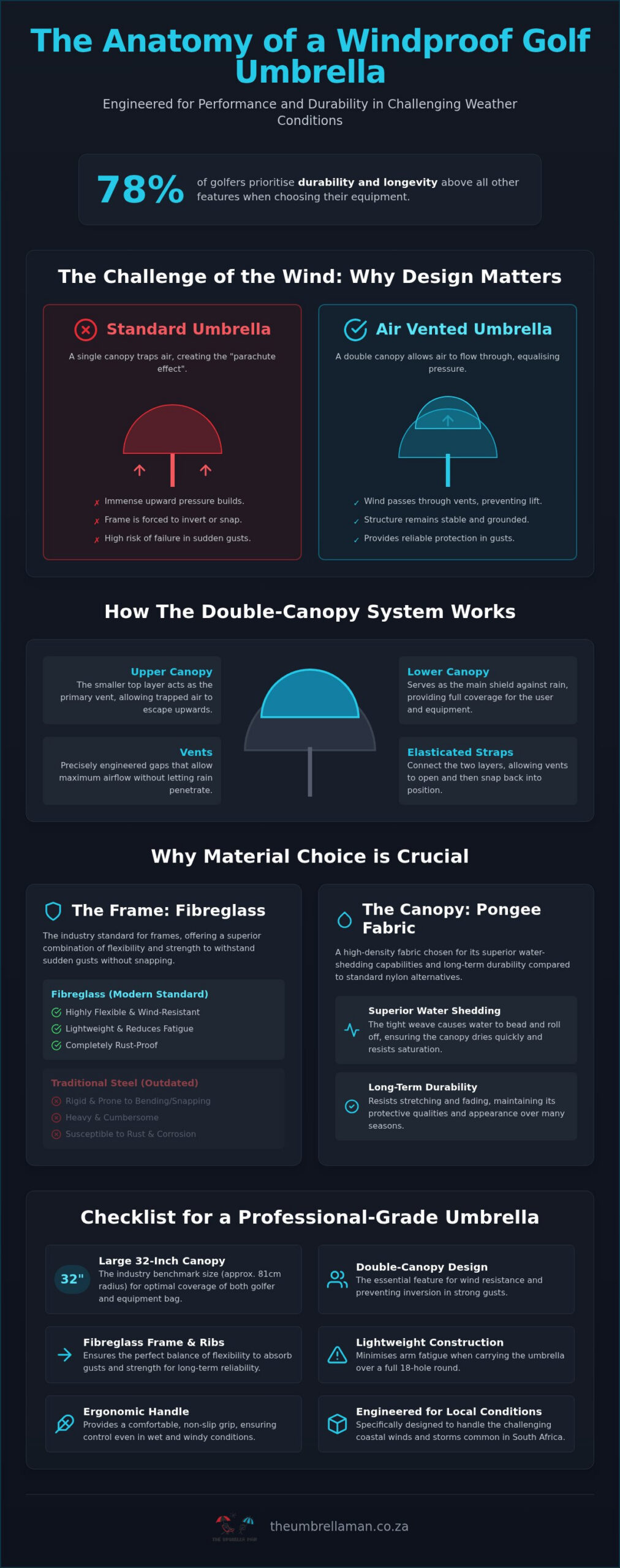
Did you know that 78% of golfers prioritise durability and longevity above all other features when selecting their equipment? It’s a sensible priority. This is especially true when a sudden coastal gust can instantly transform a standard umbrella into a useless tangle of metal and torn fabric. By switching to a high-quality air vented golf umbrella, you can avoid the common frustrations of heavy frames, rusted components, and broken ribs during a round.
In this guide, you’ll discover how air-vented technology and fibreglass engineering work together to create the ultimate windproof protection for the golf course. We’ll examine the specific mechanics of wind resistance, the durability of high-performance pongee fabric, and why these materials are the preferred choice for South African conditions. Whether you’re a regular player or sourcing equipment for commercial use, understanding these design principles ensures your investment remains a reliable partner for many seasons to come. We will look at everything from frame flexibility to the practical benefits of lightweight materials over 18 holes.
Key Takeaways
- Understand how the double-canopy design of an air vented golf umbrella prevents inversion by equalising wind pressure whilst maintaining total rain protection.
- Learn why fibreglass is the industry standard for frames, providing the necessary flexibility to withstand sudden gusts without snapping or rusting.
- Identify the importance of high-density fabrics like pongee for superior water shedding and long-term durability compared to standard nylon alternatives.
- Discover how to evaluate handle ergonomics and frame weight to ensure your equipment remains comfortable to carry throughout a full round of golf.
- Recognise the specific design features of professional-grade 32-inch models that are engineered for the challenging weather conditions on South African courses.
What is an Air Vented Golf Umbrella?
An air vented golf umbrella is a specialised piece of equipment designed to remain stable in high-wind conditions. Unlike a standard umbrella, which consists of a single continuous piece of fabric, the vented version features a double-canopy design. This construction allows air to flow through the structure without compromising its ability to keep the user dry. In the South African climate, where coastal winds and sudden inland storms are common, this design is the professional standard for anyone spending extended time on the course.
The primary purpose of the venting system is to equalise pressure. When a gust hits a traditional canopy, the fabric acts like a parachute, catching the wind and forcing the frame to invert or snap. By incorporating an overlap where air can escape, the air vented golf umbrella stays grounded and manageable. The “golf” designation specifically refers to the increased coverage and structural reinforcement required for the sport. These models typically feature a much larger diameter to protect both the golfer and their equipment bag, supported by a frame built to withstand repeated use over 18 holes.
The Evolution of the Double Canopy
Professional golf has long dictated the direction of umbrella innovation. Early models relied on heavy steel frames that were prone to rusting and bending under pressure. As players demanded more reliable protection that wouldn’t cause arm fatigue, manufacturers transitioned to lightweight, flexible materials like fibreglass. This shift allowed for the creation of the 32-inch (approximately 81cm) radius canopy. This size has become the industry benchmark because it provides the optimal balance between maximum coverage and aerodynamic stability. It’s large enough to shield a professional tour bag whilst remaining light enough for a caddy or player to carry comfortably for several hours.
Key Components of a Vented System
A high-performance vented system relies on three critical elements working in unison to provide stability:
- The upper canopy: This smaller top layer acts as the primary vent. It overlaps the lower section, allowing trapped air to escape from underneath the structure.
- The lower canopy: This serves as the main shield against rain. It features strategically placed gaps that sit beneath the upper layer to ensure water cannot enter the interior.
- Elasticated tension straps: These heavy-duty cords connect the two layers. They allow the vents to open during a gust but ensure the fabric returns to its original position immediately after, maintaining the umbrella’s shape and tension.
By integrating these components, the modern air vented golf umbrella provides a level of reliability that single-canopy alternatives cannot match. It’s a practical solution for South African golfers who need equipment that performs consistently, regardless of the weather conditions.
The Science of Wind Resistance: How Vents Prevent Inversion
Standard umbrellas often fail because they create what is known as the “parachute effect”. When wind hits a single-layer canopy, the air is trapped underneath with no escape route. This builds immense upward pressure that forces the ribs to bend and eventually snap. It’s a common sight on South African courses during sudden weather shifts, where cheap equipment simply cannot cope with the physical load.
An air vented golf umbrella solves this problem through the principles of pressure equalisation. By incorporating a secondary layer with an opening, air can pass through the structure. This balances the pressure between the top and bottom of the canopy. It’s essentially a relief system that allows the wind to flow through the fabric rather than pushing against it. This design prevents the umbrella from turning inside out even during heavy gusts.
For a professional 32-inch model, this aerodynamic feature is vital. A larger surface area naturally catches more wind, which increases the physical strain on the user. Without venting, you’d find yourself constantly fighting to keep the umbrella steady over a long round. Aerodynamic venting reduces this drag, making the equipment much easier to handle whilst walking the fairway. It ensures your arm doesn’t tire before you reach the final green.
Managing High-Velocity Gusts
In South Africa, storms can bring high-velocity gusts that test the limits of outdoor gear. The vent acts as a pressure-relief valve during these sudden bursts. The gap size between the upper and lower layers is precisely engineered to allow maximum airflow without letting rain penetrate the interior. Wind load management refers to the controlled release of air pressure through a secondary canopy layer to maintain the structural integrity of the frame under stress.
Stability on the Fairway
Walking between holes in windy conditions is far more manageable with a stable canopy. A vented design significantly reduces the “tug” or drag that golfers often feel. This stability is crucial because it allows you to keep the umbrella positioned correctly over your golf bag. Keeping your clubs dry is essential for maintaining your grip and performance. If you’re looking for professional-grade stability, The Umbrella Man’s collection offers engineered solutions designed specifically for our local conditions. A stable canopy shape sheds wind efficiently, allowing you to focus on your next shot rather than struggling with your gear.
Fibreglass Frames: Why Material Choice Matters for Durability
While the canopy manages wind flow, the internal frame provides the essential structural integrity required to keep the umbrella open under pressure. In professional manufacturing, fibreglass has replaced traditional steel and wood as the superior material for both ribs and shafts. This transition is driven by the need for a high strength-to-weight ratio. A 32-inch air vented golf umbrella requires a robust skeleton to support its large surface area, yet it must remain light enough for a player to carry comfortably for several hours. Fibreglass provides this balance, offering a frame that is significantly lighter than metal alternatives without sacrificing stability.
Safety is an additional factor that makes fibreglass the preferred choice for South African golfers. Our local climate is known for sudden afternoon thunderstorms, which are often accompanied by lightning. Unlike steel or aluminium, fibreglass is a non-conductive material. This property offers an extra layer of security on the course, reducing the risk associated with holding a large metal object during electrical activity. It’s a practical design choice that prioritises the player’s well-being alongside functional performance.
Flexibility vs Rigidity
The primary advantage of fibreglass ribs is their ability to flex without sustaining structural damage. When a powerful gust hits the canopy, the ribs act like a spring, absorbing the energy and then returning to their original shape. Metal frames, by contrast, have a much lower fatigue life and often suffer from permanent deformation or “kinking” once they are bent beyond a certain point. Frame flexibility prevents permanent snapping because the material is engineered to dissipate stress throughout the structure rather than concentrating it at a single point of failure. This resilience ensures the umbrella maintains its aerodynamic profile even after years of use in harsh conditions. For a comprehensive overview of what to look for when making this investment, our professional checklist for selecting a windproof golf umbrella in South Africa covers every critical specification in detail.
Corrosion Resistance in Diverse Climates
South Africa’s diverse geography includes long coastal stretches where salt-laden air is a constant threat to metal equipment. Steel frames quickly develop rust in these environments, which leads to staining on the fabric and eventually causes the opening mechanism to seize. Fibreglass is naturally immune to corrosion, ensuring that the shaft and ribs remain in top condition regardless of the humidity or salt content in the air. Because the material doesn’t degrade, the fibreglass shaft stays smooth over time, allowing the runner to glide effortlessly during deployment. We recommend simply rinsing the frame with fresh water after exposure to sea spray and allowing it to dry fully before storage to ensure the hinges remain clear of salt crystals.
Selecting the Best Golf Umbrella for Professional and Commercial Use
Selecting a high-performance air vented golf umbrella involves evaluating more than just its wind resistance. The canopy fabric is the first line of defence against the elements. Professional manufacturers typically use high-density pongee or 190T poly nylon because these materials offer superior water-shedding capabilities. Pongee is particularly valued for its soft feel and durability, ensuring that water beads and rolls off immediately rather than soaking into the fibres. This prevents the umbrella from becoming heavy and waterlogged during a prolonged South African downpour.
Handle ergonomics are equally important for comfort over long periods. You’ll generally choose between EVA foam and rubberised grips. Whilst EVA foam provides excellent cushioning and reduces hand fatigue, rubberised grips often provide better traction when your hands are wet. The 32-inch radius is widely considered the “goldilocks” size for maximum coverage. It’s large enough to protect a golfer and their equipment bag without being so cumbersome that it becomes difficult to manage in a crowd. Regarding the opening mechanism, automatic systems are often preferred for tournament speed, allowing for instant deployment as soon as the rain starts.
Criteria for Golf Tournaments and Events
When you’re preparing for a tournament, you must ensure your gear is compatible with standard course equipment. A professional-grade umbrella should fit securely into standard golf cart holders and bag attachments. Weight distribution also plays a critical role. Since a round can last between four and five hours, a large umbrella must be balanced to prevent strain on the wrist and shoulder. Colour selection is another practical consideration. Vibrant colours improve visibility on the course during low-light conditions, whereas neutral tones like navy or black provide a classic, professional aesthetic for formal events.
Wholesale and Branding Considerations
For businesses looking to source equipment for corporate gifting or event branding, consistency is the primary requirement. When you buy in bulk, you need to ensure that every unit meets the same professional standard. A clean, high-tension canopy surface is essential for high-quality logo printing. This ensures that your branding remains crisp and visible without distorted lines. Organisations sourcing wholesale golf umbrellas in South Africa should prioritise suppliers who can guarantee uniform quality and colour across the entire batch. Sourcing directly from a specialist manufacturer like The Umbrella Man guarantees that your commercial order maintains uniform quality and colour across the entire batch. This level of reliability is vital for maintaining your brand’s integrity during high-profile golf days and corporate tournaments.
The 32-Inch Fibreglass Solution from The Umbrella Man
The 32″ Air-vented Fibreglass Golf Umbrella is the flagship product in our range. It integrates the advanced aerodynamic principles and material science discussed in previous sections to provide a professional-grade solution. By combining a double-canopy system with a full fibreglass frame, this model addresses the specific challenges of the South African environment. It’s built to withstand the intense wind loads of coastal regions and the high-heat conditions found inland. We utilise high-performance 190T pongee fabric for the canopy, ensuring superior water repellency and a professional finish. This balance of performance and stability has made it a preferred choice for tournament organisers and professional players across the country.
Every air vented golf umbrella we produce undergoes careful quality control to ensure it meets our established manufacturing standards. The 32-inch radius provides the optimal coverage area for both the golfer and their equipment, yet the use of modern materials ensures the total weight remains manageable. This is a critical factor for anyone spending four to five hours on the course. Our design prioritises functional longevity, ensuring that the umbrella remains a dependable part of your kit for many seasons.
Professional Specifications
Durability is the primary focus of the 32-inch design. Since our establishment in 2009, we’ve refined our manufacturing processes to ensure that every component meets rigorous standards. The fibreglass ribs and shaft are engineered for a long service life, resisting the common failures associated with cheaper metal alternatives. This specific material choice ensures that the frame remains lightweight, which is essential for players who must carry their gear over 18 holes. Sourcing directly from a South African manufacturer provides the added benefit of national reach and reliable logistics. We understand the local market requirements and maintain a consistent inventory to support our clients’ needs. This functional reliability has defined our brand for over a decade.
Ordering for Your Organisation
We support a diverse range of sectors beyond the professional golf circuit. Our clients include educational institutions, hospitality groups, and corporate entities that require durable outdoor equipment. Whether you’re looking for a single high-performance tool or a bulk order for a national event, our supply chain is structured to accommodate your needs. The ease of national supply ensures that organisations can maintain a uniform standard of equipment across multiple locations. This is particularly important for branding consistency during corporate golf days or large-scale promotional events. You can view our 32-inch Air-vented Fibreglass Golf Umbrella here to explore the full specifications of this model. We provide a streamlined process for bulk requirements, ensuring that your organisation receives the highest standard of protection for staff and guests alike.
Investing in Professional Course Protection
Choosing the right equipment transforms your experience on the course from a struggle against the elements into a focused round of golf. By prioritising an air vented golf umbrella, you ensure that sudden gusts and heavy rain don’t compromise your performance. Professional gear makes the difference. The combination of high-strength fibreglass frame technology and aerodynamic venting provides a level of stability that standard models cannot match.
As a trusted South African manufacturer since 2009, we’ve developed our products to meet the rigorous demands of the local climate. Our national delivery across South Africa ensures that professional-grade protection is accessible to golfers and organisations alike. Whether you’re preparing for a tournament or upgrading your personal kit, investing in durability is always a sound decision. We remain committed to providing practical solutions that stand up to the toughest conditions.
Explore our full range of professional golf umbrellas and step onto the first tee with confidence, regardless of the forecast.
Frequently Asked Questions
What is the benefit of a double canopy golf umbrella?
A double canopy design provides a relief system for high-velocity winds. By allowing air to flow through the vent, the air vented golf umbrella avoids the parachute effect that often causes standard models to invert. This ensures the structure remains stable even in challenging weather. You stay dry because the overlapping fabric layers prevent rain from entering the interior. It’s a practical solution for maintaining your composure on the fairway during a storm.
Is a fibreglass umbrella better than a steel one for wind?
Fibreglass is the superior choice for wind resistance because of its natural flexibility. Unlike steel, which can bend permanently or snap under pressure, fibreglass ribs are engineered to flex and then return to their original shape. This material is also significantly lighter, which reduces arm fatigue during a long round. Additionally, fibreglass doesn’t rust, making it much more durable for use in humid or coastal South African environments.
How big is a 32-inch golf umbrella in terms of total coverage?
A 32-inch measurement refers to the radius of the canopy from the centre to the edge. This translates to a total span of approximately 130cm to 140cm when the umbrella is fully deployed. This size provides enough coverage to protect both the golfer and a large tour bag. It ensures your equipment stays dry whilst remaining manageable enough to navigate through crowds or narrow paths between holes.
Can air vented golf umbrellas still leak in heavy rain?
High-quality vented designs do not leak because of the strategic overlap between the two canopy layers. The upper layer acts as a shield, directing water onto the lower layer and away from the vent opening. When you use an air vented golf umbrella made with high-density pongee fabric, the water beads and sheds off instantly. This design ensures that you receive maximum wind protection without sacrificing the goal of keeping you dry.
Why are golf umbrellas usually larger than standard rain umbrellas?
Golf umbrellas are larger because they must protect more than just a single person. In a tournament setting, keeping your clubs and bag dry is essential for maintaining a proper grip and protecting expensive equipment. A standard rain umbrella is typically too small to cover a golfer’s stance and their bag simultaneously. The increased diameter provides a wide dry zone, allowing you to manage your kit and prepare for shots without getting wet.
Are these umbrellas safe to use during a thunderstorm on the golf course?
While no umbrella provides absolute safety during a lightning strike, fibreglass is a non-conductive material and is safer than a traditional steel frame. Metal shafts act as conductors, which increases risk during electrical storms. We always recommend that golfers follow course safety protocols and seek proper shelter immediately if lightning is detected. Using a fibreglass model is a sensible precaution, but it shouldn’t replace standard safety procedures during severe weather.
Do you provide wholesale discounts for golf clubs or corporate events?
Yes, we specialise in large-scale wholesale supply for various organisations across South Africa. Since 2009, we’ve partnered with golf clubs, schools, and corporate entities to provide high-performance outdoor gear in bulk. Our national reach ensures that we can manage large orders efficiently whilst maintaining consistent quality across every unit. If you’re organising a tournament or corporate golf day, we offer professional solutions tailored to your specific branding and volume requirements.
How do I clean and maintain my air-vented umbrella?
Maintenance is straightforward and helps extend the life of your equipment. We recommend rinsing the canopy and frame with fresh water after use, particularly if you’ve been playing in coastal areas where salt air is present. It’s vital to leave the umbrella fully open in a shaded area until it’s completely dry before storing it. This practice prevents mildew from forming on the fabric and ensures the opening mechanism continues to operate smoothly.