Compare Outdoor Umbrella Fabrics for Fade Resistance, Cost and Lifespan
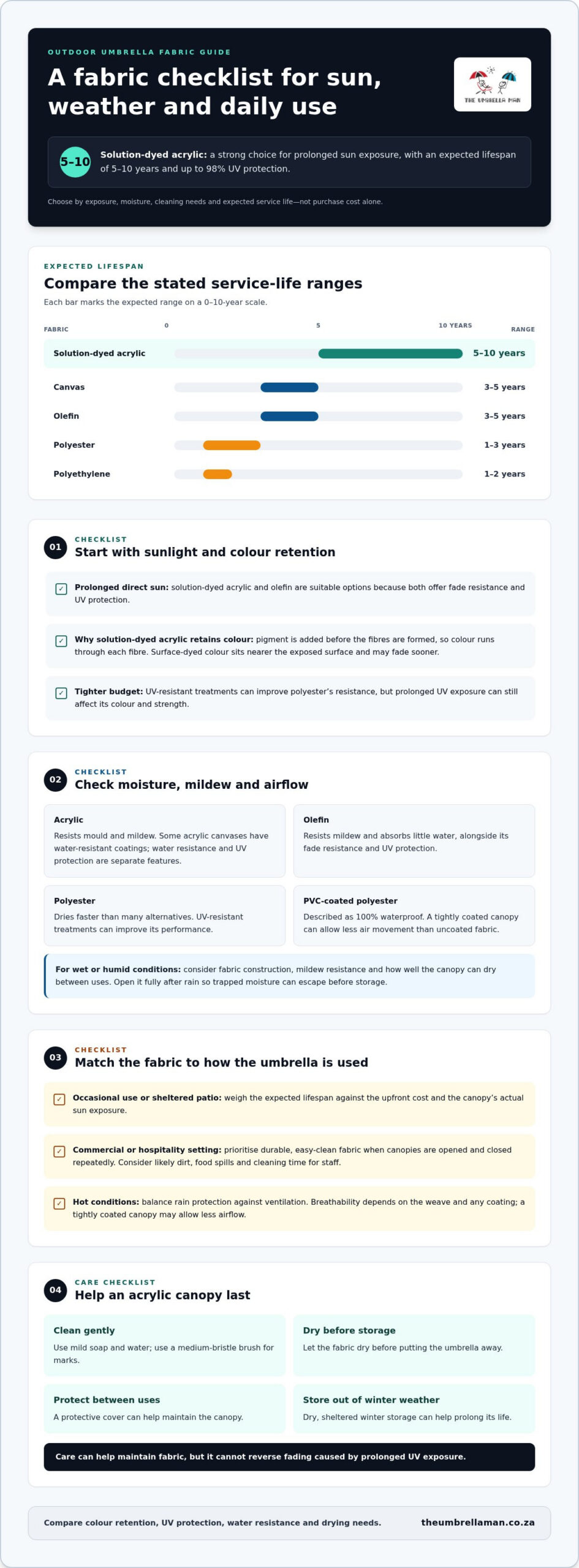
Solution-dyed acrylic is the leading choice when you want the best fabric for fade-resistant outdoor umbrellas. Acrylic patio umbrella fabric has an expected lifespan of 5-10 years and resists fading, whilst polyester can last 1-3 years in direct sunlight. The right choice still depends on sun exposure, budget and how the umbrella will be used.
Weigh the upfront cost against expected lifespan. A canopy exposed to strong, prolonged sunlight needs different qualities from one used occasionally. For commercial settings, ease of cleaning and durability also affect day-to-day practicality.
This comparison explains how acrylic and polyester differ in fade resistance, UV protection, lifespan and cost, with olefin and other canopy options for context. It also covers how to choose fabric for South African conditions, including the needs of hospitality venues and other commercial settings.
Key Takeaways
- Solution-dyed acrylic is a strong option for prolonged sun exposure, with an expected lifespan of 5-10 years and up to 98% UV protection.
- Polyester can suit tighter budgets, but direct sunlight may shorten its lifespan; UV-resistant treatments can improve its performance.
- Compare canopy materials by colour retention, UV protection, water resistance and how quickly they dry, not by cost alone.
- Olefin offers another option to consider for its fade and mildew resistance, low water absorption and expected lifespan of 3-5 years.
- For commercial settings, prioritise durable, easy-clean fabric to help keep canopy care practical for staff.
Solution-dyed acrylic performance and lifespan
Solution-dyed acrylic is a strong choice for South African umbrellas exposed to direct sunlight. Its colour is integrated through the fibre, and acrylic patio fabric has an expected lifespan of 5-10 years.
Solution-dyed and surface-dyed fabric
In solution-dyed acrylic, pigment is added before the fibres are formed, so colour runs through each fibre. Surface-dyed fabric is coloured after the fibre or cloth is made, leaving more pigment near the exposed surface. Because ultraviolet light affects that surface, the colour may fade sooner. Solution-dyed fabric is therefore a practical option for canopies exposed to prolonged sun.
How does solution-dyed fabric prevent UV fading compared with surface-dyed fabric? Its pigment runs through the fibre rather than sitting mainly at the surface, so sun exposure is less likely to fade the colour quickly. Surface-dyed colour is more exposed to weathering on the canopy face.
Acrylic durability and UV protection
Acrylic canvas resists fading, mould and mildew, useful qualities in outdoor weather. Acrylic fabric is described as providing up to 98% UV protection, while many acrylic canvases also have water-resistant coatings. The coating and the fabric’s UV performance are separate features: water resistance helps manage moisture, while UV protection concerns sunlight exposure.
Solution-dyed acrylic is listed with an expected lifespan of 5-10 years. Actual wear also reflects how often the umbrella remains open, its exposure to sun and rain, and whether it is stored dry. For a canopy in a sunny garden, colour retention and resistance to mildew can matter as much as the initial fabric choice.
Can umbrella fabric be repaired or re-dyed after fading, and is replacement more cost-effective? A small tear may be repairable, but re-dyeing a faded canopy can be difficult because colour loss may be uneven and sunlight may have weakened the fabric. Replacement is generally more practical when fading comes with brittle material, damaged seams or widespread wear.
Care can help preserve an acrylic canopy. Clean dirt with mild soap and water, using a medium-bristle brush for marks, then let the fabric dry before storage. A protective cover and dry, sheltered storage during winter can help prolong the canopy’s life. These steps help maintain the fabric, but cannot reverse fading caused by prolonged UV exposure.
| Fabric | Expected lifespan | Fade and UV considerations | Weather considerations |
|---|---|---|---|
| Solution-dyed acrylic | 5-10 years | Resists fading; up to 98% UV protection | Resists mould and mildew; some canvases have water-resistant coatings |
| Canvas | 3-5 years | Shorter expected lifespan than acrylic | Outdoor performance depends on care and exposure |
| Polyester | 1-3 years | Can fade or weaken under prolonged UV exposure | UV-resistant treatments can improve resistance |
| Olefin | 3-5 years | Fade-resistant and offers UV protection | Resists mildew and absorbs little water |
| Polyethylene | 1-2 years | Shorter expected lifespan than acrylic | Consider exposure and intended use |
Choose solution-dyed acrylic for prolonged sun exposure and colour retention. Compare other fabrics for lifespan, weather resistance and care requirements.
Choosing fabric for sunlight, budget and environmental impact
Start with the canopy’s exposure, then weigh moisture, cleaning and material priorities. In South Africa, an umbrella used in full sun has different requirements from one opened occasionally on a sheltered patio.
For hours of direct sunlight, acrylic and olefin are suitable options because both offer fade resistance and UV protection. UV-coated polyester may suit a tighter budget, although prolonged exposure can still affect its colour and strength. Compare expected service life with purchase cost rather than judging affordability by the initial outlay alone. This is a practical starting point when choosing the best fabric for fade-resistant outdoor umbrellas in a sun-facing space.
How do water resistance, mildew resistance and breathability compare across outdoor umbrella fabrics? Acrylic canvases may have water-resistant coatings and resist mould and mildew; olefin resists mildew and absorbs little water. Polyester dries faster than many alternatives, while coatings can reduce airflow. Balance rain protection against ventilation in hot, humid conditions.
For wet settings, check the fabric construction, not just its fibre name. PVC-coated polyester is described as 100% waterproof, while a water-resistant coating on acrylic offers a different level of moisture protection. In humid areas, mildew resistance and the ability to dry between uses matter. Open the canopy fully after rain so trapped moisture can escape before storage.
Breathability depends on the weave and any coating. A tightly coated canopy can shed water effectively but allow less air movement than uncoated fabric. In a hot climate, consider whether the umbrella will shade a still-air courtyard or an exposed seating area. For changing weather, balance airflow, moisture management and straightforward cleaning.
Commercial use brings practical demands. A café or hospitality venue may open and close the canopy repeatedly, so durable, easy-clean fabric can reduce staff cleaning time. Choose a surface suited to likely dirt, food spills and frequency of use. Stain- and mould-resistant material can be useful where canopies stay outdoors between service periods.
Environmental considerations include material composition and product life. Some listed products contain at least 50% recycled material under the Global Recycled Standard. That claim can help buyers compare material content, while expected lifespan indicates how often a canopy may need replacing. Weigh both factors alongside exposure and care requirements when deciding on the best fabric for fade-resistant outdoor umbrellas.
How much do replacement canopies made from acrylic, olefin and polyester cost in South Africa? The cost depends on fabric, canopy dimensions, shape, construction and any coating. Compare like-for-like specifications and consider expected lifespan, since a lower initial cost may not mean lower replacement costs over time.
For a practical choice, match the fabric to its main exposure: direct sun favours acrylic or olefin; tighter budgets may favour UV-coated polyester; wet or humid sites call for moisture management and mildew resistance.
How canopy fabric affects UV protection, fade resistance and durability
Canopy performance depends on fibre, colour distribution and construction. In South Africa, compare UV protection and wear with how the umbrella will be used.
Olefin fade resistance and UV protection
Olefin is a synthetic outdoor fabric described as fade-resistant, with UV protection and low water absorption. It also resists mildew and stains, making it a useful option for exposed patios where moisture and dirt can affect the canopy.
Its expected lifespan is 3-5 years. Compared with acrylic, olefin offers a different balance of durability and moisture management; compare the fabric’s stated UV performance and cleaning needs for the site, rather than choosing by fibre name alone.
UPF protection
UPF describes how much ultraviolet radiation passes through fabric, so it relates to shade performance rather than colour retention. A canopy can resist fading but still need a separate UV-protection measure. Assess both properties independently when comparing outdoor fabrics.
Acrylic patio fabric is described as providing up to 98% UV protection. Treat that figure as a fabric-performance claim, not a measure of how much of a person’s body is shaded. Canopy size, position and sun angle also affect the shaded area beneath an umbrella.
Colours that fade least in intense sun
In intense South African sun, solution-dyed fabric is the stronger choice for colour retention, whatever the shade. Muted mid-tones and patterned colours can make gradual fading less conspicuous than a uniform, highly saturated colour, but shade alone does not prevent UV damage.
Colour choice matters visually, too. A pale canopy may show dirt more readily, while gradual colour change can be easier to notice on a dark surface. Prioritise solution-dyed construction and high colourfastness, then choose a shade that suits the setting and cleaning routine.
Fabric weight and weave
Fabric weight describes material mass, but does not establish UV protection or fade resistance on its own. A denser, even weave can provide a more substantial canopy than a loose weave, yet fibre type, colour treatment and finish remain important comparison points.
For a durable patio umbrella, compare the fabric specification, weave and stated UV performance together. A heavier polyester canopy is not automatically more fade-resistant than solution-dyed acrylic. Choose a construction suited to wind exposure and regular opening, then follow its care requirements.
For example, compare olefin’s low water absorption with acrylic’s colour retention, then review the canopy’s UV information. If a rating is absent, do not infer one from fabric colour or weight. Choose based on documented performance and intended exposure, especially for a fixed, sun-facing patio.
Polyester canvas affordability and sun exposure
Polyester can be a practical choice when the initial budget matters. Its value depends on where the umbrella will stand, how often it is used and how much direct sunlight reaches the canopy. An umbrella opened occasionally in a sheltered area faces different demands from one left outdoors through long, sunny days.
Standard polyester in direct sunlight
Polyester umbrella fabric has an expected lifespan of 1-3 years, and prolonged UV exposure may cause it to fade or weaken. That makes standard polyester less suited to a canopy exposed to intense sun every day. If the umbrella is used seasonally or can be closed and stored between uses, polyester may still suit a tighter budget.
Colour retention is part of the value calculation. A bright or dark canopy may show visible fading as sunlight affects the fabric, while wear can also reduce its strength. Compare the expected period of use with the fabric’s exposure: an umbrella opened frequently in a sunny South African garden puts greater demands on polyester than occasional shade on a covered patio.
UV-resistant treatments and lifespan
UV-resistant treatments can improve polyester’s resistance to sunlight and extend its longevity. Solution-dyed polyester is also listed with an expected lifespan of 1-3 years in direct sunlight, so the dyeing method alone does not remove exposure-related wear. Compare the specific fabric treatment and intended use, rather than assuming all polyester canopies perform alike.
A treatment can improve performance, but it does not make polyester immune to prolonged UV exposure. A canopy left open throughout the day, for example, receives more sunlight than one closed after use. Closing the umbrella when it is not needed reduces direct exposure and helps limit fading and weakening.
Consider the full use pattern before choosing a lower-cost fabric. Note whether the umbrella will be open daily, exposed to midday sun or kept under cover when not in use. Then compare those conditions with the fabric’s stated lifespan and UV treatment. This helps distinguish a suitable budget option from a canopy likely to need replacement sooner.
Care also affects how long polyester remains presentable. Clean dirt with mild soap and water, using a medium-bristle brush for stains, then allow the canopy to dry fully. A protective cover and dry, sheltered winter storage can help prolong the fabric’s life. These steps support maintenance, but cannot prevent all fading under sustained sunlight.
For a budget-conscious decision, weigh purchase cost against expected use and replacement frequency. Polyester is better suited to limited exposure or intermittent use than to a canopy left in strong sun. Where daily sunlight is unavoidable, compare it with acrylic or olefin, which are recommended for hours of direct exposure.
Outdoor umbrella fabric for commercial settings
For a South African café, hotel or school, canopy fabric affects upkeep as well as shade. Commercial umbrellas may face regular use, direct sunlight, food spills and changing weather. Assess the site first: note sun exposure, likely stains, cleaning routines and whether umbrellas stay outdoors between uses.
Easy-clean fabric is a practical priority in hospitality settings because it can reduce staff cleaning time. Acrylic resists fading, mould and mildew, while olefin is described as stain-resistant, fade-resistant and mildew-resistant. Polyester dries faster than many alternatives, but prolonged UV exposure can make it fade or weaken. These differences help match fabric to the work involved.
Consider daily operations, not just the canopy material. A restaurant with outdoor tables may need frequent cleaning after food spills, while a school courtyard may face dust and sustained sun. Choose a surface staff can clean with a straightforward routine. Resistance to stains and mildew can also help where canopies dry slowly after rain.
Sun exposure changes the durability calculation. Acrylic or olefin suits umbrellas facing hours of direct sunlight; UV-coated polyester is an option for tighter budgets. Polyester fabric has an expected lifespan of 1-3 years, while acrylic and olefin have expected lifespans of 5-10 years and 3-5 years respectively. Compare those figures with use intensity and replacement planning.
Commercial buyers should assess the complete canopy, not just its fibre. Review UV protection, colourfastness, water resistance and cleaning requirements together. A coated fabric may offer stronger rain protection, while airflow and drying time matter in humid conditions. For a high-use patio, consider how quickly staff can clean the surface and return the seating area to use.
How should outdoor umbrella fabric be cleaned and stored to slow fading and extend its life? Clean the canopy with mild soap and water, using a medium-bristle brush for dirt or stains. Let it dry fully, then use a protective cover and store it somewhere dry and sheltered during winter.
A simple site assessment helps narrow the choice: identify the strongest sun exposure, common stains and available cleaning routine. Then compare acrylic, olefin and UV-treated polyester against those requirements. This makes the trade-offs between fabric performance, staff upkeep and replacement planning clearer for a café, school or hospitality venue.
For commercial shade requirements, explore outdoor umbrella options suited to different settings and uses.
The Umbrella Man: 2.0m 160gm Poly-Canvas Beach Umbrella
The Umbrella Man offers the 2.0m 160gm Poly-Canvas Beach Umbrella as an option for beach shade. For garden use, the 2.56m Garden Pattern Umbrella is another canopy choice, while the 2.0m 190T Poly Nylon Beach Umbrella provides an alternative material to compare. These offerings give buyers practical options for different outdoor settings.
Use the fabric comparison above to match an umbrella to its exposure, cleaning routine and intended use. In particular, distinguish poly-canvas from solution-dyed acrylic: do not assume the materials have the same fade resistance or lifespan. Consider the canopy type alongside the shade area you need before choosing.
Explore The Umbrella Man’s umbrella range to find an option suited to your requirements.
Choose a canopy that fits its setting
Choosing the best fabric for fade-resistant outdoor umbrellas starts with the conditions the canopy will face, not colour alone. Consider how often it will be opened, the shade area required and the care routine available. These details turn a fabric comparison into a practical shortlist for a beach, garden or commercial space.
The Umbrella Man’s range includes the 2.0m 160gm Poly-Canvas Beach Umbrella, the 2.56m Garden Pattern Umbrella and the 2.0m 190T Poly Nylon Beach Umbrella. Compare these options according to their intended setting and the material characteristics discussed in this guide. Poly-canvas and poly nylon should not be assumed to perform like solution-dyed acrylic.
For help considering the available options for your requirements, contact The Umbrella Man. A well-matched canopy can make choosing outdoor shade a clearer, more considered decision.
Frequently Asked Questions
How Long Do Patio Umbrella Fabrics Last?
Patio umbrella fabric lifespans range from 1-2 years for polyethylene to 5-10 years for acrylic. Polyester is listed at 1-3 years, while canvas and olefin are each listed at 3-5 years. Use these estimates to plan for eventual replacement. Exposure and care also matter: a canopy left open in full sun faces different wear from one closed between uses.
What Are the Most Important Features of Umbrella Fabrics in South Africa?
For South African outdoor settings, prioritise UV and fade resistance, colourfastness and suitable moisture management. Solution-dyed fabric is recommended for outdoor umbrellas because colour runs through the fibres. Stain and mildew resistance can help in changing weather, while oil-repellent fabric can be useful for outdoor furniture. For an umbrella near outdoor dining, consider how easily staff can clean spills from the canopy.
Which outdoor umbrella fabrics resist fading best: solution-dyed acrylic, polyester, or olefin?
Solution-dyed acrylic and olefin are stronger choices for fade resistance than standard polyester. Acrylic retains colour during prolonged sun exposure, while olefin is described as fade-resistant and offers UV protection. Polyester may fade or weaken with prolonged UV exposure, although UV-resistant treatments can improve its performance. For a canopy exposed daily, compare its treatment and colourfastness rather than relying on the fibre name alone.
What UV protection ratings and colourfastness standards should outdoor umbrella fabric have?
Choose fabric with stated UV-protection information and high colourfastness. Acrylic patio fabric is described as providing up to 98% UV protection. Colourfastness indicates how well fabric retains its colour during exposure, so consider that claim alongside UV information. Assess these as separate properties: stable colour alone does not establish how much UV protection the canopy provides.
How long do acrylic, olefin, and polyester umbrella fabrics typically last in strong sunlight?
Acrylic patio fabric has an expected lifespan of 5-10 years, olefin 3-5 years, and polyester 1-3 years in direct sunlight. Solution-dyed polyester is also listed at 1-3 years in direct sun. Use these estimates to compare replacement cycles for a sunny patio. Closing an umbrella when it is unused and storing it dry during winter can help prolong its life.