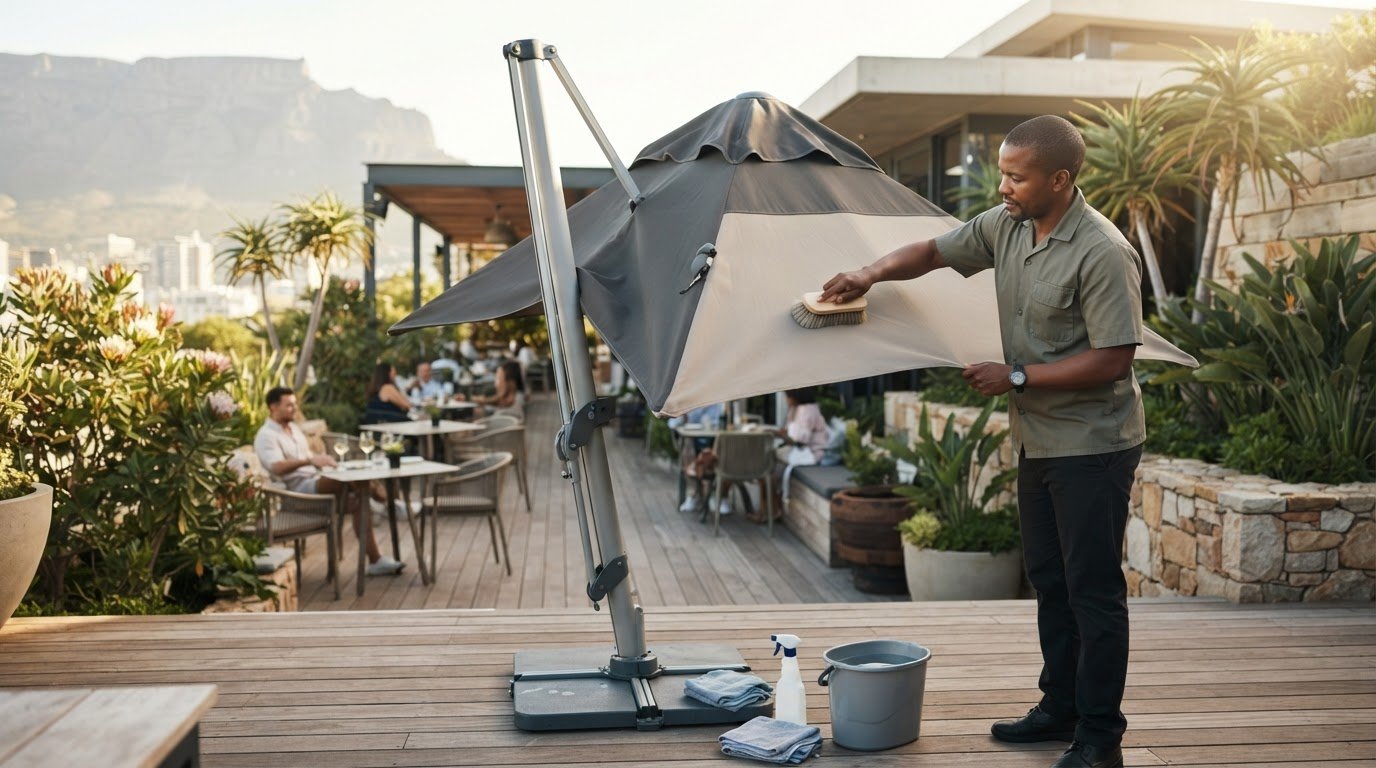
How to Clean and Maintain Commercial Umbrellas: A Practical Guide
Could a simple care routine prevent a small stain or stiff joint from becoming a larger problem? For businesses that rely on outdoor shade, knowing how to clean and maintain commercial umbrellas can be challenging: canopy fabrics vary, and regular opening, closing and exposure to the elements all take their toll. The wrong cleaner or damp storage can cause avoidable damage.
A consistent approach makes upkeep easier for staff and helps keep umbrellas presentable and ready for use. This guide covers practical steps for removing everyday dirt, choosing a suitable cleaning method, drying and storing canopies, and checking frames and operating parts for wear. It also explains how to use fabric care instructions, when an umbrella needs closer assessment and when replacement may be the sensible option. Routine checks and careful handling help teams spot minor issues early and make informed decisions about commercial umbrella supply as their needs change.
Key Takeaways
- Build a repeatable care routine to keep umbrellas presentable and spot wear before it becomes a bigger operational concern.
- Identify the canopy material and follow its care label or manufacturer guidance before choosing a cleaning method.
- Learn how to clean and maintain commercial umbrellas with a careful sequence that limits the risk of damaging the canopy.
- Make brief checks between cleans, and close umbrellas in unsuitable weather in line with their product instructions.
- Recognise when fading, tears or unsafe movement need assessment, and when replacement may be more appropriate than further cleaning.
Why a Commercial Umbrella Care Routine Protects Your Outdoor Setup
Outdoor umbrellas collect dust, leaves and other debris. Repeated opening, closing and handling also put their fabric, fittings and moving parts through regular wear. In a hospitality venue, event space or workplace, a neglected umbrella can become harder to operate and less presentable to staff and visitors. A simple care routine gives your team a consistent way to spot changes before the umbrella is used again.
Regular cleaning helps maintain appearance, but it has limits. It can remove surface dirt when the method suits the canopy; it cannot reverse fading, tears, bent components or other physical damage. Inspection is just as important: it helps staff flag concerns, not fix them. Regular inspection and material-appropriate cleaning help keep umbrellas presentable and make developing wear easier to spot before use.
What commercial use changes about umbrella care
Commercial umbrellas may be opened and closed throughout the working day, moved between positions or handled by different staff. Their exposure depends on the site. Sun can fade surfaces over time, dust and airborne debris can settle on the canopy, and rain can leave it damp. Near the coast, salt air is another factor to consider. Umbrella construction also varies, as outlined in this general history and types of umbrellas.
Set care intervals according to actual use, rather than relying on an arbitrary calendar alone. A busy outdoor dining area may need more frequent checks than an umbrella brought out occasionally. After dusty conditions, heavy use or wet weather, look for visible soiling and let a damp canopy dry according to its care guidance before storage.
Create a simple staff inspection routine
Make inspection part of the opening or set-up process, and assign it to a named role or shift rather than assuming someone else will do it. A brief visual check before use can catch obvious concerns. Repeat the check after severe weather or heavy soiling, and record anything that needs follow-up.
- Look for stains, dirt, fading, tears or other visible fabric damage.
- Check for loose fittings and note any mechanism that sticks or does not move normally.
- Record when and where the issue was seen, then flag the umbrella for assessment if its condition or operation raises concern.
Clear records help staff distinguish routine dirt from changes that may affect safe use. Keep affected umbrellas out of service until concerns have been assessed; cleaning is not a substitute for repair or a reason to continue using damaged equipment. This distinction is central to how to clean and maintain commercial umbrellas in day-to-day operations: clean what can be cleaned, document what has changed and take damaged equipment seriously.
Identify the Canopy Material and Check the Frame Before Cleaning
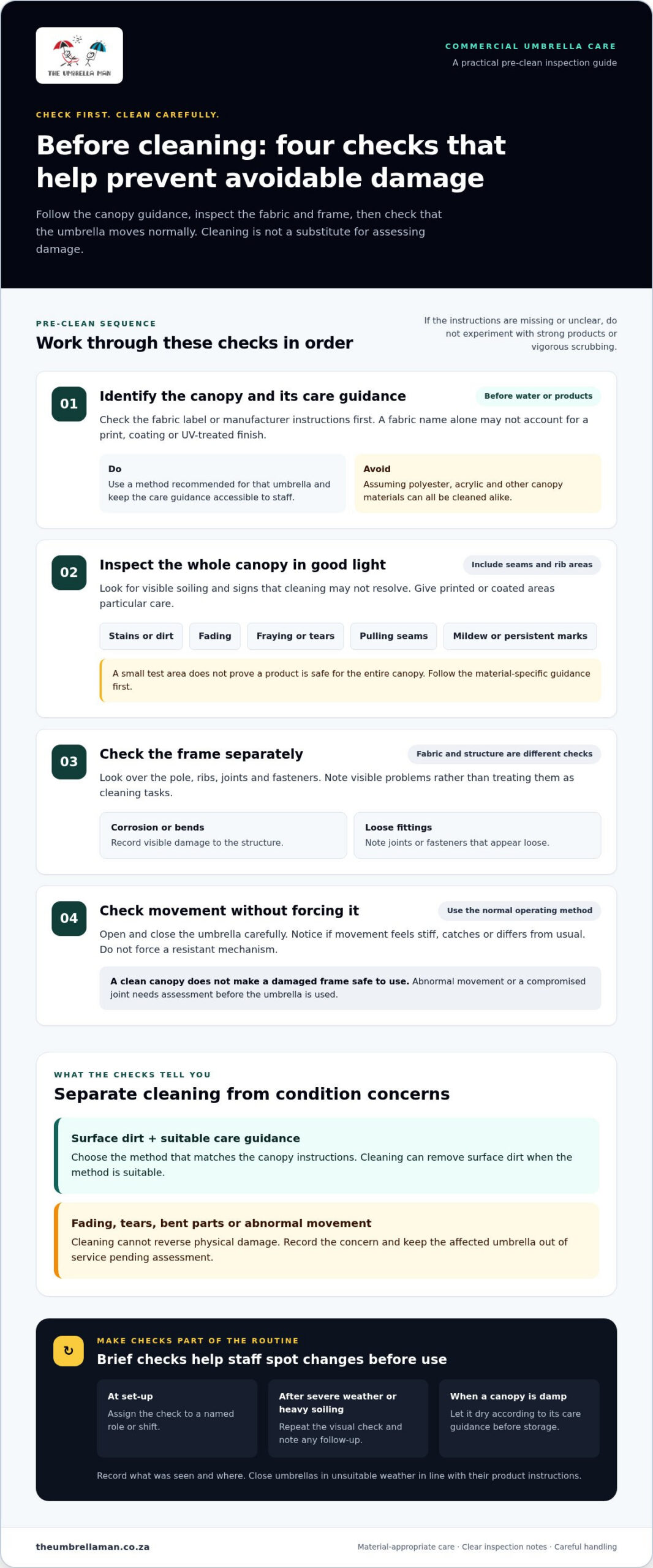
Before preparing water or cleaning products, identify the canopy material and look for its care label or manufacturer instructions. The fabric name alone may not tell you everything: a printed design, surface coating or UV-treated finish can affect which methods are suitable. Don’t assume polyester, acrylic and other canopy materials can all be cleaned in the same way.
Cleaning instructions should follow the canopy material and its finish, because a method suitable for one surface may harm another. If the guidance is missing or unclear, avoid experimenting with strong products or vigorous scrubbing. Use only a method recommended for that umbrella. This is an important first step in how to clean and maintain commercial umbrellas without causing avoidable surface damage.
Check the canopy and its care instructions
Inspect the whole canopy in good light, including the seams and areas around the ribs. Note fading, fraying, seams pulling apart, mildew or marks that remain after ordinary surface debris has been removed. These signs may indicate a condition that cleaning alone cannot resolve. Read any label carefully and keep the guidance accessible to staff responsible for routine care.
Printed or coated areas deserve particular care because abrasion or an unsuitable cleaner could affect their appearance or finish. Don’t treat a small test area as proof that a product is safe for the entire canopy. Follow the material-specific guidance first, then use the spot-test method described in the cleaning procedure.
Inspect the frame and moving parts
Assess the structure separately from the fabric. Check the pole, ribs, joints and fasteners for visible corrosion, bends, looseness or other damage. Then open and close the umbrella carefully, following its normal operating method. Notice whether movement feels stiff, catches or differs from usual, but don’t force a resistant mechanism.
A clean canopy does not make a damaged frame safe to use. If a rib is bent, a joint is compromised or the umbrella moves abnormally, keep it out of use pending assessment. Record the concern so staff can distinguish a cleaning task from a structural issue that needs attention.
Keeping canopy and frame checks separate makes staff notes more useful. For example, “surface mark near a seam” describes a fabric observation, while “joint loose during opening” identifies a mechanical concern. This distinction helps prevent attempts to clean or operate equipment that should first be assessed.
Once the umbrella’s condition and material guidance are clear, staff can choose a suitable cleaning method and avoid unnecessary handling. If inspection shows that an umbrella is beyond practical use, planning replacement units can help maintain the outdoor set-up. The Umbrella Man supplies umbrellas for business requirements, with commercial umbrella supply for businesses planning additional or replacement units.
How to Clean a Commercial Umbrella Without Damaging the Canopy
Once you’ve identified the canopy material and checked its care instructions, follow a controlled cleaning sequence. A gentle method is more appropriate than scrubbing harder at a stubborn mark, which could affect the fabric, print or surface finish. Use a mild cleaning solution only if the manufacturer’s guidance permits it; otherwise, follow the specified care method.
Prepare the umbrella and remove loose dirt
Choose a stable, clear area where staff and visitors won’t pass through the work zone. Open the umbrella only if it is stable and safe to handle, and secure it according to its instructions. Before adding water, use a soft brush or cloth to lift loose dust, leaves and debris. This helps prevent dry grit from being rubbed into the canopy during washing.
Wash, rinse and dry the canopy carefully
Clean manageable areas at a time so you can control the amount of water and solution used. Avoid abrasive pads, stiff brushes and unverified chemical treatments. Bleach or harsh cleaners may affect fabrics or finishes, so don’t use them unless the canopy’s care instructions specifically allow it. Follow the sequence below, stopping if the fabric reacts unexpectedly.
- Secure the area. Keep people clear, check that the umbrella is stable and prepare only cleaning materials permitted by its care guidance.
- Remove loose debris. Brush gently across the canopy surface, taking care around seams and printed or coated sections.
- Spot-test the solution. If the instructions permit a cleaning solution, test it on a discreet area first. Check for changes to colour, texture or finish before continuing.
- Wash gently. Use a soft cloth or brush and light pressure. Clean one section at a time, following the recommended method and avoiding vigorous rubbing at marks.
- Rinse away residue. Use clean water as directed by the care instructions, taking care not to leave soap or cleaning solution on the fabric.
- Air-dry fully. Leave the canopy open in a suitable, secure place until it is completely dry. Don’t close or store it whilst damp.
Allow the canopy to dry throughout, including around seams and folds. Closing it while moisture remains can create conditions that encourage musty odours or mildew. If the umbrella can’t be left safely open, choose a suitable drying location rather than folding damp fabric into storage.
This sequence makes how to clean and maintain commercial umbrellas a repeatable staff task, with the material’s care guidance at the centre of each decision. Cleaning can remove suitable surface dirt, but it won’t restore a damaged finish or repair torn fabric. If a mark remains or the canopy shows damage, record the condition and arrange an assessment before returning the umbrella to use.
Maintain Commercial Umbrellas Between Cleans and During Poor Weather
Routine care doesn’t mean washing the canopy every time it’s used. Brief, condition-based checks help staff catch new debris, marks or changes in operation before these become reasons to clean or remove an umbrella from use. Set the frequency according to how heavily each umbrella is used and the conditions at the site. Record recurring issues so the team can respond consistently.
Use condition-based checks between washes
Check the canopy and structure during set-up and after periods of heavy use, poor weather or noticeable soiling. Focus on changes since the previous use, rather than repeating a full cleaning inspection each time.
- Remove loose leaves and other debris before they collect or become harder to clear.
- Look for fresh stains, fabric wear and loose fasteners.
- Notice whether opening and closing feels different from normal.
- Record recurring marks or operating issues and adjust handling or cleaning routines where appropriate.
If an umbrella is used frequently or sits in a more exposed position, increase the frequency of checks to suit those conditions. Logs also help staff see whether a problem is isolated or recurring. If a check reveals a safety concern or structural damage, take the umbrella out of use for assessment rather than treating routine care as a repair.
Close and store umbrellas with care
Follow the product instructions for closing and securing an umbrella when weather is unsuitable, including during strong winds or heavy rain. Don’t leave it open simply because the canopy appears clean or the frame seems stable. Make decisions about poor weather part of the site’s operating routine, and ensure staff know who is responsible for securing outdoor equipment.
After rain or cleaning, let the canopy dry fully before closing it for storage. Trapped moisture can contribute to musty odours and mildew, while a clean, ventilated storage space helps keep the fabric dry. Avoid wrapping or covering a damp umbrella in a way that holds moisture against the canopy.
- Store umbrellas in a dry, ventilated place, following the product’s storage instructions.
- Keep heavy items off stored umbrellas to avoid unnecessary pressure on the canopy and frame.
- Arrange equipment so fabric is not crushed or held against wet surfaces.
Where outdoor equipment is exposed to demanding conditions, suitable selection and care work together. The commercial outdoor durability guide offers related guidance on choosing outdoor structures for practical use. A consistent routine is a useful part of how to clean and maintain commercial umbrellas, but it can’t prevent every effect of exposure or reverse damage.
For businesses planning additional or replacement umbrellas, commercial umbrella supply is available for business requirements.
Retiring Umbrellas and Planning Your Next Commercial Supply
Cleaning can remove suitable surface dirt, but it cannot restore torn fabric, failing seams or a bent frame. If an umbrella has persistent structural damage, unstable fittings or unsafe movement, keep it out of use until its condition has been assessed. Don’t assume it is safe because it still opens, or that another wash will resolve a problem caused by wear.
Decide when cleaning is no longer the answer
Look for tears, seams pulling apart, bent ribs and fittings that no longer hold securely. These issues need attention before the umbrella is used again. Fading, discolouration and repeated stains may also remain after appropriate cleaning. They affect appearance, but are not necessarily removable dirt. Record what you see and distinguish cosmetic changes from damage that could affect operation.
A practical approach to how to clean and maintain commercial umbrellas includes knowing when cleaning has reached its limit. If the canopy or frame appears compromised, don’t put the umbrella back into service without assessment. No fixed service life applies to every umbrella: use, exposure, storage and condition all inform the decision to retain or replace it.
Plan commercial umbrella sourcing around your operation
Before arranging replacements or additional units, map requirements to how your outdoor areas operate. A hospitality venue may need coverage across separate seating areas, whilst an events team may need units for temporary layouts. Consider present demand as well as the practical effect of having no spare umbrella if one is taken out of use.
- Estimate quantities: Count the seating areas or event positions that need shade, then consider whether replacement stock is needed.
- Match use to requirements: Note where umbrellas will be used, how often they’ll be handled and what outdoor exposure they’ll face.
- Plan storage: Consider where units can be stored dry and safely between periods of use.
- Review presentation: If branded canopies are part of your setting, include artwork and visibility requirements in the planning stage.
For businesses considering branded canopies, the custom branded umbrella guide covers how canopy branding can support outdoor visibility.
The Umbrella Man supplies umbrellas to businesses and other organisations across South Africa, with a range of options for different operational needs. A considered replacement plan helps you select quantities and applications that fit your set-up, without treating cleaning as a substitute for damaged equipment. Explore commercial umbrella supply options when you’re ready to plan additional or replacement units.
Make Umbrella Care Part of Your Outdoor Operations
Turn the lessons from this guide into a practical standard your team can follow. Add umbrella checks to existing set-up and end-of-day procedures, and make sure staff know how to record concerns and keep equipment out of use when its condition needs assessment. A shared routine helps care remain consistent as responsibilities change between shifts.
Use those records to inform future decisions. If particular positions or operating conditions lead to repeated damage, factor that experience into the quantity, placement and type of umbrellas you plan for next. This makes how to clean and maintain commercial umbrellas part of a broader approach to managing outdoor equipment, rather than an occasional task prompted by visible dirt.
When you’re ready to plan suitable units for your operation, explore commercial umbrella supply options. A clear care routine and considered supply plan can help your outdoor set-up stay organised and ready for use.
Frequently Asked Questions
How often should commercial umbrellas be cleaned?
Clean them when use, visible soiling or site exposure makes it necessary, rather than relying on one fixed timetable. An umbrella beneath trees may collect leaves and bird marks, while one near a busy entrance may pick up dust more quickly. Check the canopy regularly and clean it when dirt is noticeable, following its care instructions to avoid unnecessary washing. A condition-based approach to how to clean and maintain commercial umbrellas can help prevent grime from building up.
Can I use a pressure washer to clean a commercial umbrella?
Usually, avoid a pressure washer unless the canopy’s care instructions explicitly permit it. The concentrated spray may be too forceful for some fabrics, seams or printed finishes, and can drive water into areas that are difficult to dry. Use the manufacturer-approved method instead, starting with gentle hand cleaning. If the instructions don’t address pressure washing, don’t assume that a particular distance or setting makes it safe.
Can a commercial umbrella canopy be machine-washed?
Only machine-wash a canopy if its product care label or manufacturer instructions specifically allow it. Some canopies may be fixed to ribs or contain finishes and construction details that aren’t suited to a washing machine. Don’t detach fabric or put it in a machine based solely on its material name or size. If guidance is unclear, use only the cleaning method specified for the product rather than experimenting.
What should I do if mildew returns after cleaning?
If mildew returns, check whether moisture is lingering in folds, seams or the storage area, and review the canopy’s care guidance before cleaning it again. Make sure the fabric dries completely and that stored equipment isn’t enclosed in a damp or poorly ventilated space. Repeated growth may point to a persistent moisture problem, not just a surface mark. Avoid applying stronger chemicals unless the manufacturer says they’re suitable.
Can cleaning restore a faded or UV-damaged umbrella canopy?
No. Cleaning removes suitable dirt but can’t reverse fading or material deterioration caused by exposure. A canopy may look dull even after it has been cleaned correctly, and stronger products or harder scrubbing won’t restore lost colour or protection. Check for brittleness, weakened fabric or other changes alongside the appearance. If you’re unsure whether the canopy remains suitable for use, have its condition assessed before putting it back into service.
Should a commercial umbrella be closed while its canopy is wet?
A wet canopy should not be left folded away for storage, as trapped moisture can contribute to odours or mildew. However, if weather or site conditions make it necessary to close the umbrella, follow its operating instructions and avoid leaving it wet and enclosed longer than necessary. Once conditions are safe, open it in a suitable place so it can dry fully before long-term storage. Don’t leave it open if that creates a weather or safety risk.
Can branded commercial umbrellas be cleaned without damaging the logo?
The correct method depends on both the canopy fabric and how the logo has been applied. Check the product’s print and fabric care instructions before using water or any cleaning solution. Avoid abrasive rubbing directly over the branded area, as it may affect the print or finish. If guidance permits washing, test the approved method in a discreet spot first and stop if the logo’s colour or surface changes.