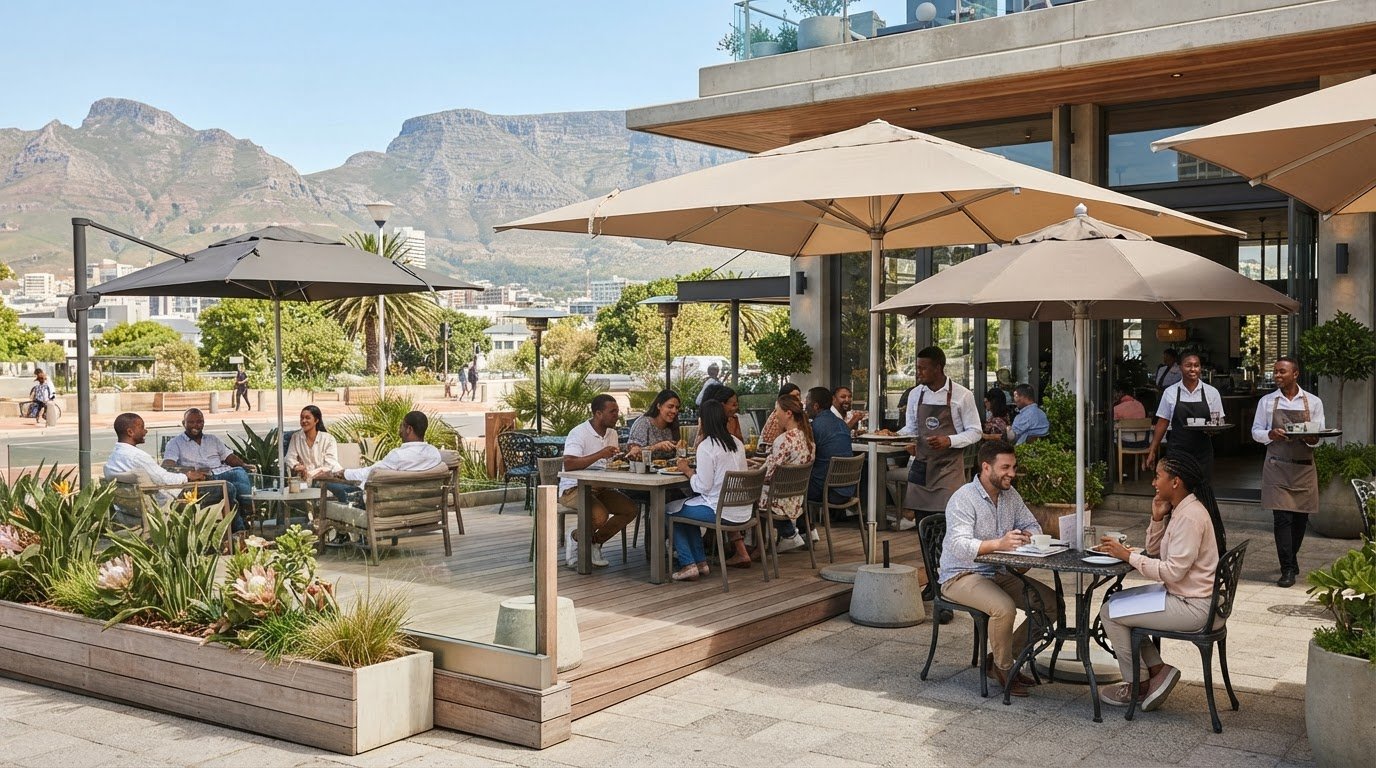
Commercial Café Umbrellas in South Africa: A Practical Buying Guide
The largest canopy isn’t always the best choice for a café. With commercial cafe umbrellas South Africa venues need to account for seating, customer circulation, sun exposure and the demands of daily handling, not just the area to be shaded.
It’s easy to focus first on how much shade an umbrella provides. But a practical setup also needs to fit the layout and be manageable in local conditions. This guide compares key umbrella formats and explains when barriers may complement shade, so you can weigh up the trade-offs for your venue.
You’ll find practical ways to choose a size and style, plan for wind and routine handling, and prepare for individual or bulk purchasing. The Umbrella Man supplies and manufactures umbrellas and outdoor products for businesses, including hospitality clients, and accommodates individual and large-volume wholesale orders. Use the steps ahead to plan outdoor shade around the way your café operates.
Key Takeaways
- Choose umbrella format and canopy shape to suit your table arrangement, coverage needs and available circulation space.
- Map seating, observe sun exposure, mark clear routes and consider who will handle umbrellas during daily service.
- Commercial cafe umbrellas South Africa venues use provide overhead shade, while barriers have a separate role in managing boundaries or screening.
- Compare umbrellas and barriers as parts of the full outdoor layout, considering placement and how each affects staff and guest movement.
- Prepare a buying brief with venue use, seating plan, order quantity and operational priorities to make product comparisons and procurement planning more focused.
Commercial café umbrellas in South Africa: venue benefits
Outdoor seating needs to keep guests comfortable, leave staff room to serve and make effective use of the available floor space. Shade can make outdoor tables more usable during suitable service periods, but an umbrella placed without considering the whole layout may narrow a route or obstruct an entrance. For venues considering commercial cafe umbrellas South Africa, start with how the seating area operates, not simply how much canopy will fit.
A commercial café umbrella is overhead shade equipment selected for repeated use in a venue. Its position needs to work with tables, people and day-to-day service. The general history and types of umbrellas help explain their varied uses, but planning a café layout calls for a practical assessment of coverage, support placement and movement around the seating.
In short: umbrellas provide overhead shade; barriers manage ground-level boundaries or screening. They address different needs, so one shouldn’t be treated as a substitute for the other.
How umbrellas support a functional outdoor dining area
Think of each canopy as part of a working floor plan. Position it to shade seated guests without putting the pole in a main route between tables, the entrance and the service area. Allow for chairs to move when guests sit down or stand up, as well as staff carrying food and clearing dishes. A layout that looks workable on a sketch may feel restrictive once the café is busy.
Shade changes through the day as the sun moves. Note when outdoor tables are most likely to be used, then consider which seating needs coverage at those times and where an umbrella could serve it. Movable shade can be repositioned as seating arrangements change, unlike a permanent overhead structure. It still needs a suitable position and careful operation in changing conditions.
When café barriers complement umbrella shade
Barriers can help organise an outdoor seating area or provide screening at its edge. They don’t shade tables from above, so their role is separate from an umbrella’s. Used together, the two can define where seating begins while keeping overhead shade focused on guest comfort.
Before adding a boundary, trace the routes guests and staff need to use, including entry and exit points. A barrier may make the seating zone clearer but still be poorly placed if it constricts circulation or complicates service. The aim is to guide movement, not create an obstacle. The Umbrella Man supplies and manufactures umbrellas and outdoor products for South African businesses, including hospitality clients. Barrier placement remains a separate layout decision.
Which commercial café umbrella format fits your seating layout?
The right format depends on where the support sits in relation to tables, chairs and staff routes. A canopy’s stated dimensions describe its size, but not how much useful shade it provides across your seating at different times of day. For commercial cafe umbrellas South Africa venues should map the intended seating and circulation first, then compare formats against the available space.
Centre-pole or cantilever: what changes in the layout?
A centre-pole umbrella places its support within the shaded area. That can affect where a table sits, how chairs are arranged and how easily guests move around the pole. A cantilever format puts the support to the side of the seating area, which may allow shade without a central obstruction. Neither format is automatically the better choice. The fit depends on the site plan and the clearances available around the support.
| Format | Layout consideration | Useful planning question |
|---|---|---|
| Centre-pole | The pole occupies space within the canopy footprint and may influence table position. | Can guests and staff move comfortably around the support? |
| Cantilever | The support sits beside the shaded area, so its position needs to work with the edge of the seating plan. | Is there suitable space beside the tables for the support? |
Choosing canopy shape and coverage for café tables
Start by marking each table group, including the space chairs need when pulled out. Then mark entrances, walkways and service access. A round canopy may suit a centred table arrangement; square or rectangular shapes may align more readily with grouped tables or a longer seating run. These are planning considerations, not fixed rules. Compare the full canopy footprint with the layout so added coverage doesn’t come at the expense of circulation.
| Canopy shape | Planning consideration |
|---|---|
| Round | Consider whether the coverage aligns with a central table or a compact seating group. |
| Square | Compare its footprint with grouped tables and the shape of the available area. |
| Rectangular | Assess whether its proportions suit a longer table arrangement, while keeping routes clear. |
Illustrative layout guide, not a specification: sketch the boundary of the seating area, mark tables and chair clearance, draw the entrance and staff route, then indicate the proposed canopy footprint and support position. Adjust the layout if the shade overlaps a walkway or restricts access.
If your plan calls for a more permanent structure, compare its requirements with this guide to gazebos in South Africa. For umbrella requirements, The Umbrella Man supplies and manufactures umbrellas and outdoor products for business and hospitality customers. Explore umbrella supply for business requirements as you refine the seating plan.
How to assess shade, exposure and everyday use before buying
A canopy’s dimensions are only one part of the decision. Site layout and exposure matter alongside canopy dimensions. For commercial cafe umbrellas South Africa venues should assess where shade is useful, how people move around each position and what the team can manage during service. A short site review can reveal whether a proposed location works during operating hours, rather than only on a plan.
Map sun exposure, seating and circulation
Start with the hours when outdoor tables are in use and note where direct sun falls during those periods. Sun angles shift, so a spot that is shaded earlier may be exposed later. Sketch the seating, entrances, service routes and accessible paths before marking possible umbrella positions. This helps identify useful coverage without blocking the routes guests and staff rely on.
- Map the seating. Mark tables, chairs and the space needed to move around them. Note which groups are used at different service times, so the plan reflects actual operations rather than table count alone.
- Observe sun exposure. Review the area at relevant times during the day. Record which tables receive direct sun and how that changes, then prioritise positions where shade would be most useful.
- Plan clearances. Add entrances, customer routes, service paths and accessible approaches to the sketch. Check the space around each proposed support and consider how chairs move when guests sit down or leave.
- Review handling. Decide who will open, close, secure or store each umbrella as conditions change. A position that is difficult to reach or manage during service may not suit the venue’s routine.
Plan safe placement and daily handling
Leave practical space around umbrella supports, furniture and routes, and consider how the base will sit on the venue’s surface. Base selection and stability are safety considerations: the base must suit the umbrella and the conditions at its intended position. Don’t assume a larger canopy means the complete setup will remain stable in every location.
Exposure matters. A sheltered seating area and a more exposed position may call for different operating decisions. Take account of local conditions, including wind and rain, and follow the umbrella’s operating instructions. Avoid opening or leaving it in conditions outside those instructions.
Make handling part of the venue routine. Decide who checks conditions, closes or secures umbrellas when needed, and where they can be stored safely. Keep the process straightforward for the team, especially during busy service periods or when conditions change. Consistent handling supports safer use and helps prevent umbrellas from obstructing customer or staff movement.
Before ordering, revisit the site sketch with the proposed positions and routine in mind. This check can reveal conflicts between shade, access and daily operation while there is still time to adjust the plan.
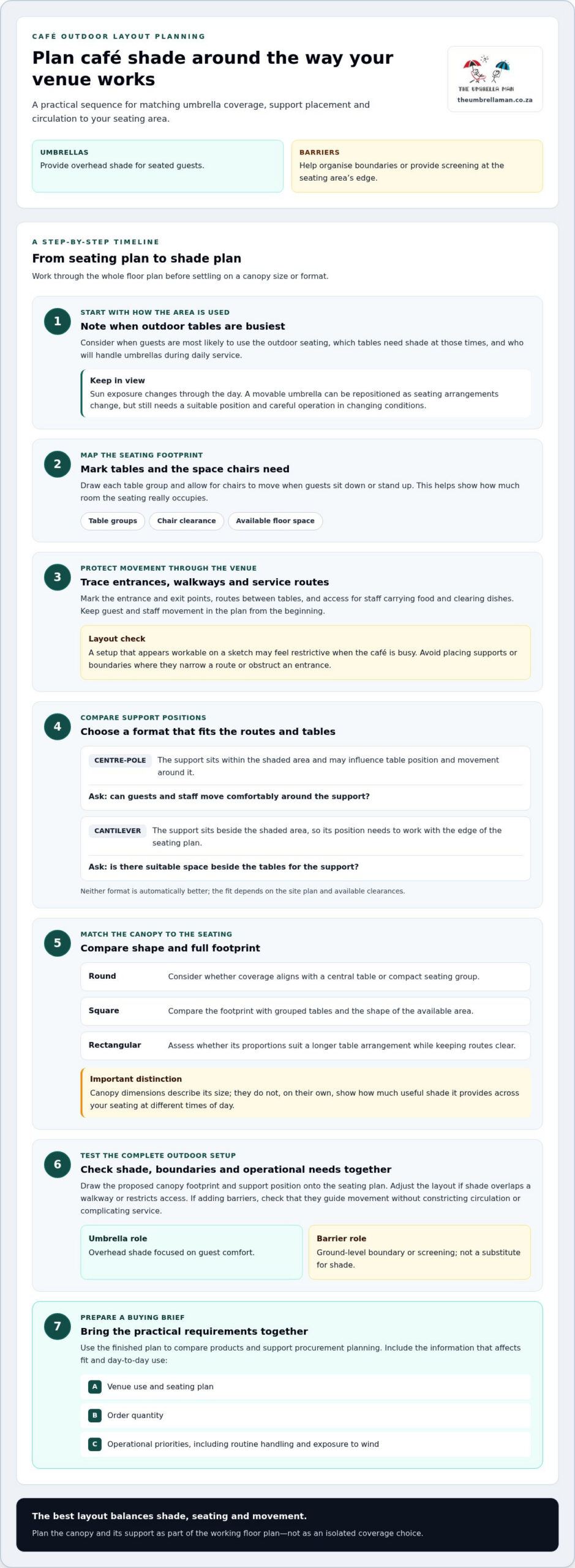
Commercial café umbrellas and barriers: compare the complete outdoor setup
Shade and boundaries solve different layout problems. An umbrella provides cover from above, while a barrier can help mark the edge of a seating area or screen it at ground level. Planning them together can make an outdoor area easier to understand and use, but a venue may need one, both or neither depending on its layout and priorities.
Umbrellas versus barriers: different jobs in one outdoor space
Consider a row of café tables beside an open walkway. Umbrellas can provide overhead shade for diners, while a barrier along the seating edge may help distinguish the café area from the route alongside it. The barrier doesn’t shade the tables, and the umbrella doesn’t define the boundary. Assess each element for its own purpose before deciding whether to combine them.
| Consideration | Umbrella | Barrier |
|---|---|---|
| Function | Provides overhead shade for outdoor seating. | Helps define or screen an area at ground level. |
| Placement | Positioned above intended tables, with the support and base included in the plan. | Placed along an edge or between areas, without obstructing access. |
| Layout impact | Can affect table positions, chair movement and overhead coverage. | Can shape the seating boundary and influence entry and circulation. |
| Operational consideration | Requires a workable approach to opening, closing and managing the shade. | Needs to suit how the space is accessed and how the furniture is arranged. |
For some venues, overhead shade is the priority; others may want a clearer boundary around tables, even where shade is already available. A combined plan may suit seating beside a shared route, provided the boundary doesn’t make the tables harder to reach or serve.
Questions to resolve before combining shade and boundaries
Mark the proposed umbrella and barrier positions on the same plan. Check the entrance, customer access, staff routes and the space needed to pull out chairs. Then consider how the layout changes if tables are moved for cleaning, service or a different seating arrangement. A boundary that works in one configuration may restrict movement in another, so plan around the venue’s routine rather than a single static arrangement.
- Can guests enter and leave the seating area comfortably?
- Do staff have clear routes between tables and service points?
- Will furniture movement bring tables or chairs into conflict with either element?
- Does each item serve a distinct purpose in the overall plan?
Branding is a separate consideration from layout: the canopy can also carry a venue’s visual identity. For guidance on that role, see custom branded umbrellas in South Africa. The Umbrella Man supplies umbrellas to South African businesses and hospitality customers, with individual and bulk orders. Review umbrella options for your commercial requirements as you plan the outdoor seating area.
Sourcing commercial café umbrellas in South Africa: plan the next steps
A clear brief makes it easier to compare options against the way your venue operates. Before sourcing commercial cafe umbrellas South Africa businesses can record the intended use, seating arrangement, order quantity and practical priorities. This gives procurement planning a useful starting point and helps separate essential requirements from preferences that can be considered later.
Prepare a useful commercial umbrella brief
Keep the brief concise but specific enough to guide a comparison. Note where umbrellas will be used, how the tables are arranged and what the team needs to manage during service. Separate functional requirements from appearance or branding preferences, so a visual feature doesn’t take priority over fit, access or routine handling.
- Venue use: Describe the outdoor area and the service periods when shade is most useful.
- Seating plan: Include a sketch showing tables, entrances, walkways and staff access, with proposed umbrella positions.
- Format preference: Record whether a centre-pole or cantilever format is being considered, and note the layout reasons behind that preference.
- Order quantity: Estimate the number required for the planned area and indicate whether the order is for one venue or multiple locations.
- Operational priorities: Summarise handling routines, storage arrangements and the conditions that influence daily use.
- Optional preferences: List appearance and branding considerations separately from must-have functional requirements.
With these details together, it’s easier to compare relevant formats on a consistent basis. The seating plan helps show whether an option suits the space, the order estimate supports procurement planning, and clear operational priorities keep the comparison grounded in how the umbrellas will be used. Update the brief if requirements change before making a purchasing decision.
Work with an established South African umbrella supplier
The Umbrella Man supplies and manufactures umbrellas and outdoor products for the South African market, including for businesses and hospitality customers. Its range includes products such as the 32″ Air‑vented Fibreglass Golf Umbrella and 23″ Aluminium Rain Umbrella. The company accommodates individual purchases and large-volume wholesale orders, supporting requirements from a single venue to larger procurement quantities.
A considered buying brief helps connect the venue’s needs to the options being assessed, without losing sight of layout and operation. Once you’ve outlined the use, quantity and priorities, view The Umbrella Man’s umbrella range.
Turn your shade plan into a practical next step
Before moving from planning to procurement, agree on what a successful outdoor setup needs to achieve for your venue. Review the proposed arrangement with the people who manage service and seating, so the commercial cafe umbrellas South Africa businesses consider can support the way the space works in practice. Their input can bring operational priorities into focus before a purchasing decision is made.
Keep the plan flexible enough to account for changes in seating or daily conditions, while being clear about the requirements that matter most. This gives your team a sound basis for selecting shade equipment that fits the venue rather than forcing the layout to fit the equipment.
The Umbrella Man supplies umbrellas for business and hospitality requirements, with options for individual and bulk orders. Explore The Umbrella Man’s umbrella range and take the next step towards a considered outdoor seating plan.
A well-planned setup can help your team make better use of the space and welcome guests with confidence.
Frequently Asked Questions
How many café umbrellas does an outdoor dining area need?
There’s no fixed number; it depends on the seating plan, canopy dimensions, sun exposure and the clearances each umbrella needs. Sketch the tables and customer routes before estimating how many canopies will provide useful coverage. For example, one well-positioned umbrella may suit a compact group of tables, while tables spread across separate areas may need shade planned for each zone. Check the proposed coverage at relevant service times.
Can café umbrellas stay open in windy conditions?
Wind exposure can affect whether an open umbrella is safe to use, so there’s no universal rule that suits every site or product. Follow the product’s operating instructions and close or secure the umbrella when conditions require it. An exposed terrace may need closer attention to changing weather than a sheltered courtyard. Include responsibility for checking conditions in the team’s routine, rather than waiting until a gust disrupts service.
What should be considered when choosing an umbrella base for a café?
Choose a base that’s compatible with the umbrella and appropriate for the surface, position and expected site conditions. A base on a level, firm surface may behave differently from one on an uneven or exposed area, so assess the actual location rather than choosing by appearance alone. Stability is safety-critical. Follow the relevant product guidance for the umbrella and base, and make sure the setup won’t obstruct customer or staff movement.
Do commercial café umbrellas provide rain protection as well as shade?
Shade provision doesn’t automatically mean an umbrella is suitable protection from rain. Performance depends on the canopy material and construction, so don’t assume a shade umbrella is waterproof or will keep tables dry in all conditions. If rain protection matters to your service, assess the product’s stated suitability and care guidance for that use. Also consider where runoff could fall, so water doesn’t create an inconvenience around entrances or seating.
How should a café store umbrellas when they are not in use?
Follow the product’s care guidance, close umbrellas when appropriate and store them in a dry, organised place. Choose a location where closed umbrellas won’t narrow staff routes, block customer access or interfere with furniture storage. If the care instructions call for the canopy to be dry before storage, allow time for that after wet weather. A consistent end-of-service routine can help staff handle and put away equipment correctly.
Can café umbrellas be used throughout the year in South Africa?
Year-round suitability depends on local conditions, the product’s construction and how it’s operated and cared for. Conditions can differ between seasons and sites, so assess exposure before leaving an umbrella in use. Follow product guidance, close or store it when conditions call for that, and inspect it routinely for visible wear or damage. These checks help the team make considered decisions, but no umbrella should be assumed suitable for every condition.