How to Source Commercial Beach Chairs in South Africa: A Professional Procurement Guide
The true cost of a beach chair isn’t found on the initial invoice; it’s measured by how many times you’re forced to replace it before the holiday season even concludes. For hospitality managers and procurement professionals, sourcing commercial beach chairs South Africa that can withstand salt air and intense UV radiation is a constant challenge. These recurring failures represent a significant drain on operational budgets and can quickly compromise the professional standard of a premium venue. You likely recognise that standard retail-grade furniture is simply not equipped to survive the rigorous coastal climate.
This guide provides a practical framework for selecting high-durability seating engineered for long-term performance. We will explore the specific material requirements for salt-heavy environments and identify procurement strategies that ensure a reliable, national supply chain. By following this professional guide, you’ll discover how to invest in seating solutions that offer a lower total cost of ownership whilst maintaining the high-quality experience your guests expect.
Key Takeaways
- Learn how to distinguish between retail-grade leisure furniture and high-durability seating designed to withstand the rigorous South African coastal climate.
- Understand the critical role of UV-stabilisation and fabric denier in preventing premature fading and material failure under intense sunlight.
- Compare the long-term performance of frame materials, such as treated timber and powder-coated steel, to find the most cost-effective solution for your specific location.
- Optimise your procurement strategy by sourcing commercial beach chairs South Africa from local manufacturers to benefit from reliable supply chains and customisation options.
- Establish a professional maintenance and inventory management routine to lower the total cost of ownership and ensure a consistent guest experience.
Understanding the Demands of Commercial Beach Environments
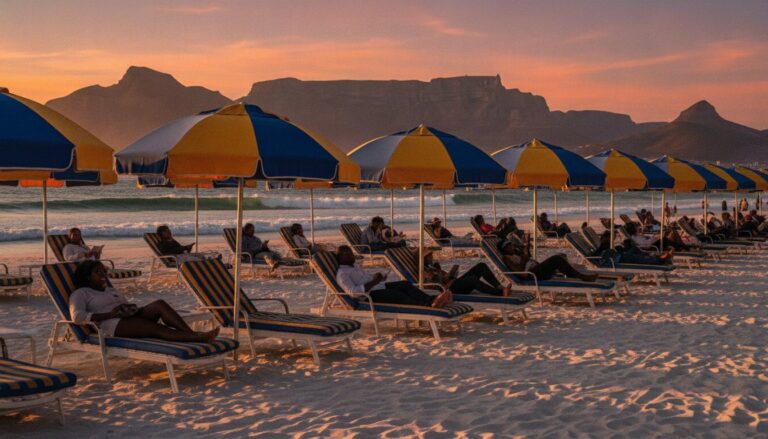
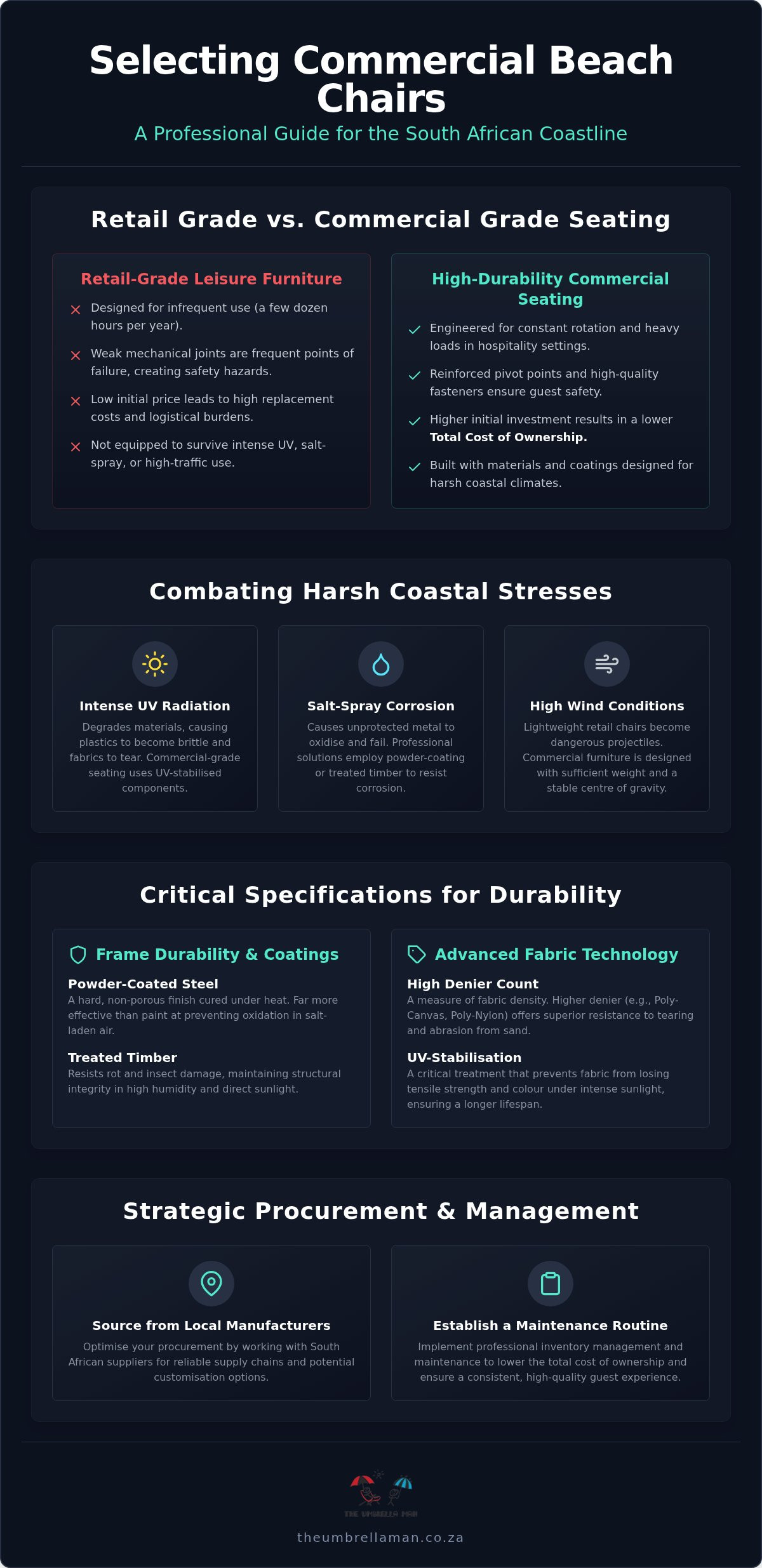
Sourcing furniture for a commercial venue requires a different mindset than buying for a private household. A chair used in a residential garden might only see a few dozen hours of use per year. In contrast, commercial beach chairs South Africa in a resort or club environment are subjected to constant rotation, heavy weight loads, and abrasive sand. The total cost of ownership is the only metric that truly reflects the value of the investment. Whilst a retail-grade chair might seem affordable initially, the cost of frequent replacements and the logistical burden of disposing of broken units quickly exceed the price of a professional-grade alternative.
The High-Traffic Factor in Hospitality
In high-traffic hospitality settings, every component of a chair is tested daily. Mechanical joints are the most frequent point of failure, as they bear the brunt of repetitive movement. If these components aren’t engineered for durability, they will seize or snap, creating a significant safety hazard. Maintaining guest safety is a non-negotiable professional standard for any reputable venue. Choosing chairs with reinforced pivot points and high-quality fasteners ensures that the furniture remains stable and functional throughout the peak season, protecting both the guest and the venue’s liability. It’s a matter of quiet competence; having furniture that simply works without constant intervention.
Environmental Stresses on South African Coasts
South Africa’s coastline is beautiful but notoriously harsh on materials. With a vast array of beaches in South Africa spanning from the Atlantic to the Indian Ocean, the environmental variables are extreme. The UV index in these regions frequently reaches “extreme” levels, which causes standard retail plastics to become brittle and fabrics to lose their tensile strength within months. This degradation isn’t just aesthetic; it compromises the structural integrity of the fabric itself, leading to unexpected tears.
Salt-spray corrosion is another silent killer of coastal equipment. Unprotected or poorly treated metal frames will begin to oxidise almost immediately when exposed to the salt-laden air. This is why commercial-grade solutions, such as the 7-Level Steel Beach Chair with its reinforced frame or the Wooden Beach Recliner made from durable timber, are essential for long-term use. These products are designed to resist the electrochemical reactions caused by salt and moisture. Additionally, wind resistance is a critical factor. Lightweight chairs that lack stability can become dangerous projectiles during the gusty conditions common on the coast. Investing in furniture with sufficient weight and a stable centre of gravity is a practical necessity for any professional operation.
Key Specifications of Commercial-Grade Beach Seating
To mitigate the environmental stresses discussed in the previous section, procurement officers must look beyond surface-level aesthetics. Selecting commercial beach chairs South Africa involves a rigorous assessment of structural materials and protective coatings. Technical specifications dictate the lifespan of the furniture, directly impacting the long-term profitability of your venue. Reliability is built into the details of the frame and the density of the fabric.
Frame Durability and Coatings
The 7-Level Steel Beach Chair is a staple for high-traffic environments because of its multi-position adjustability and robust frame. Powder coating is a critical specification here. This process applies a dry powder that is cured under heat to create a hard, non-porous finish. It’s far more effective than traditional paint at preventing oxidation in coastal air. For luxury resorts where a natural feel is preferred, the Wooden Beach Recliner offers a durable alternative. These units use treated timber that resists rot and insect damage, ensuring the furniture maintains its structural integrity even when exposed to high humidity and direct sunlight.
Advanced Fabric Technology
Fabric choice determines how well the chair resists tearing and fading under pressure. Poly-Canvas is often preferred for its durability and professional finish, whilst Poly-Nylon provides excellent strength-to-weight ratios for easier handling. Denier is a unit of measurement that indicates the mass in grams of nine thousand metres of a single strand of yarn, effectively serving as a benchmark for fabric density and durability. Higher denier counts generally correlate with better resistance to abrasive sand and constant guest use. UV-stabilisation is equally vital; without it, the intense South African sun breaks down the chemical bonds in the fabric, leading to premature brittleness and failure.
Safety is a primary concern for public seating. Commercial models are engineered with wider footprints and reinforced hinges to prevent tipping or collapse. Standard weight capacities for commercial-grade chairs are significantly higher than retail versions, catering to a diverse range of guests. If you are looking for specific technical data on these models, you can view the professional outdoor seating range for detailed specifications. Beyond the frame and fabric, consider these safety and ergonomic factors:
- Reinforced Pivot Points: Essential for preventing mechanical failure during repeated adjustments.
- Stability Standards: Wider leg bases to ensure the chair doesn’t sink unevenly into soft sand.
- Adjustability: Providing multiple reclining levels to accommodate different guest preferences, from reading to sleeping.
- Weight Capacity: Ensuring the structure can safely support high-usage loads without warping.
A well-specified chair doesn’t just look professional; it functions as a dependable asset for your business. By prioritising these technical standards, you ensure that your seating remains a functional part of your inventory for multiple seasons. This methodical approach to procurement reduces the need for emergency replacements and maintains the visual integrity of your venue.
Comparing Frame Materials for the South African Coastline
Selecting the appropriate frame material is a strategic decision that balances operational efficiency with the specific environmental challenges of your location. Whilst aesthetics play a role in brand alignment, the physical properties of the frame dictate how often your staff will need to move, clean, or replace the units. For commercial beach chairs South Africa, the choice typically narrows down to high-grade steel or treated timber, each offering distinct advantages for different hospitality models.
Steel: The Workhorse of Commercial Seating
Steel remains a primary choice for large-scale operations due to its exceptional strength-to-weight ratio. The 7-Level Steel Beach Chair is engineered to provide maximum versatility, allowing guests to find their preferred lounging angle with ease. This mechanical reliability is essential in high-traffic zones where chairs are adjusted dozens of times per day. Steel frames provide the necessary weight to remain stable during the afternoon coastal breezes, yet they’re light enough for staff to stack and store during the off-hours.
To create a comprehensive guest station, many procurement managers pair these chairs with a wind resistant beach umbrella South Africa. This combination ensures the entire setup remains secure even when the wind picks up. Maintenance for steel is straightforward; a regular rinse with fresh water to remove salt deposits is usually sufficient to preserve the integrity of the powder-coated finish and prevent the onset of surface rust.
Timber: Luxury and Longevity
For upscale resorts and private clubs, the Wooden Beach Recliner offers an aesthetic that steel cannot replicate. Beyond its visual appeal, timber possesses natural thermal properties that make it highly functional in the South African heat. Unlike metal, which can become uncomfortably hot under the midday sun, wood remains relatively cool to the touch. This improves guest comfort significantly, especially in venues where chairs are positioned on open decks or white sand with high reflectivity.
The longevity of wooden furniture depends entirely on the quality of the timber and the treatment process. Professional-grade wooden recliners are manufactured using hardwoods or treated softwoods that naturally resist rot and moisture absorption. Whilst timber requires a more deliberate maintenance cycle, such as occasional oiling to maintain its colour and water-repellent properties, the investment pays off in durability. These chairs don’t just survive the elements; they age gracefully, maintaining a premium look that enhances the venue’s professional standard over several seasons.
When deciding between these materials, consider the following maintenance and operational factors:
- Steel Maintenance: Requires weekly fresh-water rinsing to prevent salt buildup in the adjustment notches.
- Timber Maintenance: Needs an annual application of protective oil to prevent the wood from silvering or cracking in low humidity.
- Wind Stability: Heavier wooden frames offer superior stability in gusty areas, whilst steel provides better portability for daily setup and breakdown.
- Heat Management: Timber is the superior choice for comfort in direct sun without the need for full-length cushions.
By matching the material to your operational capacity and guest expectations, you ensure that your inventory of commercial beach chairs South Africa remains a functional asset rather than a recurring maintenance burden.
How to Organise and Manage Bulk Seating Inventories
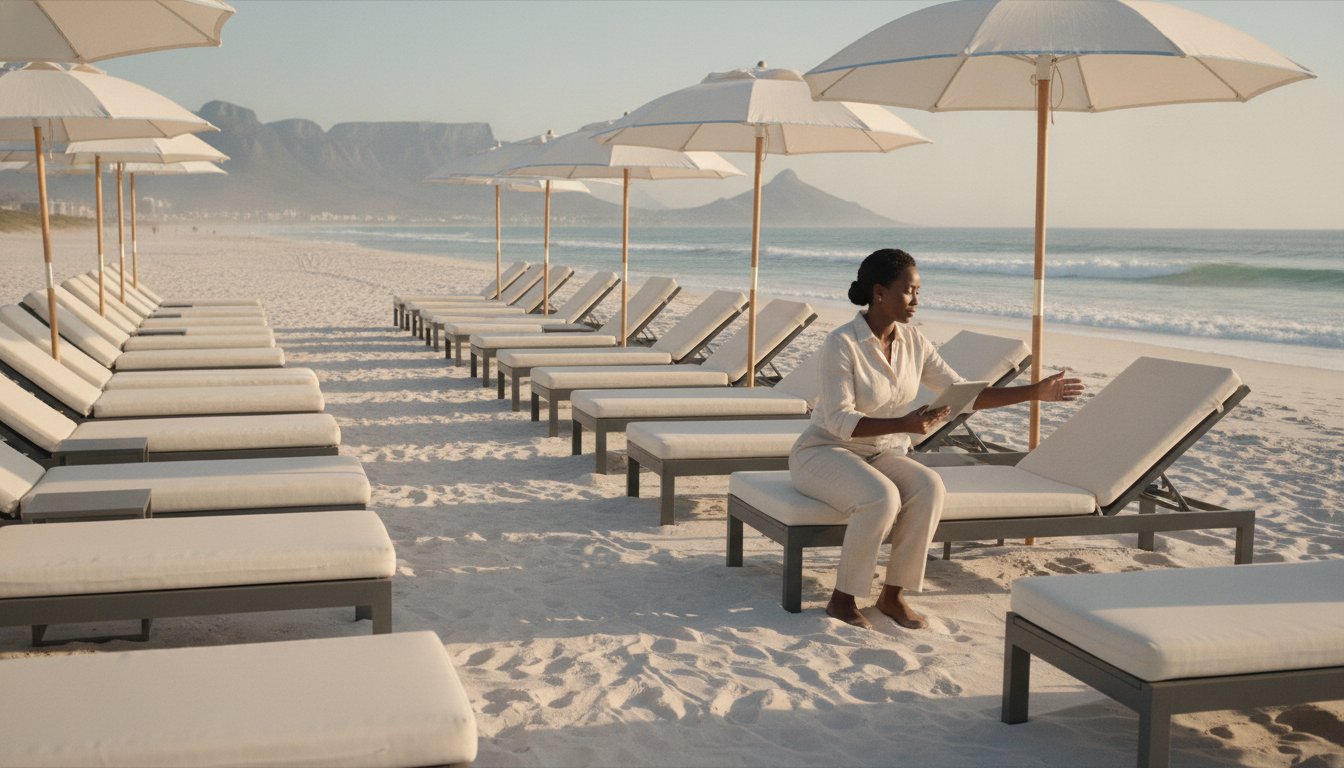
Managing a fleet of commercial beach chairs South Africa requires a systematic approach to protect your capital investment. It begins with a realistic assessment of volume requirements. Procurement teams should base orders on peak occupancy periods rather than average daily usage to avoid guest dissatisfaction during the busiest weeks of the year. Once your inventory is on-site, the focus shifts to operational discipline and logistical efficiency.
Efficient Storage and Logistics
Space is often at a premium in hospitality storage areas. Folding designs, such as the 7-Level Steel Beach Chair, are essential for maximising floor space when the furniture isn’t in use. When stacking, it’s vital to follow specific protocols to prevent frame distortion; never exceed the manufacturer’s recommended stack height. Implementing an inventory marking system, such as discrete colour-coding or numbering on the underside of the frame, allows for effective fleet tracking. This practice is particularly useful for loss prevention across large properties or when managing different seating zones.
Maintenance for Maximum ROI
A disciplined maintenance schedule is the most effective way to lower the total cost of ownership. The daily rinse protocol is the cornerstone of this effort. Every evening, staff should rinse the chairs with fresh water to remove salt deposits and abrasive sand. This simple action significantly extends the life of powder coatings and timber finishes. It prevents the chemical reactions that lead to corrosion and material failure.
Moving parts in adjustable mechanisms require regular attention to ensure smooth operation. Lubrication with a silicone-based spray is recommended, as it doesn’t attract sand and grit like traditional oil-based products. For the fabric, spot cleaning with a mild detergent prevents stains from becoming permanent. Whilst many commercial fabrics are pre-treated, applying a supplementary UV-protectant spray at the start of each season provides an extra layer of defence against the intense South African sun.
Managing repairs is the final step in a professional inventory strategy. It’s practical to keep a small inventory of replacement components to ensure that damaged units are returned to service quickly. This proactive management ensures your seating remains a professional asset rather than a logistical burden. If you’re ready to upgrade your venue’s equipment, you can enquire about bulk wholesale orders for professional-grade furniture designed for the coast.
Sourcing Reliable Outdoor Leisure Products in South Africa
Sourcing a fleet of commercial beach chairs South Africa requires more than just a transaction; it demands a partnership with a supplier that understands the logistical and environmental complexities of the region. Local manufacturing is a significant advantage for procurement officers, as it drastically reduces lead times and ensures that support is available throughout the product’s lifecycle. A local partner provides the agility needed to respond to sudden increases in occupancy or unexpected inventory requirements before the peak season begins.
Customisation is a vital component of professional branding. Many hospitality venues use specific colour-coding or branding to align their outdoor equipment with their corporate identity. This level of detail doesn’t just improve the aesthetic of the venue; it also aids in inventory organisation and loss prevention as discussed in previous sections. By selecting a supplier with established track records in the South African hospitality sector, you ensure that your equipment meets a professional standard that has been tested in real-world coastal conditions.
The Umbrella Man: Professional Standards Since 2009
Established in 2009, The Umbrella Man has built a reputation for quiet competence and reliability in the outdoor furniture industry. Our approach to manufacturing focuses on the functional needs of the commercial sector, prioritising durability and ease of maintenance. We specialise in bulk wholesale orders, providing a stable supply chain for resorts, clubs, and promotional agencies across the country. Our national manufacturing and supply capabilities mean that high-volume requirements are handled with methodical precision.
To simplify procurement, many clients opt for a comprehensive outdoor solution. Integrating your seating with a poly nylon beach umbrella South Africa creates a cohesive, branded shade station. This approach ensures that all components, from the fabric of the umbrellas to the frames of the 7-Level Steel Beach Chairs, are engineered to the same high standard of UV resistance and structural integrity.
Procuring Your Commercial Fleet
The procurement process for high-volume requirements should be transparent and consultative. When you request a commercial quote, it’s beneficial to discuss the specific environmental variables of your coastal location. A venue on a high-wind Atlantic beach may require different specifications than a sheltered resort on the Indian Ocean. A seasoned guide can help you determine whether the versatility of the 7-Level Steel Beach Chair or the luxury aesthetic of the Wooden Beach Recliner is the better fit for your operational model.
Ultimately, the value of a reliable supply partner lies in consistency. Choosing a manufacturer that values professional integrity ensures that your investment is protected by expert craftsmanship and dependable service. By consolidating your outdoor leisure requirements with a single, established provider, you streamline your supply chain and ensure a uniform standard of quality across your entire property.
Securing Your Coastal Investment
Selecting the right commercial beach chairs South Africa requires a methodical approach that prioritises material durability and operational efficiency. By choosing furniture engineered for the specific demands of the coastline, such as the 7-Level Steel Beach Chair or the Wooden Beach Recliner, you ensure your venue maintains a professional standard throughout the busiest seasons. Implementing a consistent maintenance routine and a structured storage strategy will further protect your capital investment and lower your total cost of ownership.
The Umbrella Man has been a dependable partner for the hospitality sector since 2009. As a South African manufacturer specialising in high-volume commercial supply, we are trusted by major hospitality and promotional brands to deliver reliable outdoor solutions. Our national capabilities ensure that your procurement needs are met with precision, expert guidance, and a stable supply chain. If you are ready to upgrade your seating inventory with professional-grade equipment, you can request a wholesale quote for commercial beach chairs from The Umbrella Man. Investing in quality today ensures a more stable and profitable operational environment for years to come.
Frequently Asked Questions
What makes a beach chair “commercial grade” compared to retail models?
A commercial-grade chair is defined by its structural reinforcement and the use of high-performance coatings designed for repetitive public use. Unlike retail models that prioritise low initial costs, commercial beach chairs South Africa feature thicker frame gauges and UV-stabilised fabrics. These specifications ensure the furniture can withstand high-traffic hospitality environments without compromising guest safety. Reliability is achieved through heavy-duty pivot points and stable footprints that prevent the unit from sinking into soft sand.
How do I prevent my beach chairs from rusting in coastal environments?
Preventing rust in coastal zones requires a combination of high-quality initial specifications and a disciplined cleaning protocol. You should select frames with a professional powder-coated finish, which provides a non-porous barrier against moisture. Additionally, a daily rinse with fresh water is essential to remove salt deposits before they can initiate the oxidation process. This simple operational step significantly extends the lifespan of the equipment and maintains the professional appearance of your venue.
Can I brand my commercial beach chairs with a company logo?
Yes, branding and colour-coding are essential services for hospitality and promotional clients. Customising your seating with a company logo reinforces your corporate identity and creates a cohesive visual experience for your guests. Beyond aesthetics, branding also serves as a practical tool for inventory management and loss prevention. It allows staff to easily track equipment across large properties or distinguish between different service zones, such as private club areas and general resort sections.
What is the best material for beach chairs used in high-UV areas?
High-UV environments require materials with specific chemical stabilisers to prevent brittleness and fading. For fabrics, high-denier poly-canvas is the preferred choice because it maintains its tensile strength even under intense sunlight. When considering frames, treated timber is an excellent option as it naturally resists heat absorption and doesn’t degrade like standard retail plastics. These materials ensure your investment remains structurally sound and visually appealing throughout the long South African summer seasons.
How many chairs should I order for a commercial resort or beach club?
Determining the correct order volume involves assessing your peak occupancy rates and allowing for a maintenance buffer. It’s practical to base your primary inventory on the maximum number of guests expected during the busiest holiday periods. Procurement professionals typically include an additional 10% to 15% in their bulk orders to account for units that may be undergoing routine cleaning or minor repairs. This ensures you never face a seating shortage during critical revenue-generating weeks.
Are wooden beach recliners more durable than steel folding chairs?
Both materials offer distinct durability benefits depending on your operational needs. The Wooden Beach Recliner is exceptionally durable in luxury settings where heat resistance and a premium aesthetic are priorities. Conversely, the 7-Level Steel Beach Chair provides superior mechanical adjustability and portability for venues that require daily setup and breakdown. Whilst timber ages gracefully with minimal oiling, powder-coated steel offers a robust, low-maintenance solution for high-volume, high-traffic beach environments where versatility is key.
What maintenance is required for commercial outdoor seating?
Professional maintenance involves a daily cleaning routine and seasonal mechanical checks. Every evening, staff should rinse the furniture with fresh water to clear away sand and salt spray. You should also lubricate moving parts with a silicone-based spray once a month to ensure the adjustment mechanisms remain smooth. Regular inspections for loose fasteners or fabric wear allow you to address minor issues before they lead to structural failure or guest safety concerns.
Do you offer national delivery for bulk beach chair orders in South Africa?
We provide comprehensive national supply and manufacturing capabilities for all bulk wholesale orders. Our established logistics network ensures that large-scale requirements are delivered efficiently to hospitality and promotional brands throughout South Africa. Since 2009, we’ve focused on being a dependable partner for businesses requiring professional outdoor seating solutions. This national reach allows us to support multi-location resorts and national corporate clients with a consistent standard of quality and service across their entire property portfolio.