Oxford and Poly-Nylon Beach Umbrellas: A Professional Guide to UV Protection in South Africa
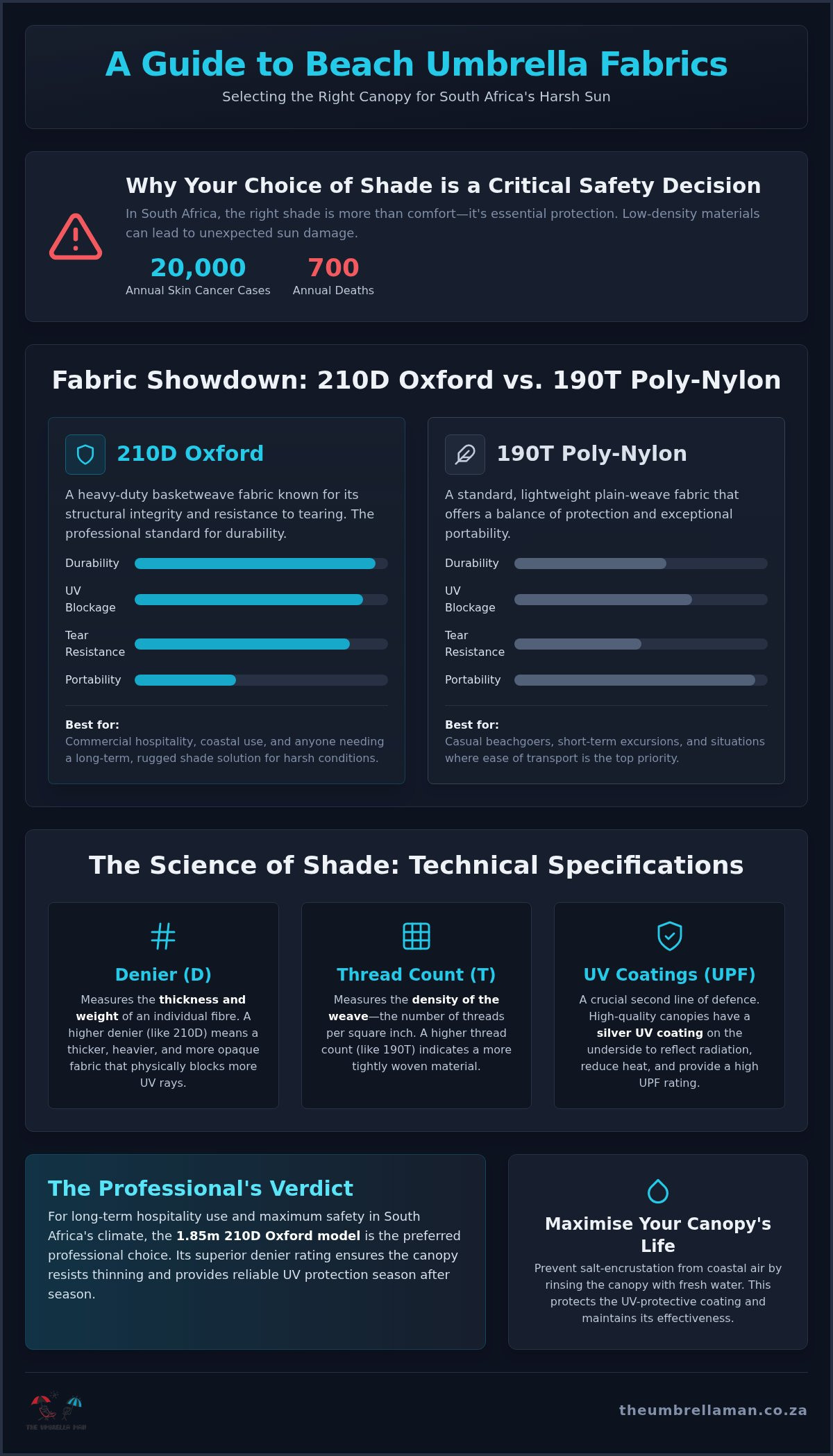
With South Africa recording approximately 20,000 cases of skin cancer and 700 deaths annually, the choice of shade is no longer a matter of aesthetics but a critical safety requirement. It’s frustrating to invest in a poly nylon beach umbrella South Africa only to find the fabric thinning or the colour fading after just one season on the coast. Many people believe that any canopy provides adequate protection, yet the reality of UV penetration through low-density materials often leads to unexpected sun damage despite being under cover.
You’ll learn to master the technical distinctions between 210D Oxford and 190T poly-nylon fabrics, ensuring you can select a durable, high-UV resistant solution that withstands our harsh climate. This guide examines how denier ratings and weave density influence long-term performance. We provide the clarity needed to choose an umbrella that offers maximum safety for your guests or family across multiple seasons.
Key Takeaways
- Recognise the technical distinction between Oxford basketweave and standard poly-nylon to select the right material for your specific environment.
- Learn how higher denier ratings, such as 210D, provide superior opacity and physical UV blockage compared to lighter 190T fabrics.
- Evaluate the trade-offs between portability and durability when you’re choosing a poly nylon beach umbrella South Africa for coastal or commercial applications.
- Discover how to optimise the life of your canopy by preventing salt-encrustation; it’s the best way to ensure the UV-protective coating remains effective.
- Identify why professional-grade 1.85m 210D Oxford models are the preferred choice for long-term hospitality use across the country.
Understanding Oxford and Poly-Nylon Beach Umbrella Fabrics
Selecting the right canopy material is the first step in securing a dependable shade solution for the South African coastline. Oxford fabric is a specialised basketweave material, typically made from polyester or nylon, that provides a distinct texture and enhanced structural integrity. This fabric has long been a staple in the production of high-performance outdoor equipment, such as heavy-duty tents and backpacks, due to its ability to withstand consistent environmental stress. Whilst Oxford models offer ruggedness, the 2.0m 190T poly nylon beach umbrella South Africa remains the standard for casual, lightweight portable use.
The effectiveness of these fabrics isn’t solely dependent on the weave itself. In professional-grade canopies, a UV-resistant coating is applied to the material to block harmful radiation. This is a critical addition for local conditions, where the sun’s intensity can quickly degrade untreated fibres. Looking back at the History of the Umbrella, we see a transition from simple sunshades to these technically advanced textiles designed for longevity and safety.
The Mechanics of the Oxford Basketweave
The strength of Oxford fabric lies in its specific weave structure. Unlike a standard plain weave, the Oxford style involves multiple threads crossing over each other in a basketweave pattern. This creates a thicker, more durable surface that handles tension better than thinner alternatives. One of the primary advantages of this structure is its resistance to mechanical damage. If a small snag occurs, the interlocking threads work to prevent the hole from expanding into a large tear. This is a common failure point for lighter umbrellas in windy coastal areas where sand and debris often strike the canopy.
Poly-Nylon: The Versatile Alternative
For many beachgoers, the 190T poly-nylon option offers an ideal balance between protection and convenience. The “T” in 190T refers to the thread count, which measures the density of the weave. A higher thread count generally indicates a more tightly woven material. Whilst it’s lighter than Oxford cloth, 190T poly-nylon provides sufficient density for everyday use and is exceptionally easy to carry over long distances from the car to the shoreline. Its weight advantage makes it a popular choice for those who prioritise portability. It’s a reliable poly nylon beach umbrella South Africa residents can trust for short-term excursions where ease of transport is the priority.
The Technical Science of Denier Ratings and UV Blockage
Understanding the technical specifications of a poly nylon beach umbrella South Africa requires a look at denier ratings. Denier, often abbreviated as “D,” is a unit of measurement that indicates the linear mass density of a fibre. Specifically, it represents the weight in grams of 9,000 metres of the thread used to weave the fabric. A higher denier rating signals a thicker, heavier fibre, which creates a more substantial canopy. This technical detail is what separates a professional-grade shade from a temporary retail alternative.
When comparing a 210D Oxford canopy to a standard 190T polyester one, the difference in physical opacity is immediately apparent. Whilst the 190T rating refers to the thread count (the number of threads per square inch), the 210D rating describes the actual thickness of those threads. Thicker fibres result in a tighter, denser weave that physically blocks more UVA and UVB rays from reaching the person below. This density is your first line of defence against sun damage.
Why 210D is the Benchmark for South African Sun
In the local market, 210D Oxford fabric has emerged as the professional standard. Because 210D signifies a heavier fibre weight than what is typically found in budget retail outlets, the material is far more robust. It resists the thinning that occurs with prolonged exposure to harsh sunlight. A denser fabric doesn’t just block light; it maintains its structural integrity over several seasons. If you require a solution for commercial hospitality, opting for a 1.85m 210D Oxford model ensures that the canopy won’t become brittle or translucent after a few months of intense coastal exposure.
UV Coatings and UPF Standards
The physical weave is only half of the equation. High-quality umbrellas often feature a silver UV coating applied to the underside of the fabric. This lining serves a dual purpose: it reflects ultraviolet radiation and helps to reduce the temperature beneath the canopy by bouncing heat away. When evaluating products, it is helpful to look for the Ultraviolet Protection Factor (UPF) rating, which indicates how much of the sun’s UV radiation is absorbed by the fabric.
Organisations like the Cancer Association of South Africa provide guidance through CANSA’s Seal of Recognition, which helps consumers identify products that meet rigorous safety standards. A professional-grade silver coating should be smooth and uniform. If the lining appears to be flaking or shows “pinpricks” of light when held against the sun, the protection is compromised. For those seeking reliable shade, exploring the range of professional-grade options from The Umbrella Man is a practical way to ensure your equipment meets these high technical standards.
Comparing Oxford, Poly-Nylon, and Poly-Canvas Performance
Choosing between different canopy materials involves balancing portability against long-term durability. Whilst a poly nylon beach umbrella South Africa is often the first choice for casual weekenders, professional users must consider how different fabrics respond to high UV indices and salt-laden winds. Each material offers a specific weight-to-strength ratio that dictates its best-use scenario. Understanding these differences helps you avoid the common frustration of a canopy that tears or fades prematurely.
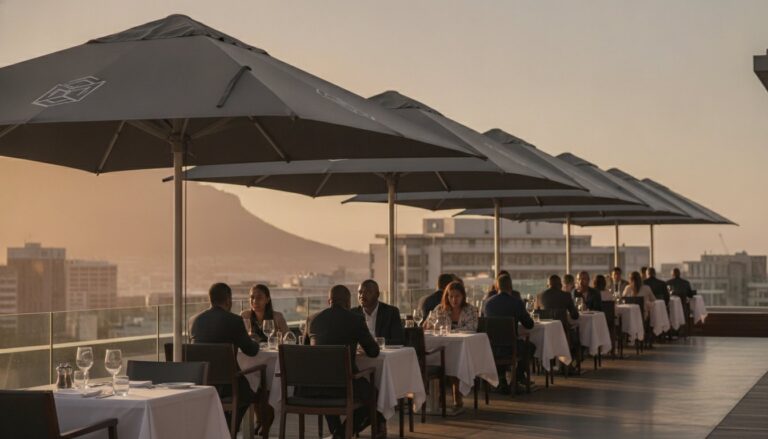
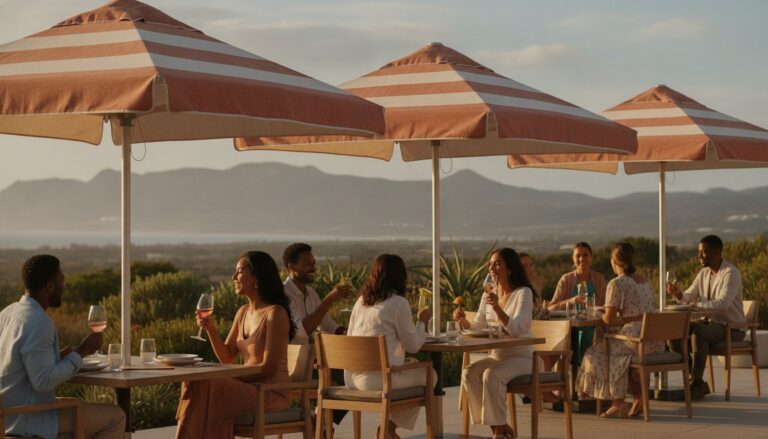
The aesthetic appeal also varies significantly between these options. A technical Oxford fabric has a modern, slightly lustrous finish that holds vibrant colours well, making it ideal for branding. In contrast, poly-canvas provides a traditional, matte appearance that suggests a more permanent, luxury feel. Lifespan expectations follow a similar trajectory; whilst lightweight nylon may last a single busy season, a heavy-duty canvas or high-denier Oxford is designed to remain functional for several years if maintained correctly. For dining establishments seeking to combine visual impact with commercial durability, exploring patterned outdoor umbrellas for restaurants offers a practical way to enhance brand identity without sacrificing fabric performance.
Material Performance Matrix
- 2.0m 190T Poly-Nylon: This is the most portable option. It’s best for occasional use where the priority is a lightweight frame that’s easy to carry across soft sand. It provides essential shade but has the lowest resistance to mechanical wear.
- 1.85m 210D Oxford: This material represents the ideal professional middle ground. It offers superior UV protection and a much higher tear strength than standard nylon without the excessive weight of canvas. It’s the benchmark for frequent personal use and commercial hospitality.
- 2.0m 160gm Poly-Canvas: This is the premium choice for heavy-duty applications. The increased weight makes it highly stable in breezy conditions, and the thick weave provides the most substantial physical barrier against solar radiation.
Selecting the Right Material for Your Environment
For promotional events or high-frequency personal use, the 210D Oxford model is generally recommended. Its ability to withstand constant opening and closing makes it more resilient than a basic poly nylon beach umbrella South Africa. If your requirement involves permanent resort fixtures or semi-permanent outdoor seating, the 160gm Poly-Canvas is more appropriate. This material is also frequently used for garden umbrellas South Africa businesses rely on for patio shade.
Wind resistance is another factor to consider alongside material choice. A heavier poly-canvas canopy requires a sturdier frame to support its weight, whilst a lighter Oxford or nylon canopy is easier to manage in shifting winds. Regardless of the material, ensuring the umbrella is properly secured with a plastic umbrella spike or a weighted base is essential for safety in coastal environments.
Maximising the Lifespan of Your UV-Protected Canopy
Even the highest quality 210D Oxford or poly nylon beach umbrella South Africa requires consistent maintenance to retain its protective properties. Ultraviolet protection is often delivered through specific coatings or dense weaves that can degrade over time if subjected to harsh environmental conditions. Salt-encrustation is a primary concern; as seawater evaporates, it leaves behind abrasive crystals that can physically wear down the fabric’s fibres. Without regular care, these crystals act like sandpaper, thinning the material and compromising its ability to block harmful radiation.
Proper storage is equally vital for longevity. Many users make the mistake of folding their umbrellas whilst the fabric is still damp. This creates a humid environment where mould and mildew can thrive, eventually leading to permanent stains and fabric weakness. By following a structured care routine, you can extend the life of your equipment across multiple seasons, ensuring it remains a reliable barrier against the sun.
Cleaning and Salt Removal
Rinsing your canopy with fresh water after every outing is the most effective way to preserve the material. It’s best to avoid harsh detergents or bleach, as these chemicals often strip away the UV-resistant treatments applied during manufacturing. If a deeper clean is necessary, follow these steps to maintain fabric integrity:
- Rinse the canopy thoroughly with fresh water to remove all salt and sand.
- Use a soft sponge and a mild, pH-neutral soapy solution for any stains.
- Avoid scrubbing vigorously, as this can flake the internal silver UV lining.
- Always allow the umbrella to dry whilst fully open in a shaded area to maintain its shape.
Stability and Fabric Integrity
Mechanical stress is a frequently overlooked factor in fabric longevity. When an umbrella isn’t securely anchored, the wind causes the material to flap violently against the ribs. This constant friction creates micro-tears and stretches the weave, which reduces the overall opacity of your poly nylon beach umbrella South Africa. Using a plastic umbrella spike ensures the frame remains steady, even on open, breezy shorelines. A stable frame prevents the fabric from over-extending and weakening at the seams.
Maintaining the tension of the canopy is also vital for structural integrity. A sagging fabric is more prone to collecting water or being caught by a sudden gust. For more detailed advice on managing these conditions, you can read our guide on choosing a wind resistant beach umbrella South Africa. By taking these practical steps, you ensure that your investment continues to provide a safe environment for your family or guests. To view professional-grade accessories and replacement options, browse the full range at The Umbrella Man.
Sourcing Professional-Grade Beach Umbrellas Nationally
The Umbrella Man has operated as a national manufacturer and supplier since 2009. We specialise in providing shade solutions that meet the rigorous demands of the South African hospitality and commercial sectors. Whilst many retailers offer a basic poly nylon beach umbrella South Africa for individual use, our focus is on high-spec materials like the 1.85m 210D Oxford beach umbrella with UV protection. This model is engineered to provide consistent performance in professional environments where durability is a non-negotiable requirement.
Sourcing directly from a local manufacturer offers significant logistical advantages. For resorts, hotels, and promotional agencies, bulk procurement ensures consistency across an entire property or marketing campaign. It eliminates the variations in quality often found when buying through fragmented retail channels. Customisation is another key benefit of professional sourcing. Branded UV umbrellas serve as functional safety equipment whilst doubling as high-visibility assets for your business. Many of our clients find value in exploring branded restaurant umbrellas South Africa to maintain a cohesive brand presence across various outdoor zones. Restaurant operators looking to elevate their outdoor dining areas further may also benefit from reviewing our guide to patterned outdoor umbrellas for restaurants, which covers how design choices in poly-canvas canopies can reinforce brand identity whilst meeting commercial durability standards.
Wholesale and Commercial Solutions
Procurement at a commercial scale requires a partner that understands the specific needs of the hospitality group. We maintain a steady inventory of professional-grade 1.85m 210D Oxford models, ensuring that businesses can replace or expand their shade assets without facing mismatched styles or colours. Reliability is a cornerstone of our service; we act as a stable pillar for our partners by providing practical solutions that prioritise the functional needs of the end-user. This methodical approach to supply is why we’ve become a trusted, long-term collaborator for various sectors across the country.
The Umbrella Man Quality Standard
Technical excellence remains at the heart of our manufacturing process. We understand that a poly nylon beach umbrella South Africa must endure more than just intense sun; it has to withstand wind, salt, and frequent handling by guests. Our 210D Oxford fabric is selected specifically for its high-UV resistance and superior weight-to-tear ratio compared to standard 190T alternatives. This commitment to professional standards ensures that every unit we deliver meets internal benchmarks for stability and structural integrity.
National delivery capabilities allow us to manage large-volume orders efficiently. Whether you’re outfitting a single beachfront terrace or a national chain of resorts, our team provides a structured and cohesive service experience. We don’t rush the process but instead build a comprehensive picture of your requirements to ensure the final product meets your operational needs. For businesses ready to upgrade their outdoor shade infrastructure, you can Contact The Umbrella Man for professional beach umbrella enquiries to discuss your specific requirements.
Securing Reliable Shade for the South African Coast
Selecting the right canopy material is a fundamental decision that impacts both safety and long-term value. Whilst a standard poly nylon beach umbrella South Africa offers excellent portability for casual use, technical materials like 210D Oxford provide the physical density required for superior UV blockage and mechanical strength. Understanding denier ratings and weave structures allows you to move beyond retail confusion and invest in a solution that withstands the harsh coastal climate without thinning or tearing prematurely.
Consistency and reliability are essential when outfitting commercial spaces or securing family protection. By prioritising high-density fabrics and committed maintenance routines, you ensure your shade remains a dependable barrier for many seasons. The Umbrella Man has been a trusted South African manufacturer since 2009, specialising in the national supply of professional-grade equipment. Our use of high-density 210D Oxford fabric ensures that your guests and family receive maximum UV blockage through a durable, high-spec canopy.
View our range of professional 210D Oxford Beach Umbrellas and secure a durable shade solution today. We’re ready to help you find the perfect balance of portability and protection.
Frequently Asked Questions
Is Oxford fabric better than poly-nylon for a beach umbrella?
Oxford fabric is considered superior for durability whilst poly-nylon is preferred for portability. The basketweave of Oxford cloth provides a higher tear strength and better physical blockage of solar radiation. This makes it the benchmark for hospitality and frequent coastal use. Standard poly-nylon is lighter and easier to carry over long distances, but it lacks the long-term structural integrity found in high-denier Oxford models used for professional shade solutions.
What does 210D mean on a beach umbrella specification?
The “D” stands for Denier, which is a unit measuring the thickness and weight of the individual fibres. A 210D rating means that 9,000 metres of the thread used weighs 210 grams. Thicker threads create a denser, more opaque canopy that provides a stronger physical barrier against UVA and UVB rays. This specification is a reliable indicator of quality compared to the thinner materials often found in budget retail umbrellas.
Does the colour of the umbrella canopy affect its UV protection?
Canopy colour does influence UV absorption, but the fabric density and specialised coatings are more critical. Darker colours generally block more radiation than lighter shades of the same material. However, a high-spec 210D Oxford umbrella with a silver UV lining provides excellent protection regardless of the top colour. You should prioritise the denier rating and the presence of a certified UV coating over the aesthetic choice of fabric colour for maximum safety.
How long does the UV coating on an Oxford umbrella typically last?
A professional UV coating can remain effective for several seasons if the canopy is maintained correctly. Salt crystals and harsh cleaning chemicals are the primary causes of coating degradation. Rinsing the fabric with fresh water after each beach visit prevents salt from abrading the silver lining. If you store the umbrella dry and avoid abrasive scrubbing, the protective layer will continue to reflect heat and block radiation for a significant period.
Can poly-nylon beach umbrellas withstand strong coastal winds?
Poly-nylon models are lightweight, which makes them susceptible to being lifted by strong gusts. To ensure a poly nylon beach umbrella South Africa remains secure, you must use a dedicated anchoring tool. A plastic umbrella spike provides the necessary grip in soft sand to prevent the frame from shifting. Whilst the fabric is resilient, the stability of the entire unit depends on firm ground contact and proper tensioning of the canopy.
Are Oxford umbrellas waterproof as well as UV resistant?
Oxford fabric is naturally water-resistant due to its polyester composition and tight basketweave structure. Most professional-grade 210D models are designed to shed light rain easily, making them versatile for various weather conditions. This water resistance also helps prevent the fibres from soaking up moisture, which keeps the umbrella lightweight even during a drizzle. It’s important to dry the canopy completely before folding it to maintain this resistance and prevent mildew.
What is the best way to clean a 210D Oxford canopy?
The most effective way to clean 210D Oxford fabric is with fresh water and a soft cloth. You should avoid using high-pressure hoses or stiff brushes that might damage the internal UV coating. If there are stubborn stains, a mild soapy solution is sufficient. Always ensure the canopy is completely dry whilst in the open position before storing it. This prevents the growth of mould which can weaken the fabric over time.
Do I need a special base for a 1.85m Oxford beach umbrella?
For beach use, a plastic umbrella spike is the most practical anchoring method for a 1.85m Oxford model. It allows the pole to be driven deep into the sand for maximum stability. If you intend to use the umbrella on a patio or hard surface, a weighted base of at least 15kg is recommended. The 210D fabric is heavier than standard nylon, so a sturdy base is essential to prevent toppling in light breezes.