Modern parasols: a practical guide to choosing the right outdoor shade
The most striking canopy isn’t always the right choice for your outdoor space. With modern parasols, the fit between size, setting and everyday use matters as much as appearance, whether you’re shading a compact patio, a garden table or a hospitality area.
Choosing well starts with a few practical questions: how much area needs shade, where will the support sit, and how often will the parasol be used? Answering these makes it easier to compare styles without overlooking the layout or routine that will shape your choice.
This guide covers placement, design and practical considerations for homes and business settings, as well as what to consider for individual purchases and bulk orders. The Umbrella Man supplies outdoor products including the 2.56m Garden Pattern Umbrella. Use the steps below to build a shortlist that suits your space and intended use.
Key Takeaways
- Modern parasols describe a design approach, not one frame shape or canopy material. Match the style to the setting and intended use.
- Measure the available space and map furniture and foot traffic before deciding on a parasol’s size and support position.
- Compare construction details, product information and care guidance with your practical requirements, rather than judging by appearance alone.
- Households, hospitality venues, retailers, schools and promotional buyers may have different requirements for scale and order quantity.
- The Umbrella Man supplies individual and bulk orders, with outdoor options including the 2.56m Garden Pattern Umbrella.
What makes a parasol modern, and where does it work best?
A parasol is an outdoor shade umbrella, supported by a frame or stand. “Modern” describes a design approach rather than one standard shape, material or opening method. A simple profile, a particular colour or the way a canopy sits in its surroundings can all contribute to a contemporary look. The practical choice still depends on the space and how the parasol will be used.
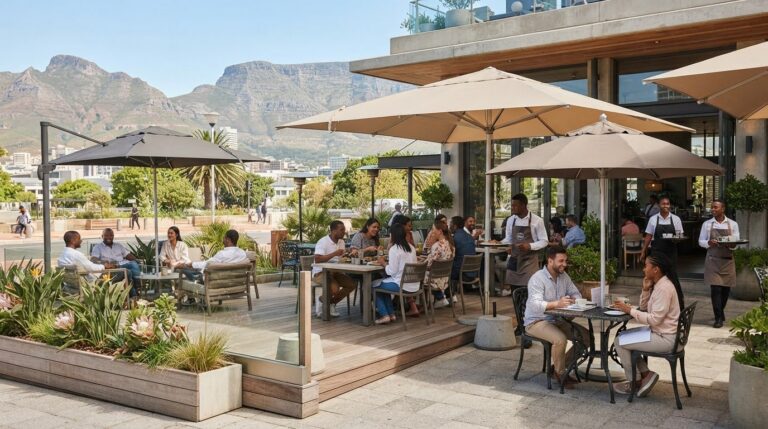
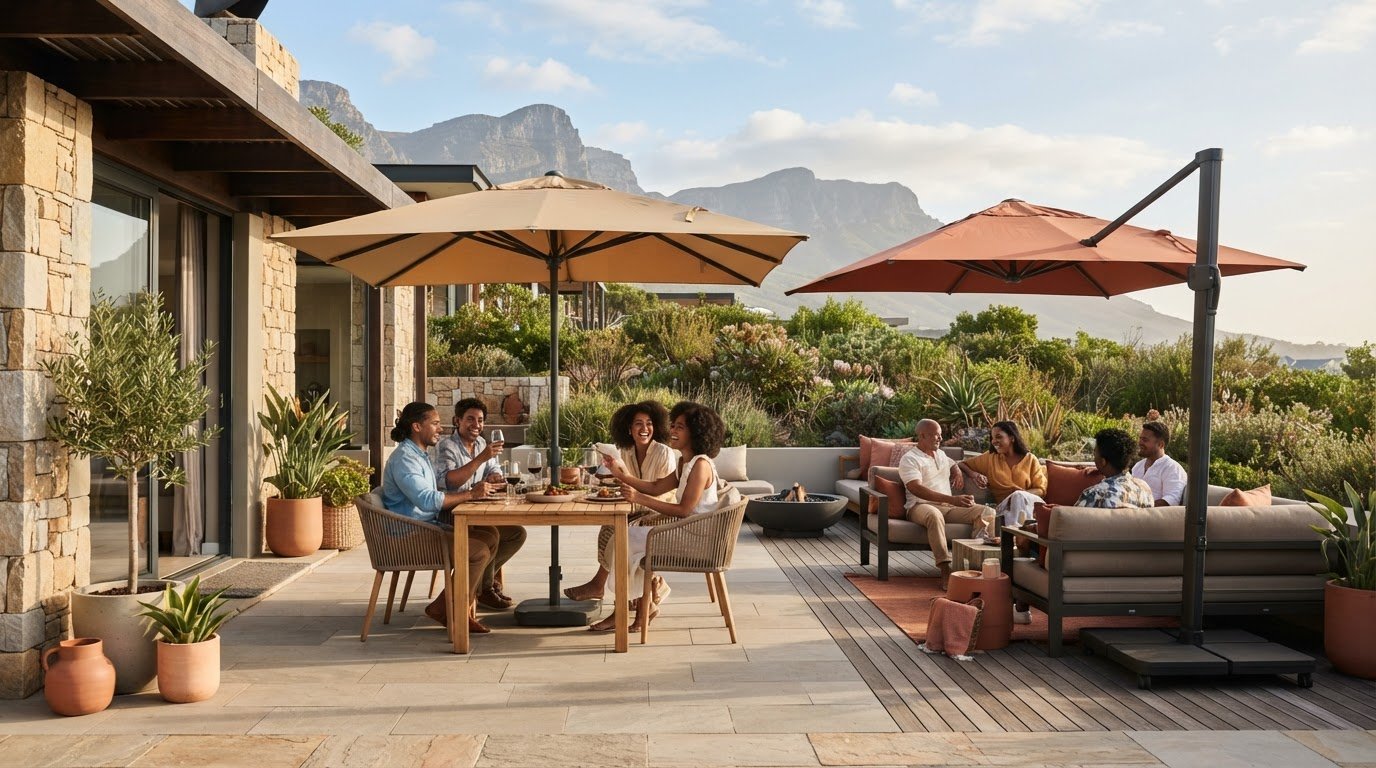
In a garden, consider where people will sit and how the parasol will fit beside planting, tables and seating. Patios often have less room to spare, so measure the footprint and check the position against walls, doors and furniture. For commercial seating, plan around the layout customers and staff need to use, as well as how regularly the area is occupied.
A parasol’s appearance can complement a space, but it needs to suit that space to be a practical choice. Treat style as one part of the decision, alongside fit, use and the conditions the product will encounter.
How is a parasol different from a general outdoor umbrella?
“Parasol” is commonly used for outdoor shade products in residential and commercial settings. “Outdoor umbrella” is a broader everyday term that can describe similar products. The distinction is not always consistent, as suppliers may organise and name product categories differently. A label alone doesn’t tell you the support arrangement, frame shape, canopy fabric or operating mechanism. The general Umbrella (Parasol) overview provides background on the terms and their functions.
Which outdoor settings can a modern parasol suit?
Plan for the specific setting. In a garden, note where people will sit and how the shade relates to the surrounding space. On a patio, measure the floor area and keep routes through the space clear. For hospitality seating, consider the table layout and how often the parasol will be used. At an event, temporary placement and the arrangement of attendees may determine what is practical.
Outdoor conditions and patterns of use vary, so think about how often the parasol will be put up and taken down. A product used occasionally at home has a different routine from one used regularly at a venue or event. Before choosing a style, record the available space, seating arrangement and frequency of use. These details provide a better basis for comparing options than appearance alone.
Which modern parasol design choices affect appearance and everyday use?
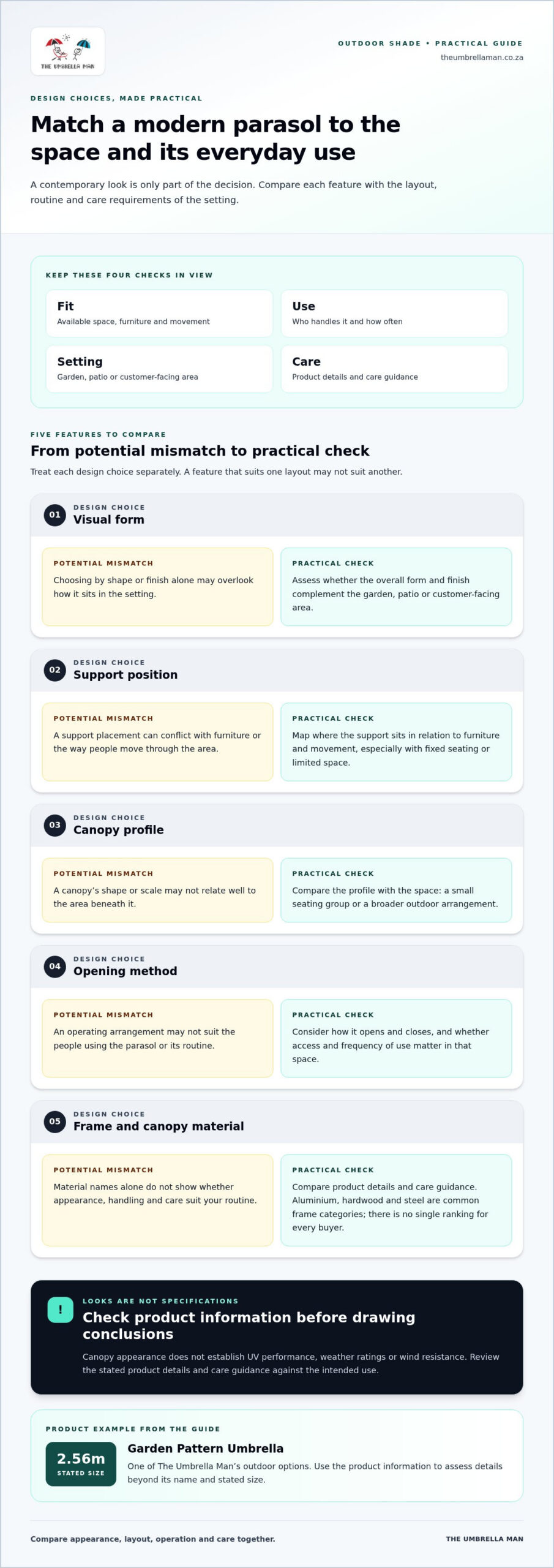
Compare a parasol’s features separately rather than treating it as one overall style choice. Its shape and finish affect how it looks beside furniture, while the support position determines where it can be placed. Canopy profile influences the impression it creates overhead, and the opening arrangement affects everyday handling. Assess each feature against the space to make your shortlist more useful.
| Design choice | What to assess | Suitable context |
|---|---|---|
| Visual form | Whether the overall shape and finish complement the setting | Gardens, patios and customer-facing areas |
| Support position | Where the support sits in relation to furniture and movement | Layouts with fixed seating or limited space |
| Canopy profile | How its shape and scale relate to the area beneath it | Small seating groups or broader outdoor arrangements |
| Opening method | How the parasol is opened and closed during normal use | Spaces where access and frequency of use matter |
| Material | Appearance, handling and care requirements | Set-ups with different routines and maintenance needs |
How should frame material influence a parasol shortlist?
Aluminium, hardwood and steel are common material categories to compare, but they don’t describe every parasol. Consider how each frame’s appearance suits the setting, how it will be handled during normal use and what care it requires. There is no single material ranking that works for every buyer. Compare the product details and care guidance with your intended routine.
What should buyers compare in the canopy and operating style?
Compare canopy shape, colour and pattern with the furniture and surrounding finishes. A bold pattern can become a feature, while a simpler colour may sit quietly within an established layout. Then consider how the canopy opens and closes: the mechanism should suit who will use it and how often. Don’t infer UV performance, weather ratings or wind resistance from appearance alone.
The 2.56m Garden Pattern Umbrella is one of The Umbrella Man’s outdoor options. Its name and stated size provide a starting point for comparison; use the product information to assess other details. For public settings, the Benefits of Shade Structures discussion offers wider context for planning shared shade. Apply the same careful approach when reviewing product information and care guidance.
A useful shortlist for modern parasols weighs appearance, layout, operation and care together. Compare outdoor umbrella options from The Umbrella Man to find products suited to your setting.
Modern parasols: how to compare style with durability and practical needs
A modern appearance doesn’t establish whether a parasol is durable or suited to a particular setting. A clean profile, coordinated colour or patterned canopy may complement an outdoor space, but these details don’t explain how the product is constructed, cared for or intended to be used. Treat visual preference and functional requirements as separate parts of the decision.
A parasol’s suitability depends on its stated specifications and how you intend to use it. First define what the product needs to do, then compare the available information with that use. Don’t treat attractive styling or broad product descriptions as evidence of performance.
How can buyers assess durability without relying on appearance?
Start with the product information. Review stated materials, construction details and care instructions, then compare similar details across your shortlist. Words such as “premium” or “robust” are descriptions, not construction details on their own. Look for information about what the product is made from and how it should be cared for. Don’t assume a service life or performance guarantee unless one is stated.
Care guidance also affects everyday suitability. A parasol that fits a household routine may be less convenient for a venue with frequent use, or the reverse. Consider who will handle it, how often it will be opened and closed, and what care the instructions call for. These questions help distinguish options that look similar but have different documented requirements.
How should buyers interpret protection and weather claims?
Read protection statements as written. Colour, fabric appearance and canopy coverage don’t establish a particular level of protection by themselves. Sun, rain and wind performance are separate considerations, so a statement about one shouldn’t be taken as evidence about the others. Look for explicit product information relevant to your intended use, and don’t assign a rating or weather suitability that the documentation doesn’t state.
Outdoor conditions and patterns of use vary. A parasol intended mainly to provide shade for outdoor seating has a different brief from one expected to remain in place through changing weather. Define the requirement first, then compare it with the product information rather than relying on assumptions.
To make the decision clearer, divide your notes into two groups:
- Appearance: record preferred shape, colour and pattern, and how each option relates to the furniture and surroundings.
- Practical requirements: note the intended use, documented materials and construction, care instructions, and any stated protection or weather information.
Then compare the two groups. A strong visual match may still be unsuitable if the documented details don’t meet your needs. Equally, a product with relevant specifications may not suit the setting if its shape or canopy design clashes with the surroundings. Assess modern parasols through both lenses, using stated information to guide practical expectations and personal preference to help make the final choice.
How to choose a modern parasol for a home, venue or bulk requirement
Start your shortlist with the space and the purpose of the shade, not a product image. Follow the same steps whether you’re planning for a household or comparing options for an organisation. The details you record will help clarify the right scale, layout and order quantity.
- Measure the space. Record the area where shade is needed, along with nearby walls, doors and other features that affect placement.
- Map the layout. Mark the furniture, seating areas and routes people use. This shows where a parasol could sit without disrupting movement.
- Define the use. Consider who will use the area, how often the parasol will be opened and closed, and whether it needs to be stored between uses.
- Compare requirements. Weigh appearance against stated product information, care needs and the practical demands of the setting.
- Shortlist options. Keep products that suit both the measured space and intended use, then compare their documented details.
What should households assess before choosing a parasol?
Start with the area to be shaded and the furniture around it. Leave room for movement and consider where the parasol can sit in relation to the seating. Then think about your routine: a product opened often may call for different handling and storage considerations from one used occasionally. Balance preferences for colour and pattern with the care instructions and stated product information.
What changes when choosing parasols for a business or bulk order?
Businesses should assess how shade fits the venue’s layout and the experience they want to create for customers, visitors or learners. Hospitality and retail settings may have several seating areas to coordinate; schools and event organisers may plan for different uses and storage needs. For bulk requirements, define the quantity and intended use together, then consider consistency across areas, repeat-use routines and care requirements.
Order quantity should support a clear product brief, not replace one. Note how many areas need shade, whether their layouts are alike and where the products will be stored when not in use. Promotional buyers can also consider whether an umbrella will form part of a wider branded set-up. These details help distinguish a household purchase from a coordinated business requirement.
The Umbrella Man supplies individual and bulk orders, with outdoor options including the 2.56m Garden Pattern Umbrella. Use your shortlist to compare options for the intended space, then explore outdoor umbrella options.
Explore The Umbrella Man’s outdoor umbrella options for your requirements
A shortlist based on your space, intended use and order quantity is a practical starting point for choosing outdoor shade. The Umbrella Man supplies and manufactures umbrellas and outdoor products for individual and commercial customers. Its range includes the 2.56m Garden Pattern Umbrella, an option to consider when looking for garden shade.
Rather than choosing on appearance alone, compare the product category and available details with the requirements you have identified. This keeps the decision grounded in how and where the umbrella will be used, whether you’re buying for a home or a business.
Which confirmed product is relevant to a garden parasol search?
The 2.56m Garden Pattern Umbrella is a named garden-shade option. Use its stated size and product name as part of your shortlist, then consider how it relates to the area you intend to shade and the surrounding arrangement. Don’t assume details about its frame, canopy fabric, opening system or weather performance from the name alone.
How can individual and business buyers take the next step?
The Umbrella Man supplies individual purchases and bulk orders for household and commercial requirements. Before comparing options, note the intended setting, number of umbrellas and product requirements. For a business, consider whether multiple areas need a consistent approach; for a household, focus on the specific outdoor space and how it will be used.
A concise brief can make comparisons more straightforward. Include:
- Setting: garden, patio or another outdoor area.
- Quantity: one purchase or a bulk requirement.
- Use: who will use the space and how the umbrella fits into its regular routine.
- Selection priorities: preferred appearance and the product information that matters to your decision.
These details help you compare products with your requirements rather than relying on assumptions about specifications. For buyers considering modern parasols, the right option depends on matching the product category to the setting and intended use. Household and multi-unit business purchases may share priorities, but quantity and use will shape the comparison.
With your requirements in hand, explore The Umbrella Man’s outdoor products.
Turn your shortlist into a confident choice
Before choosing, gather your measurements, a simple sketch of the seating layout and a note of how the shade will be used. These give you a clear reference point as you compare options and help keep visual preferences aligned with practical needs. For a business purchase, include the number of areas and umbrellas; for a home, focus on the spot where shade matters most.
Use that brief to judge whether a parasol suits your needs or simply appeals at first glance. The right fit is the one that works for your setting and routine. With modern parasols, a considered choice starts with knowing what you need the shade to do.
Ready to compare options? Explore The Umbrella Man’s outdoor products and use your requirements to guide your choice.
Frequently Asked Questions
Are modern parasols suitable for commercial outdoor spaces?
Yes, modern parasols can suit commercial spaces when their size, documented specifications and care needs fit the venue’s routine. For a café, consider how shade placement affects customer seating and staff moving between tables. A school or event space may have different storage and supervision needs. Review product information against the setting, and plan how the parasols will be positioned and managed during use.
Can a parasol provide protection from both sun and rain?
Some parasols may be intended to provide shade and some cover from rain, but don’t assume both from the canopy’s appearance. Check the product’s stated protection and weather information, as sun and rain performance are separate considerations. If you need cover for a particular purpose, use explicit specifications as your guide. Colour or fabric appearance alone doesn’t establish a protection level or suitability in wet weather.
How do I clean and care for a parasol canopy?
Follow the care instructions for the specific canopy, as cleaning methods can vary by material. As a cautious starting point, remove loose dirt gently and avoid harsh cleaning products unless the instructions allow them. If spot cleaning is permitted, test an inconspicuous area first. Let the canopy dry fully before closing it for storage, and address marks promptly rather than allowing dirt to build up.
What is the difference between a freestanding and cantilever parasol?
A freestanding parasol is supported by a pole positioned beneath or near the canopy, with a base or other support holding it in place. A cantilever design places its supporting structure to the side, leaving the area directly beneath the canopy more open. The layout can influence which arrangement works better. Consider furniture placement, available floor space and how people need to move around the shaded area.
Can a parasol be used on a balcony or compact patio?
A parasol may work in a small outdoor area if its footprint and support arrangement fit without obstructing doors or walkways. Measure the usable floor space, including room around the furniture, and account for the canopy’s reach when open. On a balcony, consider how the support can be positioned securely and whether the parasol could affect neighbours or shared access.
What happens if a parasol is exposed to strong wind?
Strong wind can place substantial force on a canopy and its support, potentially shifting or damaging the parasol. Close it when conditions become gusty, following the product’s instructions, and don’t leave it unattended in unsettled weather. A parasol shouldn’t be treated as a permanent wind barrier. If the product states a limit or specific operating guidance, follow that information rather than relying on appearance or assumptions.
How should a parasol be stored when it is not in use?
Before storing a parasol, clean it as directed and allow the canopy to dry fully to help prevent dampness being trapped in the folds. Close and secure it according to its instructions, then keep it in a dry, ventilated place where it won’t be crushed or obstruct a walkway. If it will remain unused for an extended period, check its condition before putting it back into service.