What Makes an Umbrella Windproof? How to Assess Its Design
What if an umbrella’s ability to handle wind depends less on a “windproof” label than on how its canopy releases pressure and its frame flexes? A sudden gust can invert or damage an umbrella, so it’s worth looking for clear evidence before choosing one. The phrase what makes an umbrella windproof can be misleading: it has no universal industry definition, and the label may not refer to a formal test.
You don’t need to rely on the label alone. This article explains how canopy vents, shape and frame materials can influence wind resistance, what to check in product details, and why even a well-designed umbrella has limits in gusty conditions.
We’ll also look at how manufacturers can substantiate performance claims, using The Umbrella Man’s 32″ Air-vented Fibreglass Golf Umbrella as an example of an air-vented design, not as evidence of a wind rating. By the end, you’ll have a practical checklist for comparing umbrellas and using them thoughtfully.
Key Takeaways
- Assess the canopy and frame together: their design affects how wind loads are managed.
- To judge what makes an umbrella windproof, look beyond the label and check whether performance claims are supported by test information.
- Compare visible features, such as vents and frame construction, with details that need confirmation from the manufacturer.
- When gusts pick up, keep a secure grip and close the umbrella rather than forcing it open or using it as a wind shelter.
- Choose for the conditions you expect, while remembering that no design guarantees an umbrella will withstand severe gusts.
What makes an umbrella wind-resistant, and what does “windproof” really mean?
A gust catches the canopy, the ribs strain, and the umbrella turns inside out. It’s a familiar problem, but not every umbrella responds in the same way. The useful question is what makes an umbrella windproof, or, more accurately, which design features help it manage wind forces without inverting or breaking.
Wind resistance means an umbrella can manage pressure and flex under wind. It doesn’t guarantee the umbrella will remain undamaged in every condition. The canopy, ribs and joints work together to handle the force. For background on how these parts fit into broader umbrella history and design, see the overview on Wikipedia.
Is any umbrella truly windproof?
“Windproof” is a product description, not proof of a particular tested wind-speed rating. A rating or test result is more useful when the manufacturer explains how it was established and which conditions it covers. Performance also depends on gust strength and direction, how exposed you are, and how the umbrella is held. Strong or shifting winds can overwhelm even a carefully designed umbrella, so don’t treat the label as a promise of complete protection.
Why wind can turn an umbrella inside out
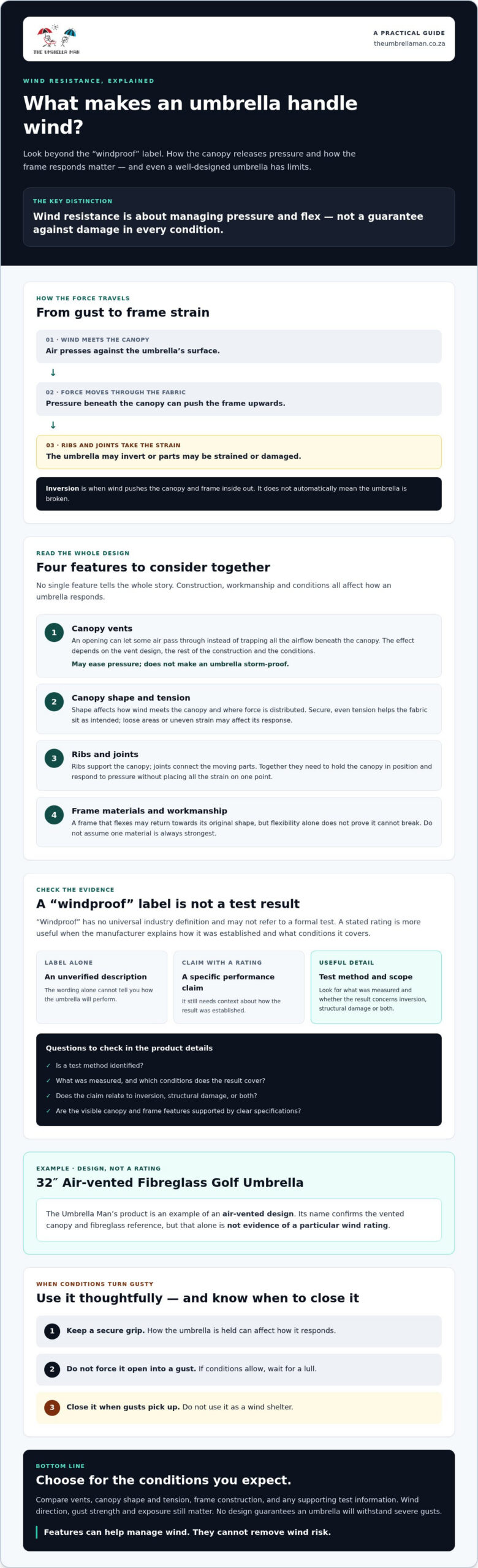
Wind presses against the canopy and transfers force through the fabric to the ribs and connecting joints. If pressure builds beneath the canopy, it can push the frame upwards and flip the umbrella inside out. This is called inversion. It can strain or damage parts, although inversion does not automatically mean the umbrella is broken. Opening it directly into a gust exposes a broad canopy to sudden force, so wait for a lull if conditions allow.
Distinguish a design claim from evidence. “Wind-resistant” may describe an intention, while a stated rating makes a specific performance claim that still needs context. Check whether the manufacturer identifies a test method, explains what was measured, and clarifies whether the result concerns inversion, structural damage or both. Without that information, the wording alone can’t tell you how an umbrella will perform in real conditions.
For a practical comparison, think of wind resistance as a matter of degree. A design may help manage pressure or tolerate flex, but it can’t remove the effects of exposure, handling or changing weather. Keep that distinction in mind as you assess the features that influence how an umbrella handles wind.
How vents, canopy shape and frame design help an umbrella handle wind
Wind resistance depends on how the whole umbrella responds, not on one feature in isolation. Vents, canopy shape, fabric tension, ribs and joints each affect how wind pressure is managed. Understanding their roles helps you assess product details without assuming one material or construction style will suit every use.
What an air-vented canopy does
An opening in the canopy can let some air pass through instead of trapping all the airflow beneath it. This may ease pressure, although the effect depends on the vent’s design, the umbrella’s overall construction and the conditions. Vents can ease wind pressure, but they can’t remove wind risk or make an umbrella storm-proof. The 32″ Air-vented Fibreglass Golf Umbrella is a confirmed example of an air-vented design, not evidence of a particular wind rating.
Canopy shape and tension matter
The canopy’s shape influences how wind meets its surface and where force is distributed. Secure, even tension helps the fabric sit as intended, while loose areas or uneven strain may affect how it responds to a gust. Consider these details alongside canopy size and intended use. A vent may help air pass through, but it doesn’t compensate for every other part of the design.
How ribs, joints and materials contribute
Ribs support the canopy, while joints connect the moving parts of the frame. Together, they need to hold the canopy in position and respond to pressure without placing all the strain on one point. A frame that flexes under stress may return towards its original shape, but flexibility alone doesn’t prove it cannot break. Material, construction and workmanship all matter, so don’t assume one material is always strongest.
Fibreglass is included in the confirmed golf umbrella’s name, but that alone doesn’t establish how it performs under a particular wind load. Look for clear product specifications and supporting evidence rather than drawing conclusions from a material label. For another perspective on how to compare wind-resistant umbrellas, Wirecutter outlines its approach to assessing umbrella performance and durability.
For a product-level example, review The Umbrella Man’s air-vented fibreglass golf umbrella. Treat its confirmed design features as points to assess, not as a guarantee of performance in severe or changing winds.
How to compare wind-resistant umbrellas without trusting the label alone
A useful comparison looks beyond the words “wind-resistant” or “windproof”. Separate details you can see or confirm in a product description from performance claims that need supporting documentation. This makes it easier to assess what makes an umbrella windproof without treating a label as proof.
| What to compare | Visible or stated detail | What to verify |
|---|---|---|
| Vents | Whether the canopy has openings or an air-vented design | How the vent is constructed and what performance benefit is claimed |
| Canopy | Fabric attachment, coverage and whether the canopy appears evenly tensioned | Fabric specifications and how the canopy is secured to the frame |
| Frame | Stated rib and frame materials; visible joints and connections | Construction details and any evidence supporting durability claims |
| Testing | A stated wind rating or mention of testing | The test method, conditions, results and whether evidence is independently verified |
Which design details are worth checking?
Look for specific descriptions of vents, canopy attachment, ribs and frame materials rather than broad claims such as “ultra-strong”. If a product lists a wind rating, check whether it names a test method and provides supporting evidence. ASTM F3512-21, for example, sets out a test method for evaluating the structural integrity and durability of market umbrellas; it doesn’t set a mandatory wind-speed rating for products. A claim without clear evidence is a reason to ask questions, not proof of performance.
Quick checklist: confirm the canopy design, frame materials and construction, then look for a stated test method, supporting results and a clear explanation of the conditions covered. Always consult official manufacturer test reports or original evidence rather than relying on unverified links or third-party search listings when shopping with The Umbrella Man.
Does umbrella size or intended use change the choice?
Yes. A compact umbrella may suit everyday carrying, while a larger canopy offers more coverage. All else being equal, a larger canopy also presents more surface area to the wind. Golf umbrellas are intended to cover more space, so consider where and how you’ll use one, as well as the conditions it may face. For beach-specific considerations, see the Choosing the Best Wind Resistant Beach Umbrella in South Africa: 2026 Buyer’s Guide.
How to use an umbrella more safely when conditions turn gusty
A wind-resistant design can help manage pressure, but safe handling still matters. Check the weather and your surroundings before opening an umbrella, especially in exposed places where gusts can change direction. If conditions are strengthening, prioritise control and safety over the product label or the wish to keep using it.
- Check conditions: Notice gusts and changing wind direction before opening the umbrella.
- Position yourself securely: Stand where you have stable footing and room to move, away from hazards and crowded paths.
- Keep a firm grip: Hold the handle steadily and stay aware of how the canopy responds.
- Close it if gusts increase: Don’t force it open against strong wind or use it as a wind shelter.
What should you do when a gust catches the canopy?
If the canopy pulls hard or becomes difficult to control, move towards a sheltered place and close the umbrella as soon as you can do so safely. Don’t pull or twist a stressed frame back into position while it’s open. Once conditions are calm, check for visible damage, such as bent ribs, loose joints, tears or a handle that no longer feels secure. If anything looks damaged, don’t use it until you can establish that it’s safe.
When should you stop using an umbrella outdoors?
Stop if the canopy repeatedly inverts, the frame bends or the handle becomes difficult to control. There’s no single wind-speed threshold that suits every umbrella and setting. Exposure, gust direction, canopy size and how securely you can hold it all affect the situation. In changing conditions, judge what’s happening around you rather than relying on a “windproof” claim. Knowing what makes an umbrella windproof can inform your choice, but it shouldn’t override the decision to close it.
An air-vented design may be one feature to consider for outdoor use, but it doesn’t make it sensible to continue in conditions you can’t manage. The Umbrella Man’s 32″ Air-vented Fibreglass Golf Umbrella is a confirmed example of that design type, not a guarantee of performance in gusts. The article Why Air-Vented Designs are Essential for Golf Tournaments may offer further context.
For more information, review the air-vented fibreglass golf umbrella and assess its stated details alongside the conditions in which you plan to use an umbrella.
Choosing an umbrella for wind resistance: features first, realistic expectations
A sensible choice starts with how and where you’ll use the umbrella. Think about exposure to wind, how much coverage you need, whether you’ll carry it regularly and how often it will be used. These factors help you decide which features matter, rather than relying on a “windproof” label to make the choice for you.
Match umbrella features to the conditions and use
For everyday use, portability may be a priority, while outdoor activities may call for more coverage. A larger canopy can provide more shelter, but it also presents more surface area to the wind, all else being equal. Consider the usual setting too: an umbrella used in an exposed space may face different conditions from one used for short trips between sheltered areas.
For golf, coverage and an air-vented canopy may be relevant design considerations. The Umbrella Man supplies a 32″ Air-vented Fibreglass Golf Umbrella. Its name confirms those design features, but doesn’t establish a particular wind rating or guarantee performance in gusts. A guide titled The 32-Inch Fibreglass Golf Umbrella: Professional Standards may offer further context.
What to expect from a wind-resistant design
Vents and flexible components may help an umbrella manage wind forces, but they can’t ensure it will survive severe or changing conditions. The canopy, frame, construction and how you handle it all contribute to its behaviour. Before choosing, look for clear details about materials and construction, then check whether any performance claims include a stated test method and supporting evidence.
In short, choose an umbrella for a defined use, assess its features and product information, and close it when conditions demand it. A considered choice can help set realistic expectations, but sound judgement remains essential when the wind picks up.
Explore The Umbrella Man’s umbrella range.
Choose with confidence, and use your umbrella thoughtfully
What makes an umbrella windproof is not a label alone, but how its canopy and frame are designed to manage wind, alongside credible evidence supporting performance claims. Vents and flexible components may help, yet no umbrella is guaranteed to withstand severe or changing gusts. Choose for your intended use, check the construction details, and close it when conditions become difficult to manage.
The Umbrella Man has served the South African market since 2009 and supplies a 32″ Air-vented Fibreglass Golf Umbrella. Its confirmed design features offer a practical example to consider, but they don’t establish a specific wind rating. Compare the available umbrella options and assess their stated details against your needs.
Explore The Umbrella Man’s umbrella range and take a considered approach to your next choice.
Frequently Asked Questions
What makes an umbrella windproof?
No single feature makes an umbrella immune to wind. Vents may let some air pass through, while canopy construction and the frame influence how forces are managed. Performance also depends on gust strength, direction and how you hold the umbrella. Treat “windproof” as a claim to investigate, not a guarantee. Look for clear, relevant test evidence from the manufacturer before relying on a performance claim.
Are vented umbrellas better in the wind?
A vented canopy is designed to let some air pass through, which may help manage pressure compared with a sealed canopy. However, that doesn’t make it suitable for every condition or prevent damage in strong gusts. Assess the whole construction, including the canopy and frame, and check the evidence behind performance claims. If the umbrella becomes difficult to control, close it and seek shelter.
Can an umbrella withstand strong winds without turning inside out?
It depends on the umbrella’s construction and the conditions, so there’s no general guarantee it will stay open. Vents and frame design may help manage wind, but severe or changing gusts can still invert or damage an umbrella. Your grip and exposure to the wind also affect how manageable it is. If you struggle to control it, move to shelter and close it safely.
Does a fibreglass frame make an umbrella windproof?
No. Fibreglass is a frame material, not a guarantee of windproof performance. How it behaves depends on the design, joints, overall construction and conditions. Compare the manufacturer’s product information rather than choosing by material name alone. A frame’s flexibility doesn’t prove it cannot break, and it doesn’t mean the umbrella is safe to use in every gust. Check for specific, substantiated performance details.
Is a bigger umbrella more likely to catch the wind?
A larger canopy presents more surface area to the wind, so size can affect how an umbrella feels and behaves in gusts. The actual response also depends on canopy shape, vents, frame construction and conditions. Choose a size that suits your intended use and coverage needs. If the wind makes the umbrella difficult to hold or control, close it rather than trying to keep using it.
What should I look for when buying a wind-resistant umbrella?
Check for clear details about canopy vents, frame materials, ribs and construction, then look for evidence supporting any stated wind rating. Consider the umbrella’s size and intended use as well. Broad terms such as “windproof” aren’t enough on their own. The phrase what makes an umbrella windproof is best answered by examining the full design and the evidence behind its claims. No feature removes the need for caution.
Should I use an umbrella in a storm?
Don’t rely on an umbrella for protection in severe or unpredictable conditions. Strong gusts can make it difficult to hold, invert the canopy or damage the frame, whatever its design. Follow local weather and safety advice, seek suitable shelter and close the umbrella if you can’t control it. A wind-resistant design can help manage wind, but it isn’t a substitute for caution or appropriate shelter.