Branded Umbrellas for Outdoor Events: A Practical Planning Checklist
A logo on a canopy is only useful if the umbrella suits the setting and the people who will use it. Planning branded umbrellas for outdoor events means weighing visibility against practical details such as the event format, audience, quantity and distribution plan.
It is easy to focus first on colour and logo placement. However, the umbrella format and supply plan also affect how useful and consistent the finished item will be. The Umbrella Man supplies and manufactures umbrellas for businesses, promotional companies, schools and the hospitality sector, with beach, garden, golf and rain umbrella formats.
This checklist will help you match a format to your event, prepare a clear branding and order brief, and plan quantities, delivery and event-day distribution. Working through these decisions in order helps keep the practical requirements aligned with how your organisation wants to be represented.
Key Takeaways
- Decide whether the umbrella’s main role is brand visibility, attendee merchandise or creating a consistent event environment.
- Match branded umbrellas for outdoor events to the intended user and setting, considering portability and presentation before selecting a format.
- Gather artwork and product details in one brief, then review logo legibility at a distance and alignment with your brand guidelines.
- Estimate quantities from attendance and distribution plans, and set internal deadlines for approvals, order coordination and delivery to the event.
Branded umbrellas for outdoor events: define the purpose before choosing
What should an umbrella contribute to your event? Answering this first turns a broad idea into a practical brief. You may want guests to notice your organisation, give attendees useful merchandise or create a coordinated look across an outdoor venue. These aims can overlap, but choosing the main priority helps guide the format, branding and quantity.
Event branding is the planned use of visual identity and practical materials to make an event recognisable and consistent. An umbrella can combine branded visibility with a useful purpose for the person who receives it. The history and types of umbrellas offer useful background, but event planning should start with the people who will use the umbrellas and the role they need to serve.
Set measurable objectives for branded event merchandise
Separate three possible objectives before choosing a product. Brand exposure is about where and how the branding will be seen. Attendee usefulness is about whether the umbrella suits the recipient and is practical to keep or carry. Event presentation is about how umbrellas contribute to a coordinated appearance, such as when staff use them or they are placed in a designated area.
Identify the intended users and likely moment of use. Will guests take an umbrella home, will staff use one during their duties, or will organisers position umbrellas in a particular area? Then choose a simple measure of success. You could record how many were distributed or gather brief feedback after the event about whether recipients found them useful. A clear measure makes it easier to assess whether the merchandise met its purpose.
Build the brief around the event audience and setting
Record the event type, expected attendance, duration and outdoor-use context. A short activation for passers-by has different needs from a full-day school event or a hospitality gathering where umbrellas contribute to the setting. Consider the audience’s age range, role and likely movements around the venue. These details help you decide whether portability, a coordinated appearance or staff access matters most.
- Event details: Record the format, expected attendance and length of the event.
- Outdoor context: Note where umbrellas will be used and whether attendees or staff will carry them between areas.
- Purpose: State whether they are gifts, staff equipment or part of the event environment.
- Success measure: Choose a straightforward way to review distribution or gather recipient feedback.
Keep the brief specific enough to guide decisions, but focused on the event rather than assumptions about what every attendee will prefer. This gives you a clear basis for comparing formats and preparing artwork. For broader considerations around brand visibility, the custom branded umbrellas guide complements this event-focused approach.
Choose branded umbrella formats that suit the event
With the event brief in hand, compare formats by who will use the umbrellas and where. Guests taking merchandise away have different handling needs from staff using umbrellas at a venue. There is no universal best choice: the right format depends on the audience, setting, intended role and practical arrangements. Planning the wider outdoor setting alongside product selection can also help. vFairs’ guide to planning outdoor events covers considerations such as weather and logistics.
Match umbrella format to audience and event role
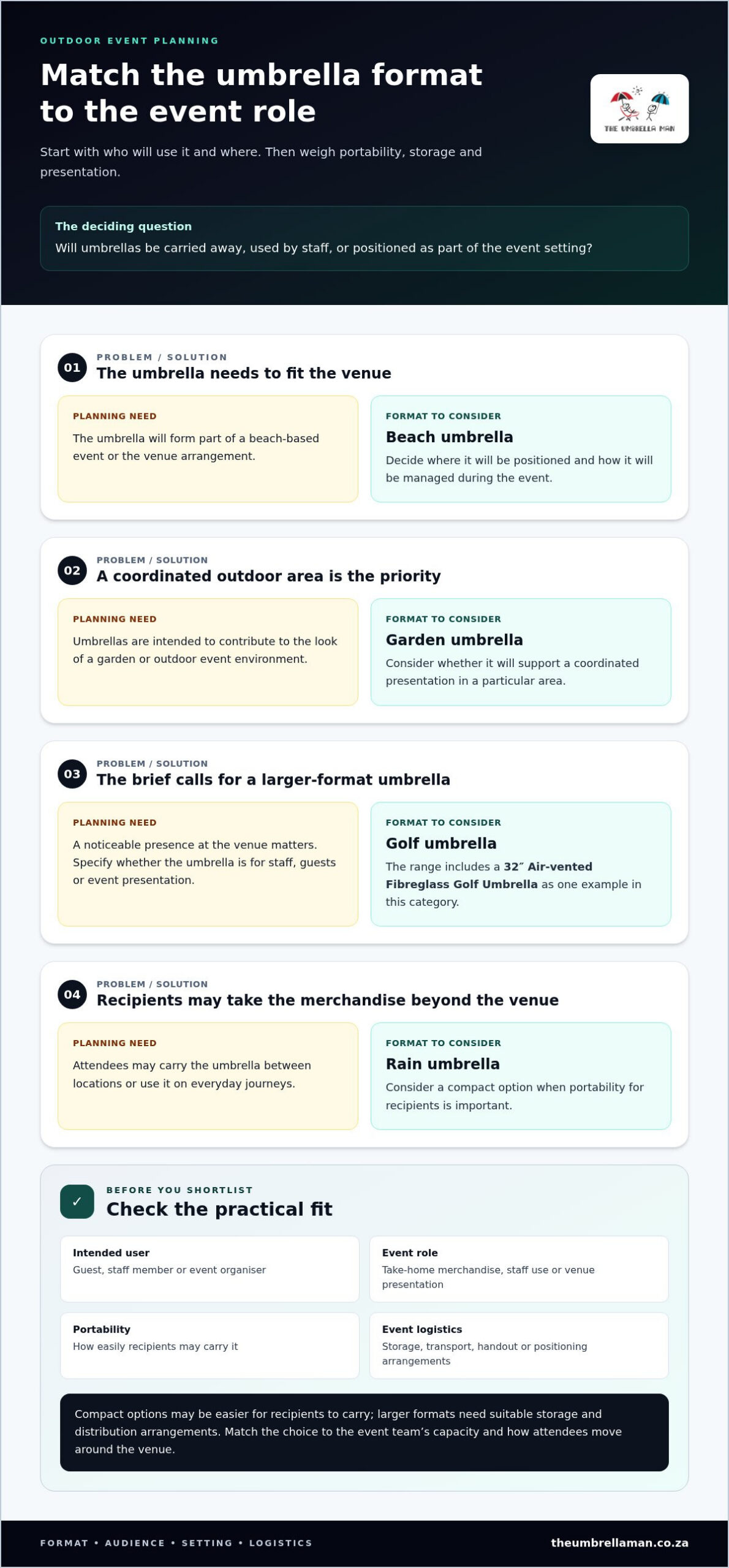
Start by deciding whether umbrellas will be carried away or used at the event. A compact rain umbrella may suit a recipient who needs to carry it between locations, while a larger format may be more appropriate when a noticeable presence at the venue is a priority. These are selection considerations, not guarantees about how a particular product will perform.
Use the category as a starting point, then compare options against the brief:
Beach umbrellas: Consider these for beach-based events or settings where umbrellas form part of the venue arrangement. Decide where they will be positioned and how they will be managed during the event.
Garden umbrellas: Consider these when the intended role is tied to a garden or outdoor event environment. Decide whether they will support a coordinated presentation in a particular area.
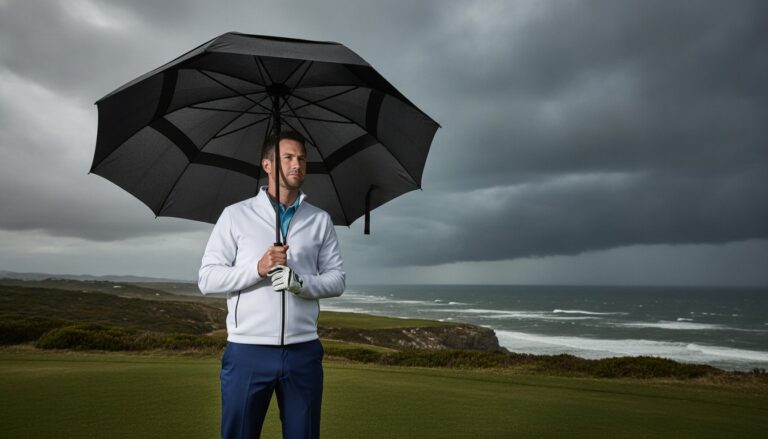
Golf umbrellas: Consider these when the brief calls for a larger-format umbrella. Specify whether it is intended for staff, guests or event presentation.
Rain umbrellas: Consider these as attendee merchandise that may be carried beyond the venue. Think about whether recipients are likely to value a portable umbrella for everyday journeys.
Compare practical handling and presentation needs
Format affects more than appearance. Before settling on an option, consider how the umbrellas will be stored before the event, transported to the venue and handed out or positioned. Compact options may be easier for recipients to carry, while larger formats need suitable storage and distribution arrangements. Match those practical demands to the event team’s capacity and the way attendees will move around the venue.
The Umbrella Man’s range includes beach, garden, golf and rain umbrellas. One golf option is the 32″ Air‑vented Fibreglass Golf Umbrella. Treat it as an example within that category, then assess whether a golf umbrella fits the intended users and event role. The professional golf umbrella guide provides further context on this product category.
As a final check, compare each shortlisted option against the intended user, event role, portability, storage and presentation needs. Organisers can browse umbrella formats for event planning as they develop a shortlist. Choosing a format that fits the brief is more useful than selecting by appearance alone.
Create a clear branding brief for event umbrellas
A clear brief gives everyone involved a shared reference for the umbrella, artwork and approval process. It sets out what the organisation wants represented and which decisions need sign-off. For branded umbrellas for outdoor events, include product details alongside brand assets so the visual treatment is considered in context, rather than treating the logo as an afterthought.
Prepare artwork and brand assets for production
Gather current brand materials before developing the artwork. Include the approved logo, colour references and relevant brand rules, then identify who has authority to approve the final proof. If several teams need to review the design, agree on the review order and decision-maker in advance. This keeps feedback coordinated and helps prevent conflicting revisions late in the process.
- Record the event and product brief. State the umbrella category and intended use, such as attendee merchandise, staff equipment or part of the event environment. Include any product details already selected so the artwork is considered alongside the item.
- Collect approved brand assets. Supply the current logo and colour references, along with any rules about clear space, proportions, backgrounds or supporting text. Use approved versions rather than recreating or altering brand elements.
- Set the design priority. Identify what must remain immediately recognisable, such as the main logo or organisation name. Note any essential secondary information, and avoid crowding the design with details that may be difficult to distinguish.
- Describe the intended layout. Explain the preferred placement and overall appearance in plain language. Treat placement and colour preferences as design direction, with the final arrangement considered in relation to the selected umbrella.
- Agree the approval process. Name the person responsible for sign-off and set out how feedback will be consolidated. Review the proof against the brief before production rather than relying on informal verbal approval.
Clear artwork gives branded merchandise a better chance of being recognised and used as intended.
Review visibility and visual consistency
Assess the design at a realistic viewing distance, not only on a computer screen. Check whether the logo is prominent enough, whether text remains legible and whether the contrast supports quick recognition. Compare the proposed design with existing brand guidelines and consider how it will sit alongside event signage and staff clothing.
Keep the review practical. A design that looks balanced on a flat mock-up may look different across an umbrella’s panels, so use the proof to assess the layout in context. Avoid assuming exact colour reproduction or a particular print method without agreed specifications. Record the required brand colours and ensure the approval material reflects the agreed design. The final brief should make the organisation’s priorities clear while keeping product and production details tied to the selected umbrella.
Plan quantities, ordering and event-day distribution
Attendance is a useful starting point, but it does not determine the order quantity on its own. The number of branded umbrellas for outdoor events should reflect who is meant to receive or use them, how they will be distributed and whether reserve stock is needed. Separate these requirements so an attendance estimate is not mistaken for a complete supply plan.
Estimate quantities and organise bulk requirements
Build the estimate by purpose. Attendee gifts depend on the distribution rules and the number of people eligible to receive one. Count staff requirements separately, as well as umbrellas intended for use around the venue. Then decide whether reserve stock is needed for late changes, damaged packaging or additional recipients. Keep any reserve proportionate to the event plan rather than adding an arbitrary allowance.
- Attendee gifts: Estimate recipients from confirmed attendance and the distribution method, such as one per registered guest or one per group.
- Staff use: Count the team members who need an umbrella for their event role.
- Venue requirements: Record any umbrellas allocated to specific event areas.
- Reserve stock: Decide whether a planned contingency is appropriate and keep it separate from the main allocation.
The Umbrella Man accommodates bulk wholesale orders, which can support event requirements beyond a small team allocation. Include a clear quantity breakdown in the order brief so the planned supply reflects the intended recipients and uses.
Coordinate delivery, storage and distribution
Work back from the event date and set internal deadlines for artwork approval, order coordination and delivery to the event location. Leave time for review and decision-making without relying on an assumed production or delivery lead time. Assign someone to receive the order, check the inventory against the agreed quantities and manage the handover to the event team.
Storage and transport should suit the selected format and order volume. Identify where the umbrellas will be kept before the event, how they will reach the venue and who will move them to the distribution point. Plan handling and storage separately for larger formats and compact umbrellas. If the event also needs shelter, the gazebo selection guide can help you plan that requirement alongside the umbrella order.
Use this sequence to coordinate the process from approval to handover:
- Approve the product brief, artwork and quantity breakdown.
- Coordinate the order against internal deadlines and the event date.
- Assign responsibility for receipt, inventory checks and storage.
- Transport the umbrellas to the venue and hand them to the named distribution lead.
- Distribute them using the agreed method and record remaining stock.
To organise umbrella quantities around your event requirements, plan your event umbrella order with The Umbrella Man.
Source branded umbrellas for outdoor events with The Umbrella Man
A useful checklist brings the event objective, audience, umbrella format, branding requirements and logistics into one practical supply brief. This gives the order a clear basis: the chosen option should suit the people who will use it, the role it will serve and the arrangements for getting it to the event. The Umbrella Man supplies and manufactures umbrellas for the South African market, with a range that includes beach, garden, golf and rain umbrellas.
What to include when requesting an event order
Bring the key decisions together before selecting a product. A concise brief keeps product and order details connected to the event’s actual requirements, whether you need umbrellas for attendees, staff or use around the venue.
- Event purpose and audience: Describe the event, who will attend and what the umbrellas are intended to contribute.
- Use and category: Explain whether the umbrellas will be gifts, staff equipment or part of the event environment, and indicate your preferred category.
- Quantity: Provide the total required, broken down by recipients, staff, venue use and any planned reserve stock.
- Brand assets: Include approved artwork, relevant colour references and brand guidelines for reviewing the visual treatment.
- Approvals and delivery: Identify the person responsible for artwork approval, the internal contact for order coordination and the planned delivery arrangements.
These details are particularly useful when the event has separate allocations or approval steps. For example, an organiser might distinguish guest gifts from staff requirements, then nominate one person to consolidate artwork feedback and another to manage receipt. Recording responsibilities in the brief helps everyone work from the same information and reduces avoidable uncertainty as the event date approaches.
Move from checklist to a considered product choice
Review the brief against the available umbrella categories before settling on a product. A rain umbrella may suit an attendee gift intended to be carried away, while a beach or garden umbrella may fit a different event setting. A golf umbrella is another category to consider against the intended user and presentation needs. The choice should follow the event’s purpose and practical requirements, not the assumption that one format suits every occasion.
The Umbrella Man accommodates individual purchases as well as bulk wholesale orders, supporting different order scales. As a South African supplier and manufacturer, it provides a range for event organisers to consider as they turn a brief into a product choice. Make the request specific about the event, audience, quantity and logistics, and include the approved artwork and decision-making contact with the order information.
Prepare your event brief, then explore suitable umbrella options for your requirements.
Move your event plan towards a confident choice
Make the umbrella decision part of the wider event plan rather than a last-minute merchandise task. Give the team a shared reference for what attendees should notice, how the item will be used and who owns the remaining decisions. This keeps the product choice connected to the experience you intend to create and makes coordination with other event materials easier.
For branded umbrellas for outdoor events, a considered brief helps your organisation assess options against its priorities rather than choosing on appearance alone. Once the intended role and product category are clear, the team can move into procurement with a consistent basis for decisions. A brief that is ready to share also helps everyone involved work towards the same outcome.
Use your event requirements to guide the final selection, then Explore umbrella options for your outdoor event. With a clear plan in place, you can take the next step with confidence and keep your event’s practical needs at the centre of the decision.
Frequently Asked Questions
What are branded umbrellas used for at outdoor events?
Branded umbrellas can provide useful event merchandise, give staff a consistent appearance or contribute to a coordinated venue setting. Their value depends on how they are used: an umbrella given to guests has a different role from one allocated to event staff or placed in a designated area. Decide which purpose matters most, then make the intended use clear in the event plan so the product supports the experience rather than becoming an unallocated item.
Which type of umbrella is best for an outdoor event?
The best type depends on the event setting and how people will use it. A beach or garden umbrella may suit a venue-based role, while a rain umbrella may be more suitable as a personal item to carry away. Golf umbrellas are another category to consider for event or staff use. Compare the options against the venue layout and the way attendees move through it, rather than treating any one format as the default choice.
How many branded umbrellas should I order for an event?
Base the order on the number of intended recipients, not attendance alone. For example, if one umbrella is intended for each registered group rather than each guest, calculate from group registrations and make the distribution rule clear to staff. Add separate counts for staff and venue use. A written allocation plan makes it easier to manage stock on the day and explain who is eligible to receive an umbrella.
How do I prepare artwork for branded umbrellas?
Start with the organisation’s approved logo and current brand guidance. Keep the main identifier prominent, and avoid relying on small text or several competing messages. Review a proof at a size that gives a realistic sense of how the artwork may be seen, and check it against signage or other event materials. Nominate one person to gather feedback so final approval is based on consolidated comments.
When should I organise branded umbrellas for an event?
Start planning once the event format, likely attendance and intended use are clear. Work backwards from the event date, allowing time for internal decisions, artwork review, order coordination and delivery arrangements. Build in time for feedback or changes rather than leaving approval until the final stage. Production schedules can vary, so organise the process early and align milestones with the event team’s deadlines.
Can branded umbrellas be ordered in bulk for events?
Yes. The Umbrella Man accommodates bulk wholesale orders as well as individual purchases. For an event order, organise the quantity into clear allocations, such as guest gifts, staff use and venue requirements. This gives the purchasing team a more useful total and helps the event team understand how the stock should be distributed. Keep the chosen umbrella category and approved artwork details with the quantity breakdown.
What should an event organiser consider besides the umbrella design?
Plan the full handover, not just the appearance. Decide who will receive and check the order, where it will be stored, how it will reach the venue and who will manage distribution. Consider whether umbrellas should be grouped by recipient type or event area, and brief the relevant staff on the allocation method. Clear responsibilities help prevent stock from being misplaced or distributed inconsistently during a busy event.