Alternatives to Titan Shade Solutions parasols for patio shade
A parasol is a practical choice for occasional shade over a defined seating area. If you’re considering Titan Shade Solutions parasol alternatives, the right option depends on the coverage you need, whether you want adjustable shade and how much patio floor space you can spare. Awnings, giant umbrellas and exterior blinds suit different layouts.
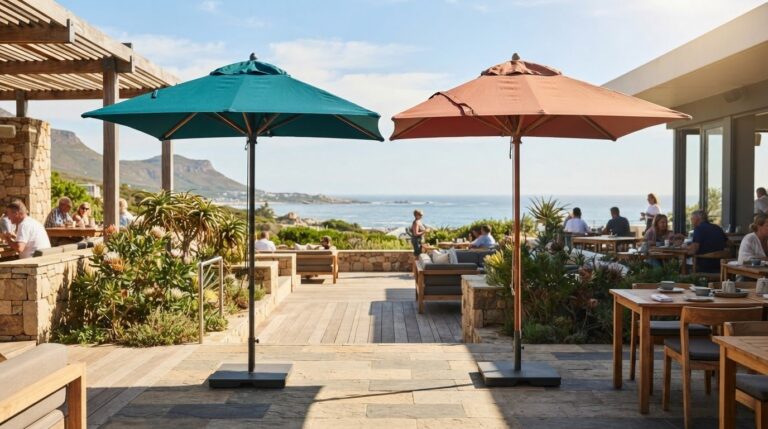
A parasol is flexible: you can move or adjust it as the sun shifts. However, its pole and base take up space, and its coverage may not suit a larger or more permanent outdoor area. Choose based on how you use the space, not simply how large the canopy looks.
This comparison explains how awnings, giant umbrellas and exterior blinds differ from parasols in coverage, adjustability, space and sun protection. It also outlines when a parasol remains a sensible option and when a more fixed solution may better suit your patio in South Africa.
Key Takeaways
- Match the shade option to your patio layout: an awning relates to the building, while a giant umbrella needs space for its support and base.
- Consider how the sun reaches your seating area. Exterior blinds can help address side-on exposure at a suitable opening.
- Weigh flexibility against permanence: parasols can be repositioned, while fixed options are planned around the structure and space.
- Choose a parasol for occasional shade over a defined spot; consider alternatives when you need broader coverage or a more permanent arrangement.
- Assess sun protection alongside coverage and layout, and choose an option suited to how you use the outdoor area.
1. Awnings, giant umbrellas and exterior blinds
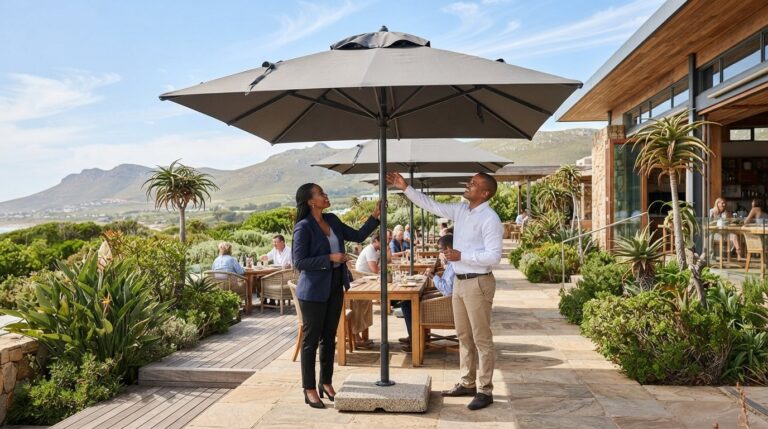
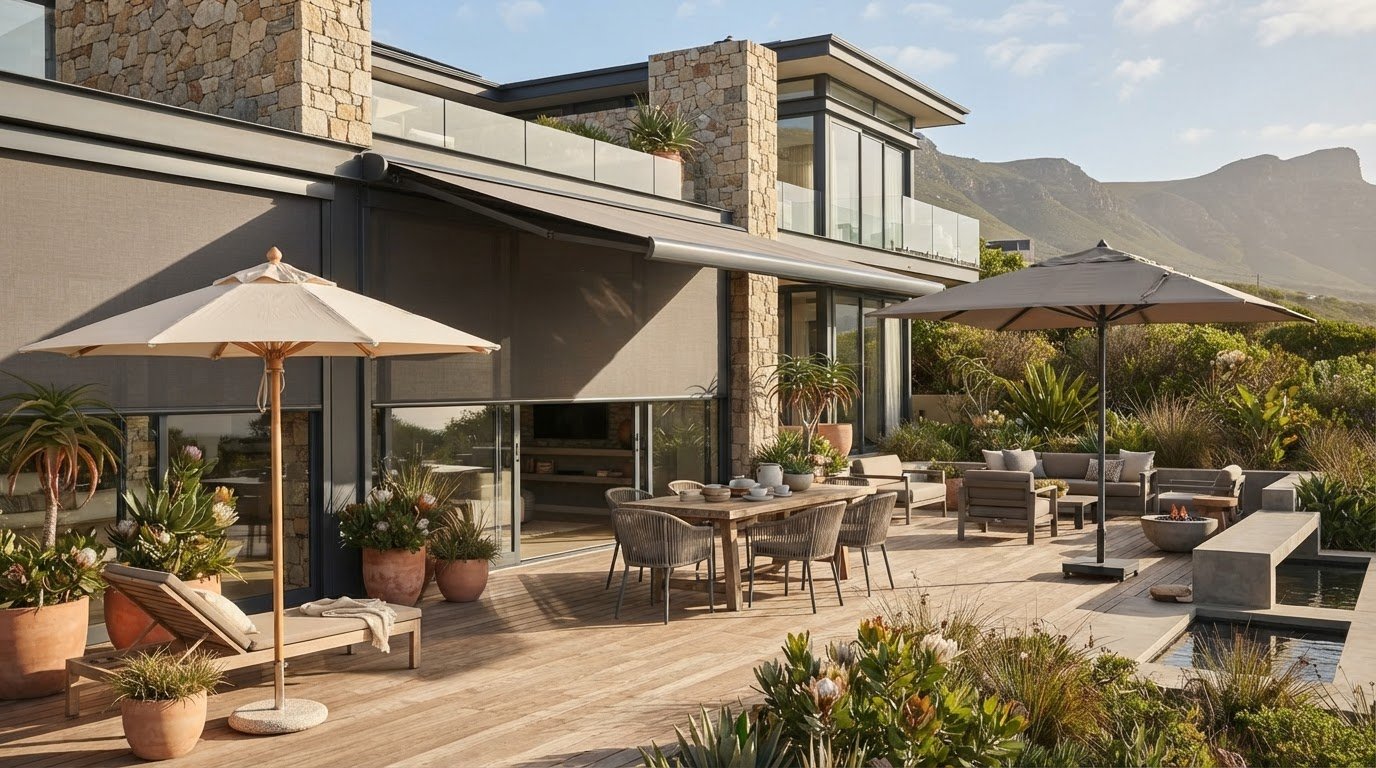
An awning shades the patio beside a building. An arm awning extends from a suitable wall over a seating or dining area. Unlike a freestanding parasol, it doesn’t need a base in the seating space, leaving more room around a patio table or walkway. Its position is tied to the building, so the wall and the area needing shade guide the layout.
Imagine a patio table beside the house. An arm awning can cover the space next to the wall, with the table arranged beneath it. Before choosing this option, consider which part of the patio needs shade and how it relates to the building. The awning’s location depends on the structure, while a seating area further away may need a different arrangement.
A giant umbrella can create a larger defined shaded area, depending on its design and position. It may suit a patio where furniture is grouped around a central spot. The support and base still need space, so plan for them alongside the table, chairs and usual walkways. For example, a base beside a main walkway could obstruct movement, even if the canopy covers the seats.
Position matters as much as coverage. Map out the furniture, then identify where the umbrella’s support and base can sit without obstructing access. Consider whether that position shades the dining area or another priority spot. You can reposition the umbrella if the layout changes, but each new position shifts the shaded area.
Exterior blinds address a different problem: sun entering from the side. They may suit a building opening or outdoor area where side-on exposure affects seating. Unlike a parasol, they don’t need a ground-level base. Their fit depends on the building and opening, so consider where sunlight reaches the patio and which opening faces that direction.
For a practical comparison, look at three things: the building, the furniture layout and the direction of sunlight. An awning attaches to the building and shades the area beside it. A giant umbrella covers a defined spot but needs room for its support. Exterior blinds relate to an opening and can address side-on sun. These differences help narrow your options before you consider how adjustable the shade needs to be.
An arm awning depends on a suitable building, but keeps a freestanding base out of the seating area. With a giant umbrella, plan its position around the furniture and walkways.
2. Coverage, adjustability and floor-space trade-offs
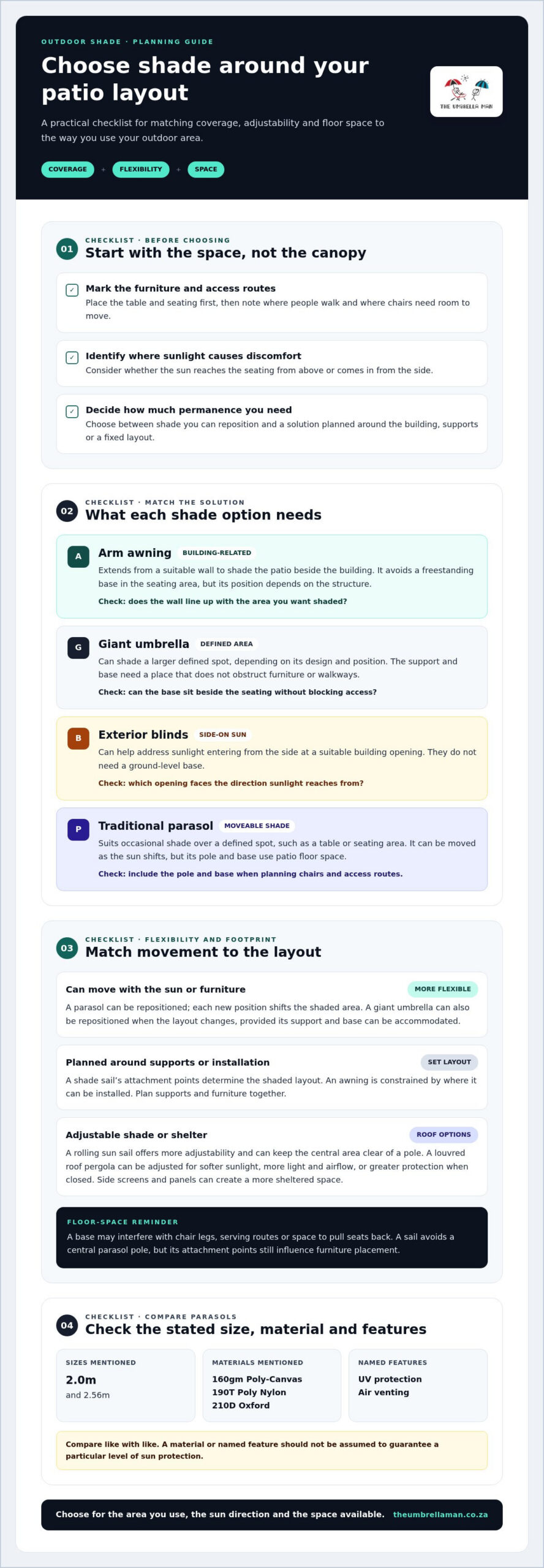
Compare shade by the area you need to cover, not canopy size alone. A traditional parasol can shade a table or seating spot and be moved as the sun shifts. Its pole and base take up floor space, so include them when arranging chairs and access routes. A giant umbrella may cover a larger defined area, but its support and base also need a planned position.
Ask what parasol sizes, materials and features should be compared? Start with the stated size, canopy material and any named feature, such as UV protection or air venting. For context, available descriptions include 2.0m and 2.56m sizes, alongside 160gm Poly-Canvas, 190T Poly Nylon and 210D Oxford materials. Compare like with like, and don’t assume a material or feature guarantees a particular level of protection.
Adjustability affects how shade follows the sun through the day. You can reposition a movable garden parasol as the sun moves or the furniture layout changes. By contrast, a sail shade is generally designed to stay in place, with its attachment points determining the shaded layout. A rolling sun sail offers a more adjustable option and can leave the central area clear of a pole.
A louvred roof pergola offers another kind of adjustment. Its roof can be altered to soften strong sunlight, allow more light and airflow, or provide greater protection when closed. Side screens and panels on aluminium pergolas can create a more sheltered space. These features suit layouts where shade and shelter need to change, rather than follow one fixed arrangement.
Floor space depends on more than the canopy or roof. A traditional parasol’s base can get in the way of chair legs, serving routes or the space needed to pull seats back. A sail shade avoids a central parasol pole, but its attachment points influence furniture placement. A rolling sun sail also needs an installation planned around the chosen layout.
Use a simple planning sequence: mark the table and seating first, note the path people take, then identify where the sun creates discomfort. Next, choose whether movable shade or a fixed layout better suits that area. An awning is limited by where it can be installed, while a shade sail needs a layout planned around its supports. Comparing umbrella sizes and materials can help clarify what a movable option offers before you decide.
A garden parasol offers flexibility when shade needs to shift: it can be moved or adjusted to cover a particular place, such as a table or seating area. When planning for one, account for the pole and base alongside the furniture instead of treating the base as an afterthought. This keeps the shaded spot and furniture layout in view together.
Shade sails allow less adjustment than louvred roof systems, so the choice involves a different balance between flexibility and a set arrangement. An awning is generally constrained by its installation location. For a rolling sun sail, consider the installation in relation to your chosen layout. These differences help match the shade to the way the area is set up, without assuming every system is equally easy to reposition.
3. When to choose an alternative to a traditional parasol
A garden parasol suits occasional shade over a small, defined area, such as a café table or garden seating spot. Choose another solution if the patio needs more permanent coverage, shade across a broader layout or protection attached to a building. When comparing Titan Shade Solutions parasol alternatives, start with how you use the outdoor space.
A pergola suits a more permanent garden shading solution, while a parasol provides simple, occasional shade. A louvred roof can be adjusted to soften sunlight, allow more light and airflow, or provide greater protection when closed. For a dining area used throughout the day, consider how adjustable coverage could support different activities.
Commercial parasol placement needs to account for the support base, furniture and customer movement. The site layout and installation method are key safety considerations. An awning attaches to a building, so its position depends on that structure. These practical factors help with planning without establishing a specific South African legal requirement.
Prices for patio and market parasols in South Africa depend on the product’s size, materials, design and intended use. Delivery costs depend on the item and destination. Compare equivalent products and include delivery in your purchasing decision. Choose among Titan Shade Solutions parasol alternatives based on the intended site, not price alone.
No single brand category suits every patio. Compare South African suppliers by the shade types they offer, such as awnings, giant umbrellas, exterior blinds and pergolas. An awning suits a patio beside a suitable building, while exterior blinds address side-on sun at an opening. These are different solutions, not interchangeable parasol models.
Customer feedback is most useful when it relates to the same product type and setting you’re considering. For a restaurant patio, look for comments about coverage over tables and how supports fit around walkways. For a home garden, focus on whether the arrangement suits everyday use. Don’t treat opinions about one design as evidence about every alternative.
Use a practical decision process before choosing. Mark the seating, dining or play area that needs shade. Identify whether the sun comes from above or the side. Then decide whether the shade should move, attach to the building or stay in a planned position. This turns a broad comparison into a decision based on the actual space.
A giant umbrella can suit a defined outdoor gathering area if its base is clear of walkways. Exterior blinds can address side-on exposure, while an awning shades the area beside a suitable building. A pergola suits a more permanent arrangement. Each option’s suitability depends on the layout and coverage required.
A parasol remains practical for occasional shade over a defined spot. Consider alternatives if the patio needs broader, more permanent coverage or the support and base interfere with the layout. This distinction helps South African households and businesses choose a solution that fits how they use their outdoor space.
4. Limitations of parasols
A parasol usually shades a smaller area than a permanent garden shading solution. That works for a compact table, but may leave nearby chairs exposed. For example, a family using a patio for dining and lounging may need to reposition the parasol as people move between areas. One canopy may not cover every part of a changing layout at once.
The pole and base also affect how the patio functions. Beside a dining table, the base can take up space needed for chair legs or a clear route past the seating. Moving it may improve access, but the canopy will then shade a different spot. Mark the table, chairs and usual walking routes before deciding whether a central support will fit.
Coverage can become less consistent as the sun moves. A parasol over a table at one time of day may not shade the same seats later. Repositioning can help, but a fixed seating layout or a patio beside a building may limit where the base can go. A permanent solution may suit an area that needs more continuous shade.
Stability is another consideration. A parasol relies on its support and base, whereas a permanent garden shading solution is installed as part of the outdoor space. This matters on an exposed patio or in a busy hospitality setting, where shade must fit around furniture and regular movement. Plan placement around the site rather than treating a parasol as a canopy without spatial demands.
Year-round use may also be more limited. A parasol provides occasional shade over a specific seating area, while a permanent structure can serve a defined outdoor space more consistently. For instance, an outdoor kitchen used for different activities may benefit from coverage planned across its working and seating zones. A parasol remains useful for a smaller, changeable layout, but may not meet every need.
Test the layout in practical terms before choosing. Place chairs where people will use them, identify the area needing shade and mark where the parasol base would sit. Then consider whether moving the canopy would disrupt access or leave another area exposed. If the patio needs broader coverage, greater stability or more year-round use, compare permanent garden shading options against the same layout.
These limitations don’t make parasols unsuitable. They clarify where this format works best: occasional shade over a defined spot, with enough room for the support and base. A small garden table may suit that arrangement well. A larger patio with fixed dining and lounging areas may call for a solution designed to cover more space.
5. Sun protection
For UV protection, choose a shade option with a stated UV-protection feature. Some garden parasols offer UV protection and shelter from light summer showers, but features vary. Shade sails can suit sunny courtyards, children’s play areas and seating corners. Awnings and exterior blinds can address exposure beside a building or at an opening.
No single alternative is best for both UV protection and wind resistance. UV performance depends on the product’s stated protection, while wind resistance relates to its design, support and installation. Compare these requirements separately rather than assuming a larger canopy provides stronger protection.
Coverage affects how well shade serves people using a patio. A parasol can provide occasional shade over a particular seating area, such as a garden table. If sunlight reaches the table from the side, an exterior blind may address the exposed opening. An awning can shade the patio beside a suitable building.
For a children’s play area, consider where children spend time and how sunlight reaches the space. A shade sail can suit this setting, as well as a sunny courtyard or seating corner. Its position depends on attachment points, so the shaded area and layout need to work together.
Wind needs a separate assessment. A parasol’s support and base take up space, and a parasol may be less stable than a permanent garden shading solution. A larger canopy alone doesn’t show how well an installation handles wind. The design, support and site arrangement all affect the practical choice.
For a fixed patio beside a house, an awning can provide shade immediately outside the property. Its position depends on the building, making the wall and shaded area central to planning. Exterior blinds relate to an opening and can address side-on exposure. Neither option needs a parasol base on the ground.
A pergola may suit a patio that needs more permanent shade. A louvred roof can be adjusted to soften strong sunlight, allow more light and airflow, or provide greater protection when closed. Side screens and panels on aluminium pergolas can create a more sheltered space. These features serve a different purpose from occasional shade over one seat.
To compare options, first locate the seating or play area exposed to sunlight. Then identify whether it arrives from above or the side. Finally, compare the product’s stated UV feature, support arrangement and intended layout. This helps distinguish sun coverage from wind-related considerations without assuming either is guaranteed by canopy size.
No single alternative is identified as best for both. For UV protection, choose a product with a stated UV-protection feature. For wind resistance, assess its design, support and installation. A pergola with side screens or panels can create a more sheltered space.
The Umbrella Man: 2.0m 160gm Poly-Canvas Beach Umbrella
The Umbrella Man offers the 2.0m 160gm Poly-Canvas Beach Umbrella for buyers seeking portable shade over a defined outdoor spot. It is a practical option to consider when occasional coverage suits your patio better than a fixed awning, exterior blind or pergola.
For another garden setting, compare it with the 2.56m Garden Pattern Umbrella or the 2.0m 190T Poly Nylon Beach Umbrella. Choose according to the space you need to shade and the arrangement of your seating. These umbrellas provide a movable shade option, rather than the broader, building-linked coverage of permanent alternatives.
To discuss these umbrella options, contact The Umbrella Man.
Choose shade that suits your next outdoor plans
Decide how you’ll use the patio, then match the shade to that arrangement. If you’re comparing alternatives to Titan Shade Solutions parasols, consider whether you need a movable option for occasional use or a more permanent solution for a regularly used space. A clear idea of the area and its purpose makes the decision more practical.
For buyers who prefer a parasol, The Umbrella Man offers the 2.0m 160gm Poly-Canvas Beach Umbrella, the 2.56m Garden Pattern Umbrella and the 2.0m 190T Poly Nylon Beach Umbrella. These give you distinct options to consider alongside your patio layout and shade needs.
Review the options with your intended use in mind, and take the next step when you’re ready. Contact The Umbrella Man to discuss its umbrella offerings. A well-considered choice can help make your outdoor space more useful for the way you plan to enjoy it.
Frequently Asked Questions
Are sun parasols still a good choice?
Yes. A sun parasol remains useful when you want occasional shade over a particular outdoor activity, such as reading beside a garden table. Before choosing one, observe where the sun falls during the hours you usually use the patio, then check whether the canopy can cover the people seated there. Some garden parasols offer UV protection, but features vary by product, so compare the stated details.
Garden parasol alternatives compared: which trade-offs matter most?
The main trade-offs are how much shade you need, whether it must move and how the installation fits your property. For example, if no suitable wall borders the seating area, an awning may not suit the layout. If side-on sun enters through an opening, exterior blinds may address it. Start with your most important constraint, then compare the options that can meet it.