Wooden Beach Recliner South Africa: How to Choose Well in 2026
The best beach chair for your routine isn’t necessarily the one that looks most comfortable in a picture. Choosing a wooden beach recliner South Africa shoppers can rely on means weighing more than appearance. Consider how the chair feels to sit in, its seating position and how easily it fits into your beach or garden routine.
Comfort matters, but carrying, storage and care can shape how often you use a chair. The Umbrella Man’s Wooden Beach Recliner sits within a broader outdoor seating range that also includes steel and low-back beach chairs. The company has served the South African market since 2009, supplying outdoor products for personal and commercial use.
This guide explains what to consider before choosing. Compare comfort and seating position, weigh the practical differences between wooden and metal-frame seating, and plan for transport, storage and care. These details will help you decide whether a wooden recliner suits the way you spend time outdoors.
Key Takeaways
- Match the chair to its main setting, whether that’s beach outings, a garden, patio, poolside or outdoor hospitality.
- Assess the assembly, joints and frame finish, and consider how the seating position affects your comfort.
- Compare wooden and metal-frame options by appearance, carrying and storage needs, care routine and intended use.
- After use, remove sand, clean the chair appropriately, let it dry fully and store it safely.
- Use these criteria to decide whether a wooden beach recliner South Africa option fits your outdoor habits and practical needs.
Is a wooden beach recliner right for your outdoor routine?
A wooden beach recliner has a wooden frame and a seating position that lets you lean back. Whether it suits you depends on where you’ll use it, how often you’ll sit in it, and how you’ll carry and store it. For a wooden beach recliner South Africa shoppers can use in different settings, practical fit matters as much as appearance.
For beach outings, think about how far you’ll carry the chair from your vehicle or drop-off point to your chosen spot. At home, a garden or patio chair may stay close to where it is used, so storage space and how it looks in the setting may matter more. Poolside, consider where the chair will be kept between uses and how you’ll manage its exposure to outdoor conditions. In outdoor hospitality, the look of the seating and the routine for moving and storing it may be important. Use these details to judge the fit for your setting.
How often you plan to use the chair can help set your priorities. Occasional use may mean less frequent moving, while a chair taken to the beach regularly needs to fit into your usual transport and storage routine. If you’ll carry it often, consider the distance and effort involved rather than assuming a wooden frame will be easy or difficult to move. Measure the space where you intend to store it, too.
What makes a beach recliner different from a standard chair?
A standard upright chair keeps you in a more vertical sitting position, while a recliner lets you lean back. That position may suit reading or resting; upright seating may feel more practical for conversation or eating. A fixed-position beach chair holds one seating position, while a recliner is intended for a leaned-back position. Designs differ, so check how a particular chair is positioned before choosing. The Deckchair offers useful historical context for this familiar style of outdoor seating.
Who may prefer wooden outdoor seating?
Wooden seating may appeal if you favour a classic, natural-looking frame in a garden, patio or beach setting. The Umbrella Man’s Wooden Beach Recliner is one option in a seating range that also includes steel and low-back beach chairs. For home or outdoor hospitality use, consider how the chair’s appearance and care routine suit the setting. Portability and storage also matter: think about who will move the chair, how far it needs to travel and where it will be kept.
How construction, seating position and care shape a wooden beach recliner
A wooden frame alone doesn’t determine how a recliner feels or how well it is assembled. The Umbrella Man’s Wooden Beach Recliner is a wooden-frame option. When comparing wooden seating, look closely at the joints, overall assembly and visible finish, then consider how the seating position suits the way you’ll use it.
Which construction details should buyers assess?
Look over the frame and its connections for visible movement, uneven assembly or damage. Check that the parts meet neatly and the structure appears consistent. You can assess the finish visually, but don’t infer a particular coating, wood species or treatment from appearance alone. Forestry South Africa provides background on treated Eucalyptus timber poles; this is general information, not a description of the timber or treatment used in a particular chair.
Seating position matters, too. An inclined position may suit reading or resting, while a more upright posture can feel more practical for conversation. Sit in the chair, if possible, and notice how the position feels for your intended activity. Reclining designs differ, so check the product details for how the chair is positioned rather than assuming a specific adjustment mechanism or number of positions.
How should a wooden beach recliner be cared for?
After use, brush away loose sand and grit, then wipe the surfaces using a suitable, non-abrasive method. Cleaners and treatments aren’t suitable for every frame, so follow the maker’s care instructions. If the chair becomes damp, let it dry fully before covering or storing it.
Gentle, regular cleaning helps stop grit collecting around joints or rubbing against surfaces when the chair is handled. If you notice damage or a change in the frame, follow the manufacturer’s guidance before attempting a repair.
In brief: The Wooden Beach Recliner has a wooden frame. When choosing and caring for wooden seating, pay attention to assembly, joints and finish, and follow the maker’s cleaning and storage guidance.
For a wider view of seating styles, explore The Umbrella Man’s outdoor seating range and compare the options with your comfort and care priorities.
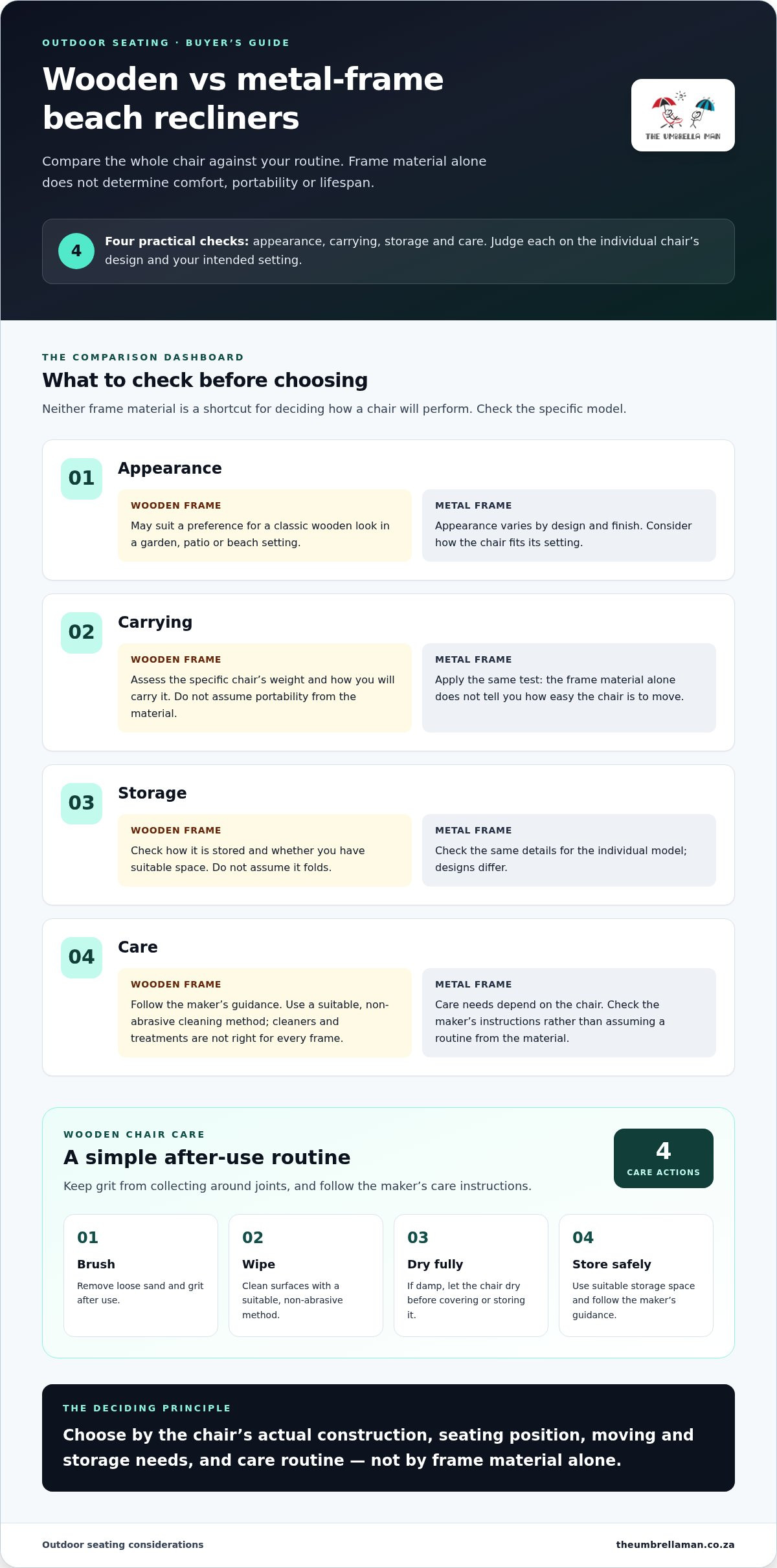
Wooden vs metal-frame beach recliners: what should you compare?
Material is one part of the decision, not a reliable shortcut for judging comfort, portability or lifespan. These depend on the individual chair’s construction, design and care. Compare the complete chair against your routine, then treat frame material as one factor among several.
| What to compare | Wooden frame | Metal frame |
|---|---|---|
| Appearance | May suit shoppers who prefer a classic wooden look in a garden, patio or beach setting. | Appearance varies by design and finish; consider how it fits the setting. |
| Carrying | Assess the specific chair’s weight and how you’ll carry it. Don’t infer portability from material alone. | Apply the same test. Frame material alone doesn’t establish how easy a chair is to move. |
| Storage | Check how the chair is stored and whether you have suitable space. Don’t assume it folds. | Check the same details for the individual model; designs differ. |
| Care | Follow the maker’s guidance for cleaning and protecting the frame. A finish can affect care needs. | Follow the product’s care guidance too. Don’t assume every metal frame needs the same routine. |
| Intended setting | Consider whether the look and care routine suit your beach, garden or patio use. | Consider the chair’s design, seating position and care requirements for your intended use. |
When might a wooden recliner suit better?
If you prefer the look of wood, a wooden-frame chair may suit an outdoor space. Balance that preference with practical considerations: how far you’ll carry the chair, where you’ll store it and how you’ll care for it. Wood species and finish can affect care, so follow the maker’s guidance for the particular chair rather than applying one routine to all wooden seating.
Which trade-offs matter most?
Start with the chair’s form and how you’ll use it. A recliner and a fixed-position chair suit different seating preferences, while carrying distance and storage space may be decisive for regular beach trips. Then compare the product details. The Umbrella Man’s seating range includes a Wooden Beach Recliner and a 7-Level Steel Beach Chair. The product names identify different seating options, but do not establish comparative weight, comfort or durability. Check the details of each chair before deciding how it suits your needs.
For another way to assess steel seating options, see this steel beach chairs comparison. The best fit is the chair whose design, care needs and storage requirements suit your routine, not a material declared universally superior.
How to use, clean and store a wooden beach recliner
A simple after-use routine helps keep grit and moisture from being trapped against a chair during transport or storage. Care needs vary by product, so follow the maker’s instructions for the chair’s materials and finish.
What should you do after a beach outing?
- Clear loose sand. Brush it away before folding, carrying or storing the chair. This reduces the chance of grit rubbing against surfaces or collecting around joints.
- Clean appropriately. Wipe visible marks using a method suitable for the chair’s finish. Avoid abrasive pads, harsh cleaning products and unverified treatments that may not suit its materials.
- Allow it to dry. If the chair is damp, let it dry fully before covering or storing it. Putting it away while wet can leave moisture against the frame or other surfaces.
- Store it safely. Choose a dry, sheltered spot where the chair won’t be knocked or left exposed unnecessarily. Follow any product-specific instructions for folding or storage.
These are useful habits for outdoor seating, but they don’t replace the maker’s care guidance. A wooden beach recliner South Africa buyers take to the beach may encounter sand and moisture more often than one kept on a sheltered patio, so account for its setting when planning a routine. Prolonged exposure to direct sunlight and moisture can affect outdoor materials. Storing a chair in a protected place when it’s not in use can limit unnecessary exposure.
How can you prepare a chair for regular outdoor use?
Before using the chair, look over the visible surfaces and joints for changes or signs that care may be needed. Follow the manufacturer’s recommendations rather than applying a coating or cleaner based on assumptions about the wood or finish. If the chair has become wet, let it dry before use or storage.
For a shaded seating area, position the chair and umbrella with their intended use in mind, and follow the umbrella maker’s setup and safety guidance. A beach umbrella can provide shade, but its placement and set-up matter. See this wind-resistant beach umbrella guide for related considerations.
For a wooden seating option to consider as part of your outdoor routine, explore The Umbrella Man’s Wooden Beach Recliner.
Choosing The Umbrella Man Wooden Beach Recliner for your needs
A suitable outdoor chair should fit the way you’ll use it, not just the way it looks. Before choosing, consider four practical points: where it will be used, whether you prefer a more upright or inclined seating position, what care routine you can manage and where you’ll store it between outings. Together, these will help you decide whether a wooden beach recliner South Africa shoppers can consider is a good match for your routine.
How does the Wooden Beach Recliner fit into the range?
The Umbrella Man’s seating range includes the Wooden Beach Recliner, alongside steel and low-back beach-chair options. This gives you different seating categories to consider; no single frame type or chair style suits everyone. The Wooden Beach Recliner is a wooden-frame option. Compare its product information with your needs for comfort, construction and care rather than drawing conclusions from the name alone.
The Umbrella Man has supplied outdoor products in the South African market since 2009. Its broader seating range gives you options to consider for different outdoor routines. For example, a chair intended for a patio may have different carrying and storage demands from one taken regularly to the beach.
What is the next step for choosing outdoor seating?
Picture how the chair will fit into an ordinary day outdoors. Will it stay in one place or need to be carried? Do you have a suitable place to store it? Does its seating style match how you prefer to read, rest or spend time with others? Answering these questions keeps the choice grounded in your actual routine.
Then review the product details for the chair you’re considering. Look for information that helps you assess its construction and use, and follow the maker’s care guidance. Avoid relying on assumptions about frame finish, portability or adjustment features that aren’t stated.
The Wooden Beach Recliner is one option in The Umbrella Man’s broader outdoor seating range. If its wooden-frame style suits your setting and practical requirements, view the product page for details and compare them with your care and storage plans.
View the Wooden Beach Recliner
Choose seating that fits the way you spend time outdoors
The right chair depends on more than its frame. Consider where you’ll use it, whether you prefer a more inclined or upright seating position, and how carrying, care and storage fit into your routine. Comparing these practical details can help you decide whether a wooden beach recliner South Africa shoppers can choose is right for you, or whether another seating style better suits your needs.
The Umbrella Man’s outdoor seating range includes the Wooden Beach Recliner alongside steel and low-back beach chairs. The company has served the South African market since 2009, offering a range of options for different outdoor routines. Review the product details and compare them with your intended setting before making your choice.
View the Wooden Beach Recliner and take the next step towards outdoor seating that suits your plans.
Frequently Asked Questions
Is a wooden beach recliner suitable for regular outdoor use?
A wooden beach recliner may suit regular outdoor use if its construction, care requirements and storage arrangements fit your routine. If you plan to use one often, check the product’s materials and care guidance rather than assuming all wooden chairs perform alike. After use, clear away sand and let the chair dry before storing it. Sun, moisture, handling and maintenance can all affect outdoor furniture over time.
How do you care for a wooden beach recliner?
Remove loose sand and debris first, then clean the chair using a method that suits its finish. Let it dry fully before covering or storing it. Avoid abrasive tools or harsh cleaning products unless the maker’s instructions specifically allow them. Check visible surfaces and joints periodically for changes. Since suitable care depends on the chair’s materials and finish, follow its product-specific guidance rather than applying an assumed treatment or schedule.
Can a wooden beach recliner be left outside?
Whether a wooden beach recliner can remain outdoors depends on its construction, finish and care instructions. Don’t assume it is designed for permanent exposure. Sunlight, moisture and airborne sand can affect outdoor materials, so consider the conditions where you intend to leave it. When the chair isn’t in use, storing it in a suitable sheltered place can limit unnecessary exposure. Follow the product’s guidance for covering, cleaning and storage.
Is a wooden beach recliner better than a metal-frame beach chair?
Neither frame material is automatically better for every buyer. A wooden recliner may appeal if you prefer its appearance, while a metal-frame chair may better suit your handling or storage preferences. Compare the specific chairs, including their construction, seating design, care requirements and intended use. Comfort and durability depend on the individual product, so choose according to your routine rather than assuming one material is always superior.
What should I look for when choosing a wooden beach recliner?
Start with where you’ll use the chair, how you’ll carry and store it, and what seating position you prefer. Then review construction details, the visible finish and the care guidance. Look for product-specific information rather than relying on broad descriptions such as “sturdy” or “portable”. Considering these points together helps you assess whether a particular wooden recliner is a practical fit for your outdoor routine.
How do I keep sand from damaging a wooden beach chair?
Brush away loose sand before folding, carrying or storing the chair. Grit can rub against surfaces during handling, so removing it first is a sensible care step. If further cleaning is needed, use a method suitable for the chair’s finish and let it dry fully before putting it away. Avoid abrasive tools and unapproved products, as the right approach can vary between wooden chairs.
Can I use a wooden beach recliner in a garden or beside a pool?
A wooden beach recliner may suit a garden or poolside setting if its design and care guidance are appropriate for those conditions. Consider how often it will encounter moisture, direct sunlight and handling, and where you’ll store it when not in use. Check the product information for intended use and maintenance advice. A garden or poolside location alone doesn’t mean a chair is suitable for permanent outdoor exposure.