Heavy-duty market parasols for windy areas: guide
A larger canopy may provide more shade, but it also presents more surface to gusts. Choosing heavy-duty market umbrellas for windy areas is about more than selecting a sturdy-looking model. Stability and durability depend on how the canopy, frame and support work together, as well as how the umbrella is used.
Start with the site and the purpose of the shade. An exposed patio, a sheltered courtyard and a busy outdoor dining area can place different demands on an umbrella. Terms such as “heavy-duty” or “wind-resistant” aren’t enough on their own to judge suitability.
This guide explains how to assess wind exposure and compare the construction details that matter, including canopy design, frame, support and opening or closing arrangements. It also covers practical operating habits, such as closing an umbrella when conditions become unsuitable. The Umbrella Man has supplied and manufactured umbrellas in South Africa since 2009. The aim is to match your requirements to the intended setting, while keeping the limits of any umbrella in mind. No umbrella should be treated as windproof.
Key Takeaways
- Assess site exposure and intended use before comparing umbrella options.
- When considering heavy-duty market umbrellas for windy areas, look beyond the label and compare documented construction details.
- Choose an umbrella category suited to the setting. Market, beach and golf umbrellas aren’t interchangeable.
- Use a consistent checklist to compare dimensions, support requirements and day-to-day operation.
- Explore The Umbrella Man’s umbrella range, with options for individual purchases and bulk orders.
Heavy-duty market umbrellas for windy areas: start with the site
A market umbrella is designed to shade a defined outdoor area, often seating or a dining space. Its pole, canopy and support are intended for a different setting from a beach umbrella, which is positioned in sand, or a golf umbrella, which is carried for personal coverage. For a general overview of the history and types of umbrellas, remember that this broad category includes designs with different purposes and components.
That distinction matters when comparing heavy-duty market umbrellas for windy areas. “Heavy-duty” suggests robust construction, but the phrase alone doesn’t show how a particular umbrella performs in gusts. Site exposure, canopy dimensions, support and operating habits all affect suitability. Let the site guide your selection before appearance.
Map where the umbrella will stand and what it needs to shade. A residential patio may need coverage over a table for part of the day, while a hospitality area may use several umbrellas during regular service hours. Consider whether the space is open or sheltered, whether it is on elevated ground, and how nearby buildings, walls or trees affect airflow. A corner sheltered from one direction may still be exposed from another.
How to assess wind exposure around an outdoor seating area
Observe the proposed position during the hours the umbrella will be open, rather than relying on a single impression from a calm day. Wind behaviour can vary across South Africa and from one site to another. Note recurring gusts, changes in direction and whether the position feels more exposed than nearby spots.
- Record the position of buildings, fences, trees and other structures that may shelter or channel airflow.
- Check the surrounding surface and planned support position. The umbrella must sit securely without obstructing seating or access.
- Consider how long the canopy will usually remain open and who will be responsible for operating it.
What heavy-duty means, and what it does not mean
The words “heavy-duty” or “wind-resistant” don’t establish a tested wind-speed limit. Information about a frame material or canopy fabric helps you compare construction, but it isn’t the same as documented performance evidence. If wind testing is claimed, look for the stated test method and result, and check whether they apply to the complete umbrella and its support arrangement.
No construction label removes the need for sound operating practice. Close the umbrella when conditions become unsuitable, and don’t leave it open simply because it appears substantial. In a household, hospitality venue or other busy outdoor setting, assigning someone responsibility for closing it can make this precaution part of the routine.
Which market umbrella features matter most when wind picks up?
Canopy size affects more than the shaded footprint. A broader canopy presents more area to the wind, so the coverage that suits a sheltered courtyard may be less practical in an exposed seating area. Shape and fabric also matter, but neither should be considered separately from the frame and support. When comparing heavy-duty market umbrellas for windy areas, look for documented specifications rather than relying on appearance or a product label.
No single material proves overall wind performance. Assess the complete umbrella and its support arrangement together. A sturdy-sounding frame description, for example, doesn’t establish how the joints, moving parts or canopy perform as a system.
Canopy and frame: assess the whole structure
Compare canopy dimensions and fabric information where the product documentation states them. Then review the details provided for the pole, ribs, joints and opening mechanism. Don’t assume that a particular material or a larger-looking component automatically makes the complete umbrella suitable for gusty conditions.
Stated product facts
Record the published canopy dimensions, fabric description, frame materials, and details of the joints or operating mechanism. Note whether any performance claim identifies a test method and result.
Questions to evaluate
Does the canopy provide the coverage you need? Are the frame and connection details clearly described? Does any wind-related claim apply to the complete product, rather than just one component?
How to compare
Use the same details for each option. Leave a specification blank when it isn’t documented instead of treating missing information as evidence of performance.
For additional context, Beaufurn discusses factors for wind-resistant outdoor umbrellas, including the role of support and design. Use such guidance to shape your questions, not as a substitute for specifications for the umbrella you’re assessing.
Base, pole and mounting: stability depends on the setup
A canopy and frame can’t be evaluated independently of their support. The pole must suit the base or mounting arrangement, which in turn must suit the surface and intended location. A freestanding base on paving, for instance, is a different setup from a fixed installation. Don’t assume that one support type, base weight or anchoring method suits every umbrella.
- Compare the pole and support requirements stated in the product information.
- Consider the installation surface and whether the proposed arrangement can be fitted securely there.
- Assess the umbrella with its intended support in place, not as a canopy and frame alone.
Keep a short comparison record for each option: dimensions, construction details, support requirements and any documented performance evidence. This makes differences easier to assess for a home patio or commercial seating area. To explore available umbrella options, view The Umbrella Man’s umbrella range and compare products against your site and setup requirements.
Market umbrellas versus beach and golf umbrellas: choose by setting
Umbrella categories reflect different uses, not interchangeable solutions for every outdoor space. A market umbrella is generally selected to shade a defined seating or dining area. A beach umbrella is intended for beach use, while a golf umbrella provides portable personal cover. For a windy site, begin with the task and setup, rather than choosing by category name alone.
This distinction is useful for households planning a patio and hospitality businesses organising outdoor seating. A product designed to be carried or positioned temporarily may not suit a space where shade is part of the layout. Equally, a market umbrella shouldn’t be assumed suitable for exposed or unattended use simply because it is designed for a seating area. Suitability depends on the product’s documented details and the conditions at the site.
When a market umbrella suits a commercial seating area
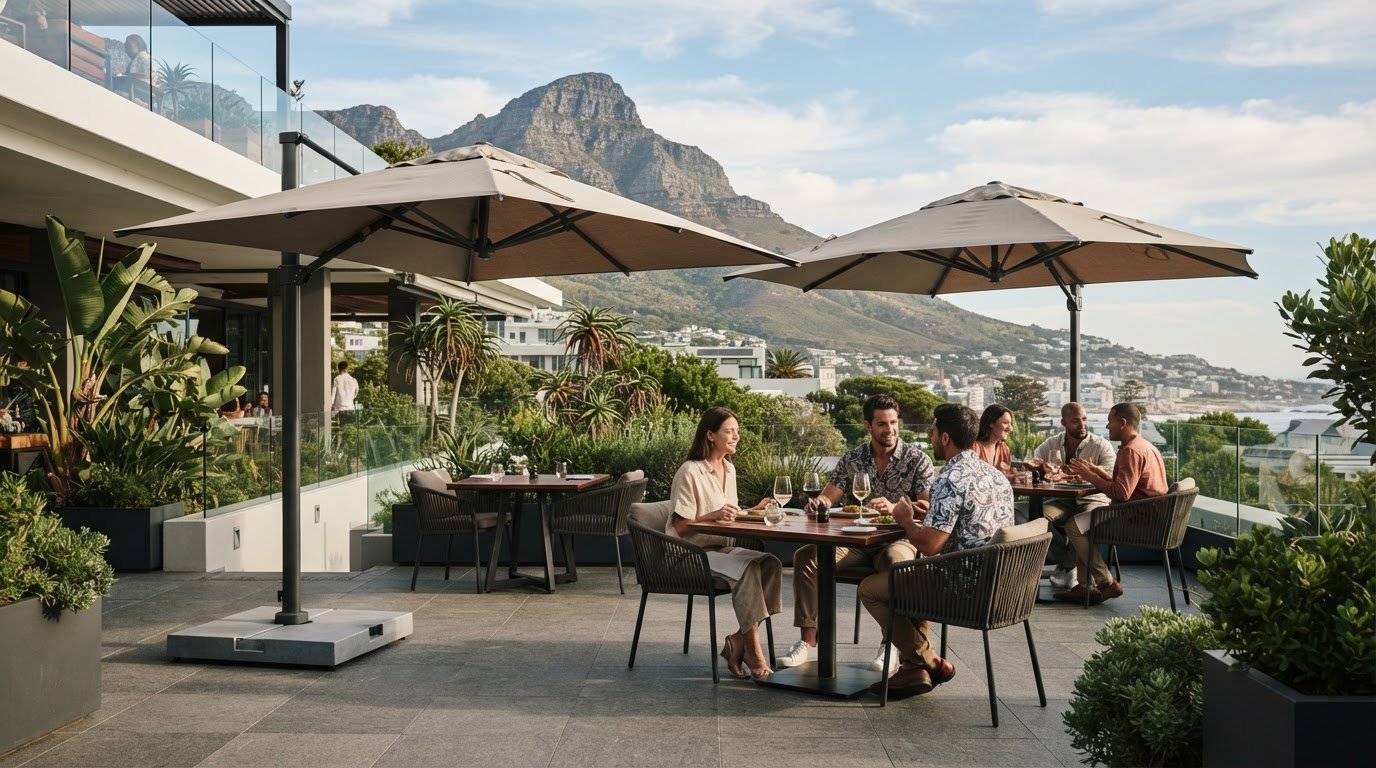
A market umbrella can suit a planned dining layout when its position, shaded footprint and support arrangement fit the tables and circulation space. Consider whether staff can open and close it without disrupting service, and who will manage it as conditions change. The category describes the intended setting, not permission to leave an umbrella open in every type of weather.
For a restaurant, café or other hospitality space, sketch the arrangement before choosing. Check that the coverage aligns with table placement while leaving room for customers and staff to move safely. If several umbrellas are planned, consider how their positions relate to one another and to surrounding structures. A layout that works in calm conditions still needs a routine for closing umbrellas when use becomes unsuitable.
When a beach or golf umbrella is the wrong comparison
Beach umbrellas are chosen for beach settings and have their own positioning and support considerations. Golf umbrellas are designed to be carried, rather than used as planned fixtures over a seating layout. Their descriptions and performance claims may not answer the questions that matter for a market setting.
Keep the comparison specific to the task:
- Market umbrella: assess its fit with a fixed or planned seating area, its support arrangement and how it will be operated.
- Beach umbrella: focus on beach conditions and how it is positioned there. The related guide to choosing a wind-resistant beach umbrella covers those beach-specific considerations.
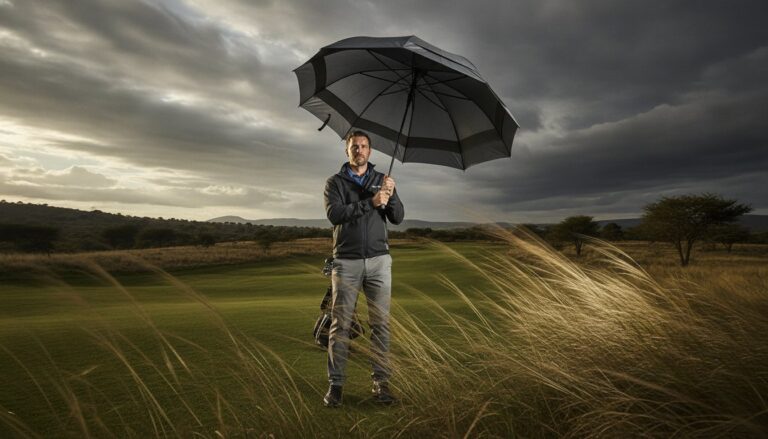
- Golf umbrella: consider portability and personal coverage, rather than treating it as a substitute for a seating-area shade structure.
The Umbrella Man’s range includes beach and golf umbrella categories, which serve different purposes from a market umbrella. Compare products according to setting and use, and don’t transfer a claim from one type to another without supporting product information. For commercial buyers, including hospitality businesses, the right category is the one that fits the layout and operating routine, with its limitations understood from the outset. This keeps comparisons of heavy-duty market umbrellas for windy areas focused on relevant criteria rather than portable alternatives.
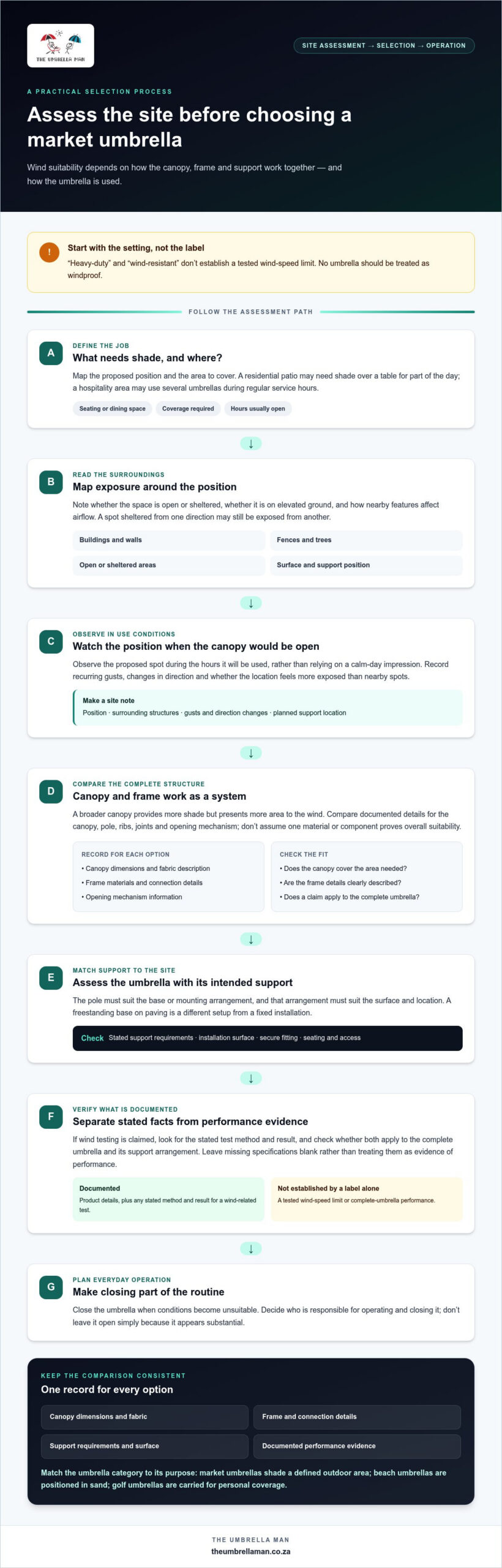
Checklist for buying a market parasol for a windy site
Use this checklist to turn site observations into a consistent comparison. It helps identify what a suitable umbrella must accommodate, but it can’t replace an assessment of the specific location or the manufacturer’s operating guidance. Compare products on the same basis, and treat broad labels such as “storm-proof” cautiously unless clear product documentation supports them.
Five questions to answer before comparing options
- Where will the umbrella stand? Note whether the position is open, sheltered, elevated or surrounded by buildings and other structures. Consider how exposure changes during the hours you plan to use the shade.
- What will it cover? Map the seating or dining layout and the space people need to move through. Choose dimensions that suit the intended area rather than selecting more coverage than the layout requires.
- What support and surface are involved? Record where the base or mounting arrangement will sit and what the installation surface is like. Compare this with the support requirements stated for each product.
- Who will operate the umbrella? For a household or venue, decide who is responsible for opening and closing it. Consider whether that person can close it promptly if conditions change.
- What information supports the product description? Gather documented dimensions, canopy and frame details, support requirements, operating instructions and any stated performance evidence. Keep missing details distinct from confirmed facts.
How to interpret specifications and operating guidance
Make a simple comparison table, using the same fields for every option. Record what the documentation states instead of filling gaps with assumptions about materials or construction. A claim such as “heavy-duty” or “wind-resistant” isn’t, by itself, a tested wind-speed limit. Treat a performance claim as useful only when its evidence and scope are clear.
Next, compare the proposed support and installation with the product’s stated requirements. Don’t assume that a base or mounting method suits every umbrella, surface or site. Manufacturer instructions should guide assembly, operation and wind-related precautions. A checklist can organise your decision, but the conditions at the actual location still matter.
For commercial planning, include the practical layout around the shade: table positions, access routes and staff responsibilities. This connects product selection with how the venue operates, rather than treating the umbrella as a standalone purchase. It’s especially useful when evaluating heavy-duty market umbrellas for windy areas, where suitability depends on both documented product details and the intended setup.
Once you’ve recorded your site requirements, explore The Umbrella Man’s umbrella range and compare available options against your checklist.
Source outdoor umbrellas through The Umbrella Man
The Umbrella Man is a South African umbrella supplier and manufacturer, established in 2009. Its customers include individuals, hospitality businesses, retailers, schools and promotional companies. Ordering options accommodate both single-item purchases and bulk orders. This experience across household and commercial requirements offers a practical starting point when planning an umbrella purchase for a home patio or outdoor venue.
For a demanding site, the aim isn’t simply to find an umbrella described as heavy-duty. Match the intended setting and day-to-day use with the product details available. Keep expectations grounded in documented dimensions, construction information, support requirements and operating guidance. No label can replace safe operating practice or guarantee suitability in every wind condition.
Plan a suitable umbrella requirement for your setting
Before comparing options, write down the purpose of the shade and the conditions at the proposed position. Note whether the space is used for dining, waiting or general seating, how exposed it is and how much coverage the layout needs. Consider the support arrangement and the surface where the umbrella will stand. These details turn a broad search for heavy-duty market umbrellas for windy areas into a more focused assessment.
Operating arrangements matter as much as the physical space. Decide who will open and close the umbrella and how that person will respond when conditions change. For a venue, include the practical demands of service: where tables sit, how customers and staff move around them, and how many umbrellas the layout may require. For a household, consider who will manage the umbrella while it is in use.
- Record the intended use, site exposure and required shade footprint.
- Note the proposed support and installation surface.
- Consider who will operate the umbrella and follow its instructions.
- For a commercial setting, plan quantities around the venue layout and daily routine.
Use this outline to compare documented product details consistently. If a dimension, construction feature or support requirement isn’t stated, don’t assume it. Manufacturer operating guidance remains the reference for assembly, use and precautions, while conditions at the actual site should inform the decision.
Explore umbrella options for individual or commercial requirements
The Umbrella Man supplies umbrellas and outdoor products to individual customers and organisations. A household purchase and a wholesale requirement may involve different quantities and planning needs, but both benefit from a clear understanding of intended use and product information. For retailers, schools, hospitality businesses and promotional companies, considering the use case alongside order scale can help organise procurement.
For a measured next step, explore The Umbrella Man’s umbrella range and consider which options fit your setting and requirements.
Make your next shade decision with confidence
A well-planned outdoor shade choice should work with the space, not simply look right in it. Turn your site observations into a practical brief: what needs shade, where the umbrella will stand, how it will be supported and who will close it when conditions call for it. This gives you a clearer basis for comparing heavy-duty market umbrellas for windy areas while keeping expectations realistic. No umbrella should be treated as suitable for every wind condition, so routine operation remains part of the decision.
For a home patio or commercial seating area, a considered choice makes it easier to organise shade around how people use the space. Keep the product’s documented details and operating guidance close as you compare options, and choose with both the setting and day-to-day responsibilities in mind.
Explore The Umbrella Man’s umbrella range as you plan your next outdoor shade purchase. Start with your site requirements, then compare the available options against your intended use.
Frequently Asked Questions
Are heavy-duty market umbrellas windproof?
No. “Heavy-duty” isn’t a guarantee that an umbrella is windproof or safe in every gust. Treat it as a general description unless product documentation provides specific, relevant test evidence. Even a documented performance result has limits and should be read alongside the manufacturer’s installation and use instructions. If conditions become unsuitable, close the umbrella rather than relying on its label or construction to withstand them.
How do I choose a market umbrella for a windy outdoor area?
Start with the exact position and intended use, then compare options against those conditions. A seating area used mainly at lunchtime, for example, may have different operating needs from a venue that keeps outdoor tables in use throughout the day. Check the documented canopy dimensions, support requirements and operating instructions. Choose coverage that fits the layout, and make sure someone can close the umbrella when conditions change.
Can I leave a market umbrella open when it is windy?
Only if conditions remain within the product’s stated operating guidance. If gusts develop, the wind direction changes sharply or the canopy begins to move unusually, close it promptly and keep people clear while doing so. Don’t wait for visible damage or assume a brief lull means conditions are suitable. In a staffed venue, make closing the umbrella part of the team’s weather and outdoor-area routine.
What makes a market umbrella more suitable for exposed conditions?
Look for product information that describes the complete arrangement, not just one component. Useful details may include canopy dimensions, construction, support requirements and performance evidence explaining how the umbrella was assessed. Consider how it will be installed and operated at your site. Clear, applicable information is more useful for comparison than broad terms such as “all-weather”.
Does a heavier base make a market umbrella safe in strong wind?
No. Weight alone can’t establish that an umbrella is safe in strong wind. The support must be compatible with the pole and appropriate for the installation surface, and the complete setup must follow the product’s guidance. A base that seems substantial may still be unsuitable for a particular umbrella or location. Don’t use a heavier base as a reason to leave the canopy open in conditions the manufacturer advises against.
Are market umbrellas different from beach umbrellas?
Yes. A market umbrella is generally selected to provide shade over a planned seating or dining area, while a beach umbrella is intended for beach use and may be positioned differently. Their support arrangements and practical requirements can therefore differ. Choosing shade for a fixed outdoor table, for example, calls for attention to its layout and installation, rather than assuming a portable beach option will suit the same purpose.
How should I care for a market umbrella used outdoors in South Africa?
Follow the manufacturer’s instructions for opening, closing, cleaning and storage, since care requirements can vary by product. After use, check for visible wear, loose connections or changes in how the mechanism operates, and stop using it if something appears damaged. Don’t force a stiff mechanism. Before storing the umbrella, make sure it’s dry if the instructions require this, and keep it closed when not in use or when conditions are unsuitable.