Poly-Canvas vs Poly-Nylon Umbrellas: A Professional Guide to UV Protection
Selecting an outdoor umbrella based on colour alone is frequently the primary reason commercial equipment fails within its first season. While many assume that all synthetic fabrics offer similar levels of protection, the technical reality of a poly canvas vs poly nylon umbrella determines whether your investment lasts for years or merely months. Most buyers understand the frustration of seeing vibrant fabrics fade and tear under relentless sun, yet finding clear information on material specifications often feels unnecessarily complex.
We’ve designed this guide to provide a transparent comparison between these two common materials, focusing on durability and UV resistance. You’ll discover the specific advantages of 160gm poly-canvas for long-term installations and how 190T poly-nylon serves tactical, lightweight needs. By understanding these technical differences, you can make procurement decisions with confidence. This ensures maximum UV protection for guests and family whilst extending the operational lifespan of your outdoor equipment through informed material selection.
Key Takeaways
- Understand how canopy material selection directly impacts the replacement cycle and long-term value of your commercial outdoor inventory.
- Discover why the 160gm poly-canvas is the superior choice for high-exposure hospitality environments requiring maximum fabric opacity and durability.
- Learn how 190T poly-nylon offers a tactical advantage for large-scale promotional requirements where portability and ease of storage are paramount.
- Evaluate the technical differences of a poly canvas vs poly nylon umbrella to ensure your procurement meets the specific UV protection standards of your site.
- Identify the ideal fabric for your specific use case, whether you require permanent shade for guests or flexible solutions for coastal events.
Understanding Beach Umbrella Fabrics: Why the Material Choice Matters
Professional procurement requires a shift in perspective. Instead of selecting an umbrella based on aesthetics, commercial buyers must evaluate the canopy as a functional barrier. The choice between a poly canvas vs poly nylon umbrella isn’t merely about texture; it’s a decision that impacts the replacement cycle of your outdoor inventory. Poly-canvas is a heavy-duty, woven polyester designed for permanence. In contrast, poly-nylon is a high-density synthetic engineered for lightness. Selecting the wrong material often leads to premature tearing or fading, which increases long-term costs and compromises guest comfort.
The Role of UV Protection in Outdoor Shade
The primary function of any beach umbrella is to mitigate the risk of solar radiation. However, it’s vital to recognise that visible shade doesn’t always guarantee safety. The effectiveness of a fabric depends on its Ultraviolet Protection Factor (UPF), which measures how much UVA and UVB radiation reaches the skin. Industry standards confirm that a UPF 50+ rating blocks at least 98% of UV radiation. Fabric density is the critical factor here. A tighter weave naturally limits the amount of light that can penetrate the material. In high-exposure coastal environments, choosing a canopy with verified UV protection is essential for the safety of guests and the structural integrity of the fabric itself.
Decoding Technical Specifications: GM vs T
When comparing fabrics, you’ll encounter two primary metrics: ‘gm’ and ‘T’. Understanding these is essential for professional sourcing as they dictate the material’s performance under stress.
- Grams per square metre (gm): This measures the weight and thickness of the fabric. For example, a 160gm poly-canvas is significantly more robust than lighter alternatives. Higher weight typically indicates a thicker weave, which provides better resistance to wind and mechanical wear over time.
- Thread Count (T): Often used for poly-nylon, this refers to the number of threads per square inch. A 190T specification indicates a high-density weave. Whilst nylon is thinner than canvas, a high thread count ensures the material remains strong and resistant to stretching or puncturing.
For commercial applications, higher numbers generally signal a more durable product. A 160gm canvas or a 190T nylon will withstand the rigours of daily use much better than lower-grade retail alternatives. Looking beyond the surface colour to these technical weave specifications ensures that your shade solutions remain functional across multiple seasons.
Poly-Canvas Umbrellas: The Robust Choice for High-Exposure Environments
Poly-canvas is distinguished by its premium, matte finish and substantial physical weight. Unlike thinner synthetic fabrics, a 160gm poly-canvas canopy provides a sense of permanence and professional quality that’s immediately apparent to guests. This weight serves a functional purpose beyond aesthetics. It offers superior opacity, which creates a noticeably cooler environment beneath the umbrella by effectively blocking solar energy. When comparing a poly canvas vs poly nylon umbrella, the structural stiffness of canvas is a significant advantage in coastal settings. It naturally resists the constant “flapping” noise and mechanical stress caused by moderate sea breezes, making it the ideal selection for long-term installations at resorts, restaurants, or private beach clubs.
The Skin Cancer Foundation identifies several sun-safe fabric characteristics that are essential for outdoor protection, including the importance of weave density. Poly-canvas excels in this regard because its thick polyester fibres are woven so tightly that very little light can penetrate the material. This dense construction ensures that the shade provided is both deep and protective, even during the peak hours of UV intensity.
Durability and Longevity of Poly-Canvas
In high-traffic hospitality environments, outdoor equipment faces constant abrasion from wind-blown sand and frequent mechanical handling. Poly-canvas is exceptionally resistant to tearing and abrasion because the 160gm weave is designed to distribute tension across a larger surface area. It maintains its structural shape over multiple seasons, preventing the sagging or stretching that often plagues lighter materials. Poly-canvas is the industry standard for high-traffic hospitality shade due to its inherent structural integrity and consistent long-term performance.
Branding and Aesthetic Appeal
For commercial entities, an umbrella is a vital component of brand visibility. Poly-canvas is the preferred substrate for high-quality screen printing because the fabric’s matte texture allows ink to bond deeply and evenly with the fibres. This results in excellent colour fastness, ensuring that corporate logos and brand colours remain vibrant despite prolonged exposure to harsh sunlight. If you’re looking to enhance your venue’s professional appearance, reviewing the criteria for custom branded umbrellas South Africa will help you select a design that ensures maximum visibility and durability. Choosing a 2.0m 160gm Poly-Canvas Beach Umbrella ensures your investment remains a stable and attractive asset for your business. You can view our professional umbrella range to find a solution tailored to your specific site requirements.
Poly-Nylon Umbrellas: Versatility and Portability in Coastal Settings
Poly-nylon, typically specified at a 190T density, represents a tactical choice for specific commercial and promotional requirements. When evaluating the merits of a poly canvas vs poly nylon umbrella, the most immediate distinction lies in the material’s exceptional strength-to-weight ratio. Whilst poly-canvas offers a sense of permanence, poly-nylon provides a high-performance synthetic alternative that’s engineered for flexibility. This material is prized for its ability to withstand tension without adding significant weight to the umbrella’s frame. It’s the most cost-effective solution for large-scale promotional giveaways or one-off corporate events where budget and ease of distribution are the primary considerations.
Portability and Ease of Use
Daily operations in the hospitality and event sectors often require the rapid deployment and retrieval of shade equipment. The reduced weight of a poly nylon beach umbrella South Africa allows staff to handle large inventories with significantly less physical strain compared to heavier canvas models. This portability doesn’t come at the expense of durability; the 190T weave is remarkably resilient. Because the fabric is thinner and more flexible, it folds into a compact profile that’s easy to store in limited back-of-house spaces or transport between different venues. For businesses managing hundreds of units, these logistical efficiencies translate into lower labour costs and faster setup times.
Water Resistance and Maintenance
Coastal environments are characterised by high humidity and frequent salt mist. Poly-nylon is naturally hydrophobic, meaning it sheds water efficiently and dries far quicker than natural fibre blends. This quick-drying property is essential for maintaining a professional appearance, as it prevents the fabric from becoming heavy or waterlogged during light showers. The Skin Cancer Foundation highlights that material composition and weave density are critical factors in sun-safe fabrics. Even though nylon is a lighter material, the high thread count of the 190T specification ensures a reliable UV barrier.
Understanding the operational differences of a poly canvas vs poly nylon umbrella helps in selecting the right maintenance routine for your specific inventory. Maintaining these synthetic canopies is straightforward. Regular rinsing with fresh water removes salt deposits that can degrade the fibres over time. Using a mild detergent for occasional cleaning ensures the colours remain bright and the branding remains clear. Selecting the 2.0m 190T Poly Nylon Beach Umbrella provides a versatile balance of protection and practicality for any large-scale outdoor requirement.
Poly-Canvas vs Poly-Nylon: A Technical Comparison for Professional Sourcing
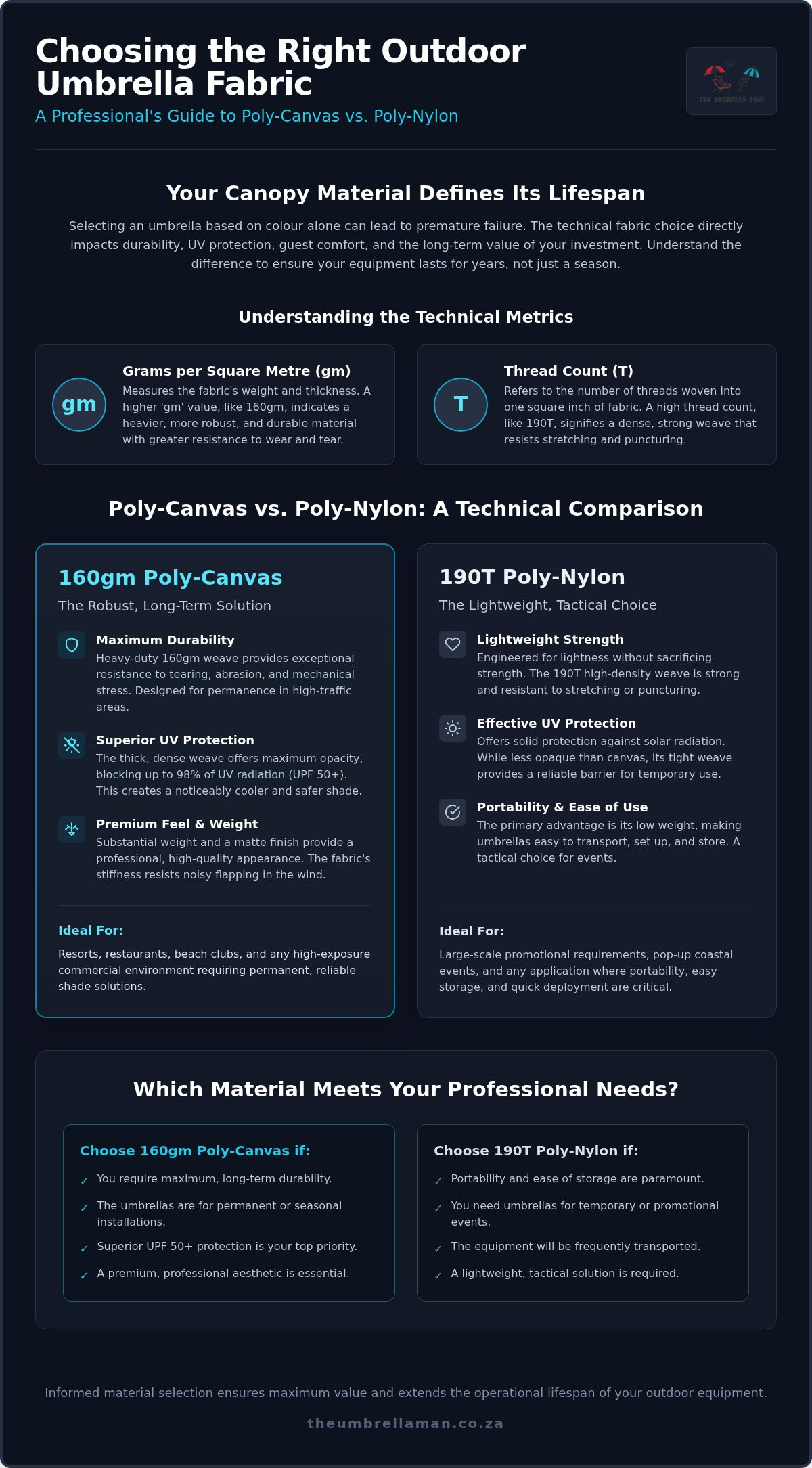
When conducting a professional comparison of a poly canvas vs poly nylon umbrella, the technical specifications reveal distinct performance profiles suited to different environmental stressors. Poly-canvas, with its 160gm weight, prioritises structural density. This translates to higher natural opacity, which is a critical factor in blocking UV radiation in climates with high solar intensity. In contrast, the 190T poly-nylon focuses on a lighter footprint. It utilises a high thread count to achieve strength without excessive bulk, making it easier to transport and store.
- 160gm Poly-Canvas: Heavier weight, superior UV opacity, and higher resistance to wind-induced flapping.
- 190T Poly-Nylon: Lighter footprint, high thread count density, and exceptional flexibility for daily transport.
Wind behaviour is another area where these materials diverge. The stiffness of poly-canvas ensures it doesn’t stretch under pressure. This maintains the canopy’s shape but places higher stress on the ribs and central pole. Poly-nylon is more flexible. It allows the fabric to “give” slightly in gusts, though this can lead to a pronounced “sail effect” if the frame isn’t appropriately anchored. Understanding these physical properties helps in selecting a canopy that matches the local wind conditions of your venue.
The Wind Resistance Factor
Because the 160gm canvas is heavier, it requires a robust frame to prevent structural failure in coastal winds. Choosing a wind resistant beach umbrella South Africa ensures the canopy material is supported by either steel or flexible fibreglass ribs. Fibreglass is often preferred for nylon canopies due to its ability to bend with the fabric. Steel provides the rigid support necessary for heavy canvas installations. Matching the fabric weight to the frame’s tensile strength is essential for ensuring the longevity of your investment.
Cost-Benefit Analysis for Bulk Orders
For procurement officers, the decision often rests on the total cost of ownership over several seasons. Whilst nylon has a lower initial cost, poly-canvas often reduces long-term replacement expenses. A 190T nylon umbrella is an excellent tactical choice for large-scale, short-term promotional events where volume is the priority. For permanent hospitality settings, the 160gm canvas typically lasts through multiple seasons. Lighter materials might require annual replacement due to UV degradation or mechanical wear. You can contact our team for technical advice on material selection for your next bulk order.
Selecting the Right Material for Your Professional Requirements
Choosing between a poly canvas vs poly nylon umbrella requires a thorough assessment of your operational environment and the specific needs of your guests. Whilst both materials provide essential shade, the decision ultimately rests on whether you require a permanent fixture for a hospitality venue or a tactical solution for a high-volume promotional campaign. Professional procurement involves looking beyond the initial purchase price to ensure the canopy weight is correctly matched to the frame’s tensile strength for maximum safety.
Before placing a bulk order, consider the following environmental factors:
- Exposure Levels: Open coastal fronts with high UV intensity demand the superior opacity of heavy canvas.
- Wind Conditions: High-wind areas require rigid frames paired with canvas, whereas sheltered gardens can accommodate lighter nylon models.
- Operational Frequency: Umbrellas that are moved daily benefit from the lightness of nylon, whilst fixed installations favour the stability of canvas.
Integrating these materials into a broader outdoor strategy allows you to manage costs without compromising on quality. You might select premium canvas for primary guest areas whilst utilising nylon for event-based overflow or promotional activations.
Recommendation for Hospitality and Resorts
For hotels, beach clubs, and resorts where guest comfort is the primary metric, the 2.0m 160gm Poly-Canvas Beach Umbrella is the recommended standard. Its premium finish and substantial weight create a high-quality atmosphere that aligns with professional hospitality standards. To ensure safety and stability on sandy shorelines, we suggest pairing these umbrellas with a plastic umbrella spike. This combination provides a secure anchor, preventing the umbrella from shifting in coastal breezes. Maintaining brand consistency across large outdoor areas is easier with canvas, as the fabric retains its shape and colour across multiple seasons. Hospitality managers looking to complete their beachfront setup should also consider how to source commercial beach chairs South Africa that match the durability standards of their canopy investment.
Recommendation for Promotional and Retail Sectors
The promotional sector often requires a balance between budget constraints and high brand visibility. In these scenarios, the 2.0m 190T Poly Nylon Beach Umbrella is the most efficient choice. Its lightweight nature makes it ideal for event-based marketing where staff must set up and dismantle equipment quickly. Even with large-scale campaigns, it’s vital to maintain a professional brand image by selecting a high-density 190T weave that resists sagging. If you’re unsure which material best suits your specific requirements, contacting an established umbrella supplier South Africa will provide you with bespoke material advice. Our team can help you select a solution that ensures durability and maximum UV protection for your specific requirements.
Securing Long-Term Value in Outdoor Shade Solutions
Selecting the appropriate fabric is the most critical factor in ensuring the longevity of your commercial shade investment. The technical distinction between a poly canvas vs poly nylon umbrella determines whether your equipment withstands the rigours of the coastal environment or requires premature replacement. Whilst the 160gm poly-canvas serves as the robust standard for hospitality permanence, the 190T poly-nylon provides a lightweight, tactical solution for promotional volume. It’s essential to match these material properties to your specific site conditions to maximise both safety and durability.
The Umbrella Man has been manufacturing quality umbrellas since 2009, establishing ourselves as specialists in bulk commercial and promotional orders. We provide national delivery across South Africa, ensuring that your business receives professional-grade equipment that meets specific UV protection requirements. Our team is ready to act as your dependable manufacturing partner for any scale of procurement. We invite you to enquire about our professional beach umbrella range today to secure durable shade for your venue. Making an informed material choice now ensures a safer, more reliable experience for your guests.
Frequently Asked Questions
Is poly-canvas or poly-nylon better for UV protection?
Poly-canvas generally offers superior UV protection due to its dense 160gm weave and higher opacity. This thickness creates a more effective physical barrier against solar radiation compared to the thinner 190T nylon. Whilst both materials can be treated for UV resistance, the natural density of canvas ensures less light penetration. This is particularly important in high-exposure environments where guests require reliable, long-term safety from intense sunlight during peak hours.
Which umbrella material is most wind-resistant for coastal use?
Poly-canvas is the more wind-resistant choice for coastal locations because its weight and stiffness prevent excessive flapping. This material maintains its structural shape better than nylon, which can act like a sail in heavy gusts. However, the effectiveness of a poly canvas vs poly nylon umbrella also depends on the frame. A heavy canvas canopy must be paired with a robust steel or fibreglass frame to manage the increased tension safely.
What does 160gm mean in umbrella specifications?
The term 160gm refers to grams per square metre, which is a standard measurement for fabric weight and density. In the context of umbrellas, a higher gm rating indicates a thicker, more substantial material. A 160gm poly-canvas is significantly more robust than lighter retail alternatives. This specification is a reliable indicator of the fabric’s durability, opacity, and ability to withstand mechanical wear over multiple seasons of professional commercial use.
Can I print a logo on both poly-canvas and poly-nylon?
Yes, both materials accommodate high-quality branding, though they suit different printing requirements. Poly-canvas features a matte finish that’s ideal for crisp screen printing and long-term colour fastness. Poly-nylon is also an excellent substrate for promotional logos, especially for large-scale campaigns where budget is a primary factor. We specialise in bulk promotional orders, ensuring that your corporate identity remains vibrant and professional regardless of the specific fabric choice you select.
How long does a poly-canvas beach umbrella typically last?
A professional-grade poly-canvas umbrella typically lasts for several seasons of daily commercial use. Its lifespan is significantly longer than lighter synthetic materials because the 160gm weave resists tearing and UV degradation more effectively. Whilst environmental factors like salt air and wind intensity play a role, the inherent structural integrity of poly-canvas makes it a dependable choice. This durability reduces the frequency of your replacement cycle, offering better long-term value for hospitality venues.
Is poly-nylon completely waterproof in heavy rain?
Poly-nylon is highly water-resistant and sheds light rain showers efficiently due to its hydrophobic properties. The tight 190T weave ensures that water beads and rolls off the surface, allowing the canopy to dry quickly. Whilst it’s effective for coastal mist and passing showers, it isn’t designed as a heavy-duty shelter for prolonged torrential rain. For most beach and promotional settings, its ability to remain lightweight whilst repelling moisture is a significant operational advantage.
Which material is easier to clean and maintain?
Poly-nylon is generally easier to maintain because it dries faster and is naturally resistant to moisture retention. Regular rinsing with fresh water is often sufficient to remove salt and sand deposits. Poly-canvas also requires fresh-water rinsing but may need occasional light cleaning with mild detergent to maintain its premium matte appearance. Both materials are engineered for low-maintenance commercial use, provided they’re stored correctly when completely dry to prevent any potential mildew growth.
Does the colour of the fabric affect the UV protection level?
Fabric colour does influence UV protection levels, as darker shades generally absorb more radiation and offer higher opacity. However, the technical construction of the fabric remains the primary factor. A high-density 160gm poly-canvas in a lighter shade may still outperform a thin, low-quality dark nylon. When comparing a poly canvas vs poly nylon umbrella, you should prioritise the technical weight and thread count over colour to ensure consistent safety for your guests.