Kids Floaties in South Africa for Pool Time
When comparing kids’ floaties in South Africa, families can choose from arm bands, swim rings and wearable flotation aids. The right option depends on the child’s size, comfort in the water and planned pool activity. Floaties are aids for pool time, not a substitute for close adult supervision.
Choosing a style can be difficult when comfort and fit matter as much as appearance. This guide covers the main types, what to compare and how to find an option suited to your child’s pool time. It also explains where The Umbrella Man’s Kids Floaties fit among the available choices.
Key Takeaways
- Compare arm bands, swim rings and wearable floatation aids to find a style that suits your child and planned pool activity.
- Consider fit and comfort alongside the child’s size when narrowing down the options.
- Use shipped-from details to understand the dispatch point, while keeping dispatch separate from the full delivery process.
- Remember that floaties are pool aids, not a replacement for close adult supervision.
- For poolside shade, the 2.0m 160gm Poly-Canvas Beach Umbrella is a separate option to consider.
Kids floaties South Africa
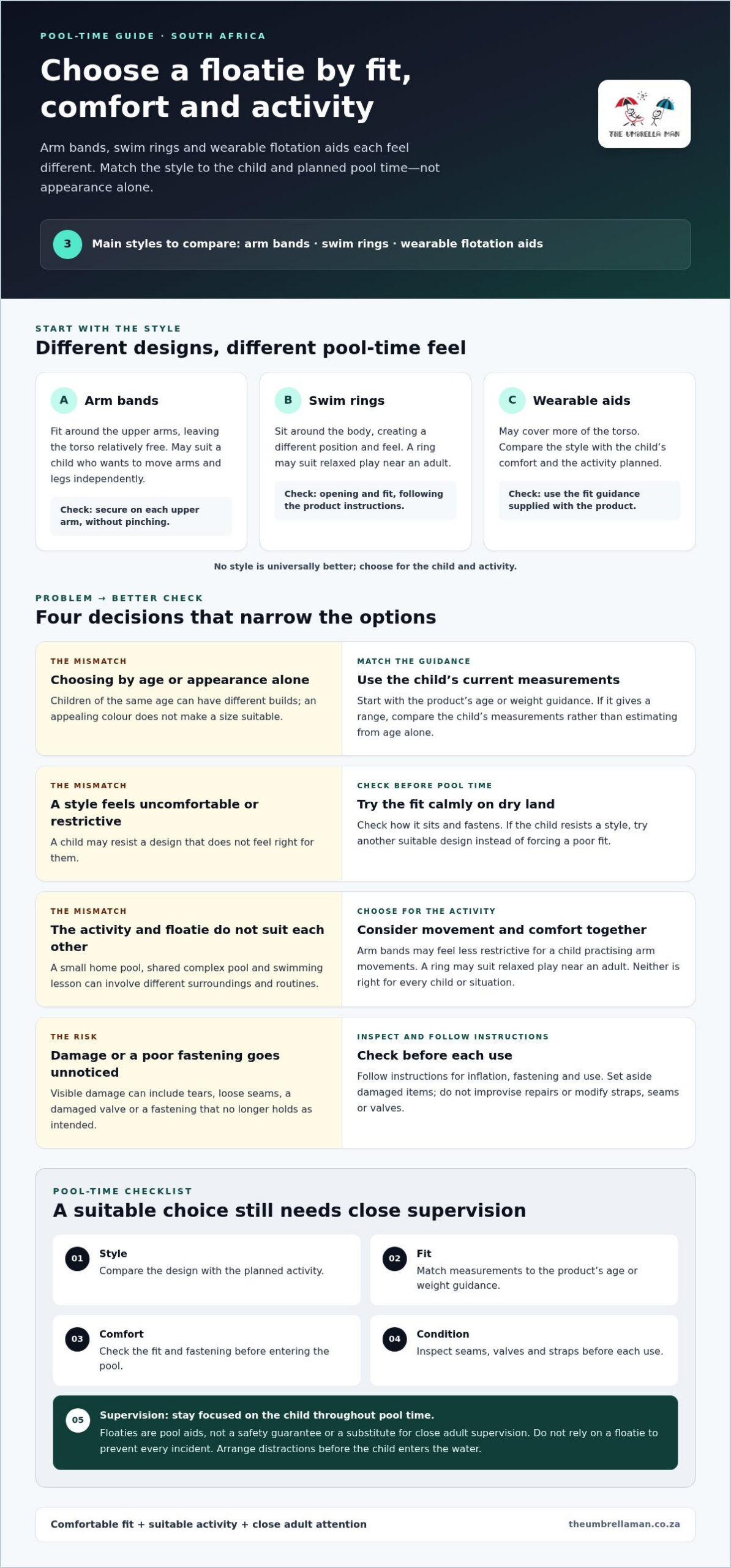
Families comparing kids’ floaties in South Africa can choose from several broad designs. Arm bands, swim rings and wearable flotation aids each offer a different pool-time experience. Start with the child’s size, comfort and intended activity, rather than choosing on colour or character print alone. A child practising kicks may prefer a different shape from one sitting and playing near an adult.
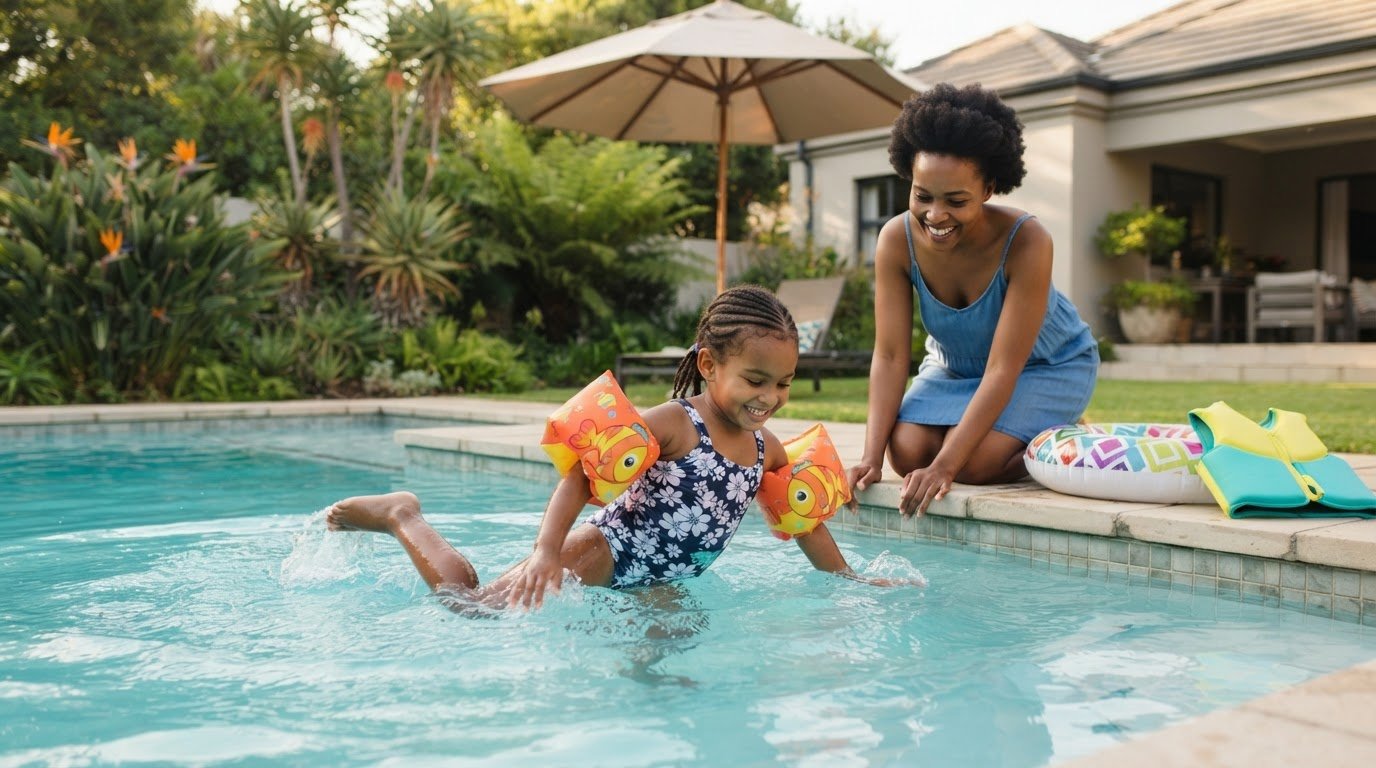
Arm bands fit around the upper arms, leaving the torso relatively free. This style may suit children who want to move their arms and legs independently. Swim rings sit around the body and create a different position and feel, while wearable flotation aids may cover more of the torso. These are general descriptions of product styles, not guarantees of support or substitutes for supervision.
Start with the product’s age or weight guidance and compare it with the child’s current measurements. A label for a different size range is not a suitable match just because the colour appeals. If the guidance gives a range, use the child’s measurements rather than estimating from age alone. Children of the same age can have different builds, so the label is an important selection point.
Compare the fit before pool time
Before entering the water, check how the floatie sits, fastens and feels. For arm bands, make sure each one sits securely on the upper arm without pinching. For a swim ring, check the opening and fit against its instructions. If a child resists a style, try another suitable design instead of forcing a poor fit. A calm check on dry land can reveal discomfort before pool play.
Follow the manufacturer’s instructions for inflation, fastening and use. An inflatable ring that feels soft may need attention before use, while an overinflated band may feel uncomfortable. Do not modify straps, seams or valves, as changes can affect how the item works. Keep the packaging or care instructions handy, particularly when storing several floaties, so you can match each item to its guidance.
Consider the pool activity and the child. A small home pool, a shared complex pool and a swimming lesson each have different surroundings and routines. A ring may suit relaxed play near an adult, while arm bands may feel less restrictive to a child practising arm movements. Neither style is universally better. Choose one that suits the activity and the child’s comfort, and stay close throughout pool time.
Treat floaties as aids, not permission for a child to use a pool independently. Keep your attention on the child, even when they seem confident or are wearing a flotation item. Do not rely on a floatie to prevent every incident. Distractions such as phones, conversations or preparing poolside items can interrupt active supervision, so arrange those tasks before the child enters the water.
Inspect the item for visible damage before each use. Look for tears, loose seams, a damaged valve or a fastening that no longer holds as intended. Set aside anything that appears damaged rather than attempting an improvised repair. After pool time, follow the care instructions for rinsing, drying and storage. Keeping different styles separate also makes it easier to identify the right item and its instructions next time.
Use a simple comparison before deciding:
- Style: Compare arm bands, swim rings and wearable aids against the planned activity.
- Fit: Match the child’s measurements to the product’s age or weight guidance.
- Comfort: Check the fit and fastening before entering the pool.
- Condition: Inspect seams, valves and straps before each use.
- Supervision: Keep an adult focused on the child throughout pool time.
These checks help narrow the options without treating any floatie as a safety guarantee. A suitable choice combines the manufacturer’s instructions, a comfortable fit and an activity the child can manage with close adult attention. When comparing children’s floaties, weigh these points together rather than choosing by appearance alone.
Shipped from
“Shipped from” identifies where an order begins its delivery journey. It may mean a warehouse, dispatch centre or seller’s premises, rather than where the item was made. This distinction helps families in South Africa understand that a product’s origin and delivery destination are separate details. A parcel labelled as shipped from a particular place still has to travel to the recipient’s address.
Distinguish the dispatch origin from delivery coverage. The origin is where the parcel enters the delivery network; the destination is the address it must reach. A listing that names a dispatch point does not, by itself, explain whether delivery reaches a rural address, residential complex or business premises. Coverage depends on the seller’s delivery arrangements.
The origin can affect the route, but it does not determine the whole delivery experience. A parcel may pass through sorting facilities before reaching its destination, and the route may differ for a smaller settlement. These examples show how geography can affect handling, not guarantee a particular route or delivery time. The destination and carrier arrangements matter too.
Read dispatch and delivery details separately
Look for separate information about dispatch, transit and delivery. “Ships from” describes the origin. “Dispatches after processing” describes a step before the parcel leaves. A delivery estimate describes the expected journey to the address. Reading these as separate stages makes a listing easier to understand. An order may be processed at one location, handed to a carrier and delivered elsewhere.
Before placing an order for kids floaties South Africa, use this sequence:
- Identify the origin. Note the named dispatch location or local hub.
- Check the destination. Confirm that the delivery address is entered correctly, including its suburb or postal area.
- Read the dispatch wording. Separate processing from the parcel’s actual handover to a carrier.
- Review delivery details. Look for information about coverage, tracking and delivery to the selected address.
This distinction avoids a common misunderstanding: an origin is not a delivery promise. A listing can say where a parcel starts without explaining the carrier’s route or the time required. A location name may also indicate a dispatch point, not a service boundary. This matters when comparing an urban address with a more remote destination.
For example, a buyer may see an item listed as shipped from a different area. That tells the buyer where the parcel is expected to begin its journey, but not whether the final delivery includes a particular estate or outlying address. Read the delivery terms for destination coverage and any tracking process. This is a practical check, not a reason to assume delivery is impossible.
Keep the order record after purchase. The confirmation message can show the selected item and destination, while a dispatch notification may indicate that the parcel has entered delivery. If tracking is provided, use its status to distinguish preparation from transit. A “label created” status may describe an administrative step, not carrier collection. Read each update in context.
When ordering kids floaties South Africa families love for summer, delivery planning also affects when the item can be used. Compare the expected delivery information with your planned pool activity. Do not treat an origin as proof that a parcel will arrive before a particular occasion. Use the stated delivery details, enter the destination accurately and allow for the journey from dispatch to receipt.
In short, use “shipped from” to understand the starting point, then assess the destination and delivery stages separately. Regional hubs and local dispatch points are useful examples of South African facilities, but a place name alone does not describe the complete service. Clear decisions come from reading origin, processing, carrier handover and destination information as distinct parts of one order from The Umbrella Man.
The Umbrella Man: 2.0m 160gm Poly-Canvas Beach Umbrella
The Umbrella Man offers the 2.0m 160gm Poly-Canvas Beach Umbrella for outdoor shade alongside children’s pool-time arrangements. Floaties support water activities, while an umbrella can help organise a shaded area nearby. Keep the umbrella and its setup separate from water safety: children still need close adult supervision in and around the pool.
For a different outdoor setting, the range also includes the 2.56m Garden Pattern Umbrella and the 2.0m 190T Poly Nylon Beach Umbrella. The 7-Level Steel Beach Chair can complement a poolside seating area. Choose based on the space and practical use you have in mind, rather than treating these items as substitutes for children’s flotation aids.
For information about these outdoor products, contact The Umbrella Man or visit theumbrellaman.co.za.
Plan a more considered poolside setup
Choosing kids’ floaties in South Africa is one part of preparing for pool time. Next, organise the space around the activity: decide where adults will sit, where pool equipment will be stored and how children will move between the pool and resting area. A clear setup helps you focus on the children instead of rearranging things at the last minute.
For outdoor shade, The Umbrella Man offers the 2.0m 160gm Poly-Canvas Beach Umbrella, the 2.56m Garden Pattern Umbrella and the 2.0m 190T Poly Nylon Beach Umbrella. These are separate from flotation aids, so consider them as part of the wider outdoor arrangement rather than as pool-safety equipment.
For information about these products or to discuss your requirements, contact The Umbrella Man. A practical setup can help make your next pool day easier to organise.